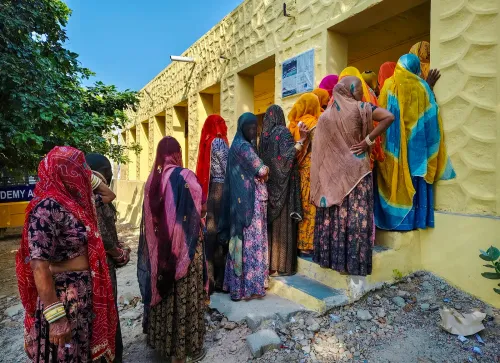
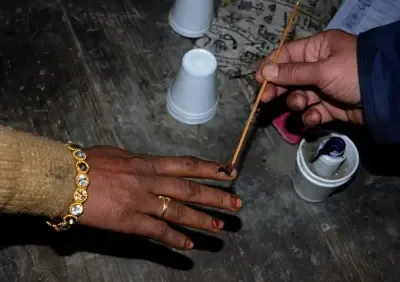
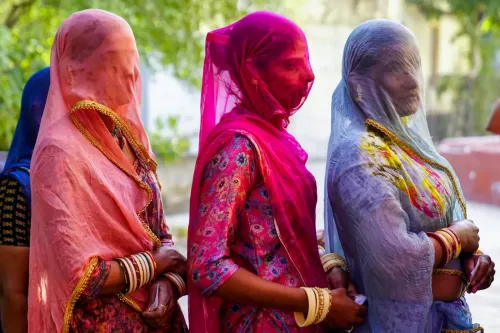
Rajasthan panchayat polls phase 3: 10.68 million voters, 9,094 candidates across 27 districts
Synopsis
Over 1.068 crore voters head to the polls on Tuesday for the third phase of Rajasthan's Panchayati Raj elections — a grassroots contest spanning 27 districts where the BJP, Congress, and the rising Bharat Adivasi Party are all fighting for rural credibility. With Chief Minister Bhajanlal Sharma's home district Bharatpur fielding the most candidates, the results will be closely watched as an early indicator of where rural Rajasthan stands politically.
Key Takeaways
Phase 3 of the Rajasthan Panchayati Raj elections is scheduled for Tuesday across 27 districts .
Over 1.068 crore voters (10,681,567) will decide the fate of 9,094 candidates .
Polling covers 377 Zila Parishad wards and 2,119 Panchayat Samiti wards across 11,869 polling stations .
Bharatpur , Chief Minister Bhajanlal Sharma's home district, has the highest candidate count — 696 candidates for 98 Panchayat Samiti wards .
Of 65 Assembly constituencies in poll-bound districts, BJP holds 30 seats and Congress holds 27 .
Congress faces competition from the Bharat Adivasi Party (BAP) in tribal-dominated areas of the state.
Voting for the third phase of the Rajasthan Panchayati Raj elections is scheduled for Tuesday, 4 November 2026, spanning 27 districts, with over 1.068 crore voters set to determine the fate of 9,094 candidates. Polling will cover 377 wards across 27 Zila Parishads and 2,119 wards across 116 Panchayat Samitis, marking one of the largest single-day grassroots electoral exercises in the state this cycle.
Scale and Polling Infrastructure
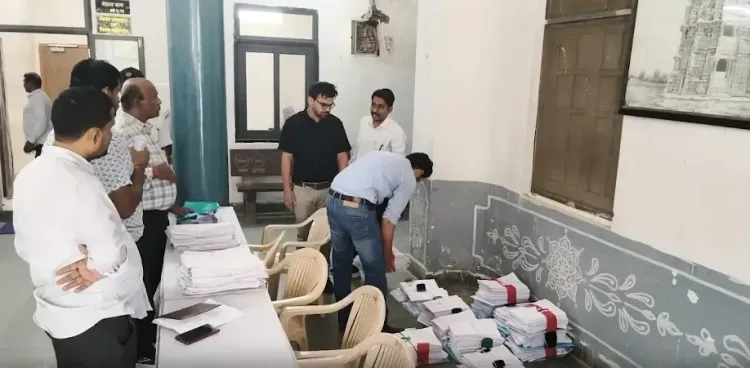
According to election officials, a total of 10,681,567 eligible voters will exercise their franchise in this phase. To facilitate the exercise, 11,869 polling stations have been set up across the participating districts. Of the total candidates, 1,305 are contesting for 377 Zila Parishad seats, while 7,789 are in the fray for the 2,119 Panchayat Samiti seats.
Bharatpur in the Spotlight
Bharatpur — the home district of Chief Minister Bhajanlal Sharma — has drawn particular attention, recording the highest number of candidates contesting Panchayat Samiti seats in this phase. Elections in Bharatpur will cover 98 Panchayat Samiti wards, with 696 candidates in the fray — the highest candidate count for Panchayat Samiti seats across any district in this phase. For Zila Parishad wards, 91 candidates are contesting across 19 wards in the district.
Elsewhere, Dausa and Hanumangarh lead in the number of Zila Parishad wards with 24 each. Dausa also tops the Panchayat Samiti count with 142 wards and 474 candidates.
BJP vs Congress: A Rural Prestige Battle
For both the Bharatiya Janata Party (BJP) and the Indian National Congress, the third phase represents a critical test of grassroots organisational strength in rural Rajasthan. The elections for Zila Parishad and Panchayat Samiti members in these districts have evolved into a prestige contest for both parties. Of the 65 Assembly constituencies spread across the districts going to polls, the BJP holds 30 seats and the Congress holds 27, reflecting a closely matched political landscape at the state level.
Candidate selection, local caste equations, coordination among party leaders, and efforts to prevent internal dissent are expected to be decisive factors. Notably, this comes amid the BJP's dominant position in the Rajasthan state assembly following the December 2023 election results.
Congress Momentum and the BAP Challenge
For the Congress, a key strategic priority is sustaining the momentum from its victory in the recent Anta Assembly by-election, while simultaneously defending its traditional vote bank in rural constituencies. The party, however, faces growing competition from the Bharat Adivasi Party (BAP) in tribal-dominated areas, where the regional outfit has been steadily expanding its organisational footprint. Critics argue that if Congress fails to consolidate in these belts, the BAP could emerge as a credible alternative for Adivasi voters ahead of future state-level contests.
What the Results Will Signal
The outcome of the third phase is expected to serve as a significant barometer of political sentiment in rural Rajasthan. With all three major political forces — BJP, Congress, and BAP — actively mobilising at the ground level, the results will offer an early read on the state's shifting electoral dynamics well ahead of the next major poll cycle. All eyes will be on Bharatpur, given its symbolic significance as the Chief Minister's home turf.
Point of View
And Congress because a poor showing would undermine the Anta by-election narrative it has been carefully building. The more underreported story is the BAP's quiet expansion in tribal belts, which could fragment Congress's base in ways that matter disproportionately in future assembly contests. The fact that 65 assembly seats are split 30-27 between the two national parties underscores how thin the margins are — making candidate discipline and caste management decisive over party branding at this level.
NationPress
2 Nov 2026
Frequently Asked Questions
When is the third phase of the Rajasthan Panchayati Raj election?
The third phase of the Rajasthan Panchayati Raj election is scheduled for Tuesday, with voting across 27 districts. Over 1.068 crore eligible voters will participate through 11,869 polling stations set up across the region.
How many candidates are contesting in phase 3 of the Rajasthan panchayat polls?
A total of 9,094 candidates are contesting in phase 3 — 1,305 for 377 Zila Parishad seats and 7,789 for 2,119 Panchayat Samiti seats across 27 districts.
Which district has the most candidates in Rajasthan panchayat phase 3?
Bharatpur, the home district of Chief Minister Bhajanlal Sharma, has the highest candidate count in phase 3, with 696 candidates contesting 98 Panchayat Samiti wards. It also has 91 candidates across 19 Zila Parishad wards.
What is the political significance of the Rajasthan panchayat phase 3 results?
The results are seen as a key indicator of rural political sentiment in Rajasthan. With BJP holding 30 and Congress holding 27 of the 65 Assembly seats in the poll-bound districts, the outcome will test the organisational strength of both parties ahead of future state-level contests.
What role is the Bharat Adivasi Party (BAP) playing in the Rajasthan panchayat elections?
The Bharat Adivasi Party (BAP) is emerging as a competitive force in tribal-dominated areas of Rajasthan, posing a direct challenge to Congress's traditional vote bank in those regions. Analysts say the BAP's expanding presence could fragment opposition votes in future assembly elections.