Piyush Goyal Calls for Unity Against Divisive Forces
Synopsis
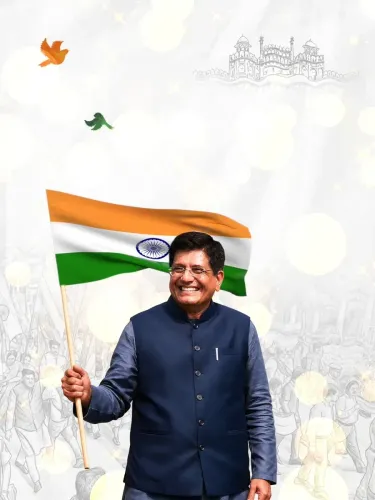
Union Commerce Minister and Rajya Sabha Leader of the House Piyush Goyal called on Indian society to unite against divisive forces in an Oct 23, 2026 post on X, echoing the BJP's long-standing 'Sabka Saath, Sabka Vikas' national-integration theme.
Key Takeaways
Union Commerce and Industry Minister Piyush Goyal posted on X on Friday, October 23, 2026 .
His Hindi message translates to: 'Today, we must unite society against the forces that seek to divide us.' Goyal is also Leader of the House in the Rajya Sabha , giving his statements additional parliamentary weight.
The messaging aligns with the BJP-led NDA's 'Sabka Saath, Sabka Vikas' framework adopted since 2014 .
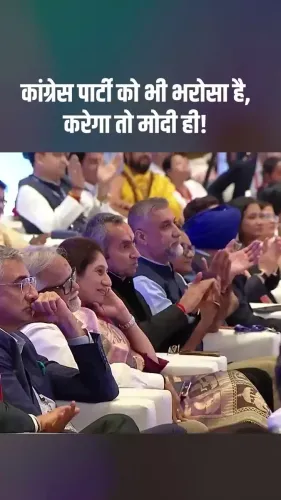
The post was accompanied by a video and uses an open-ended rhetorical style aimed directly at citizens rather than institutions.
A sharp message on social cohesion landed on Friday, October 23, 2026, when Union Commerce and Industry Minister Piyush Goyal took to X to call on Indian society to stand united against forces he described as intent on fracturing it — a rallying cry that cuts to the heart of a recurring fault line in Indian public life.
In the post, Minister Goyal wrote in Hindi: 'Aaj hamein baantne wali taakaton ke khilaaf samaj ko ekjut karna hai...' — 'Today, we must unite society against the forces that seek to divide us.' The ellipsis is deliberate. The incomplete sentence is an invitation, not a declaration — and that rhetorical choice matters.
The BJP's 'Unity' Playbook and Where This Fits
This is not the first time a senior BJP figure has reached for the language of unity as a political instrument. Since 2014, the NDA government's foundational slogan — 'Sabka Saath, Sabka Vikas' (Together with all, development for all) — has been the scaffolding around which national-integration messaging is built. Goyal's post slots neatly into that architecture.
The framing of unnamed 'divisive forces' is a well-worn technique in Indian politics across party lines — it allows the speaker to invoke a threat without naming it, broadening the appeal while sharpening the contrast. As Leader of the House in the Rajya Sabha, Goyal speaks not just as a minister but as a parliamentary floor leader whose words carry institutional weight.
Why the Timing Gets Attention
Senior political figures rarely post in a vacuum. A call for social unity from a cabinet minister and Rajya Sabha floor leader on a Friday afternoon — accompanied by a video — signals that something prompted it, even if the post does not spell it out. The video, whose content is not independently available here, likely carries the fuller argument.
What is clear is the register: this is not a policy announcement or a parliamentary statement. It is a mobilisation call directed at citizens — 'society must unite' — placing the agency with the public, not the government alone.
Whether it echoes into parliamentary debates on social cohesion or government programs in the weeks ahead will be the real test of whether this post was a moment or a movement.
Point of View
It doubles as a signal to the parliamentary opposition that social-unity rhetoric will be a live theme in the Upper House. The deliberate incompleteness of the sentence ('...') is a device to invite citizen identification, not just passive readership. Watch for whether this becomes a coordinated campaign talking point or remains an isolated ministerial sentiment.
NationPress
23 Oct 2026
Frequently Asked Questions
What did Piyush Goyal post on X on October 23 2026?
Piyush Goyal posted a message in Hindi calling on society to unite against forces that seek to divide it, accompanied by a video on his X account.
Who is Piyush Goyal?
Piyush Goyal is India's Union Minister of Commerce and Industry, a senior BJP leader, and the Leader of the House in the Rajya Sabha.
What does 'Sabka Saath Sabka Vikas' mean and how does Goyal's post relate to it?
'Sabka Saath, Sabka Vikas' means 'Together with all, development for all' — the NDA government's inclusive-growth slogan since 2014. Goyal's unity call fits squarely within that national-integration framework.
What are the 'divisive forces' Piyush Goyal referred to?
Goyal did not name specific groups or entities; the term 'divisive forces' is a broad rhetorical framing common in Indian political discourse to signal threats to social and national unity.
Why does Piyush Goyal's role as Rajya Sabha Leader of the House matter here?
As Leader of the House in the Rajya Sabha, Goyal is the government's chief floor manager in the Upper House, so his public statements on social themes can signal legislative priorities and likely debates ahead.