Jaishankar Calls on Azerbaijan President Aliyev in Baku
Synopsis
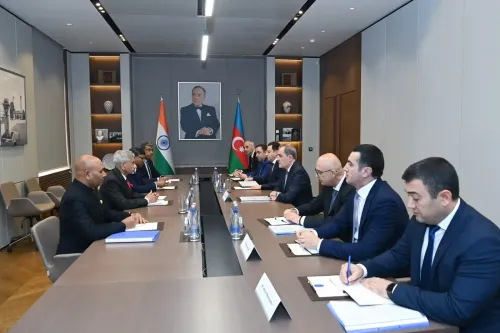
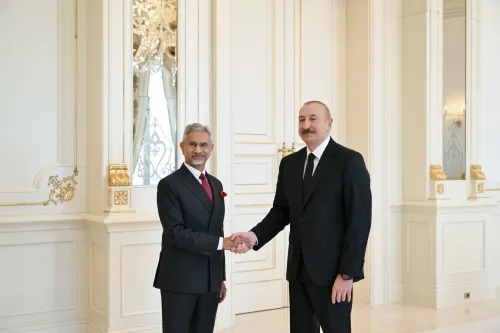
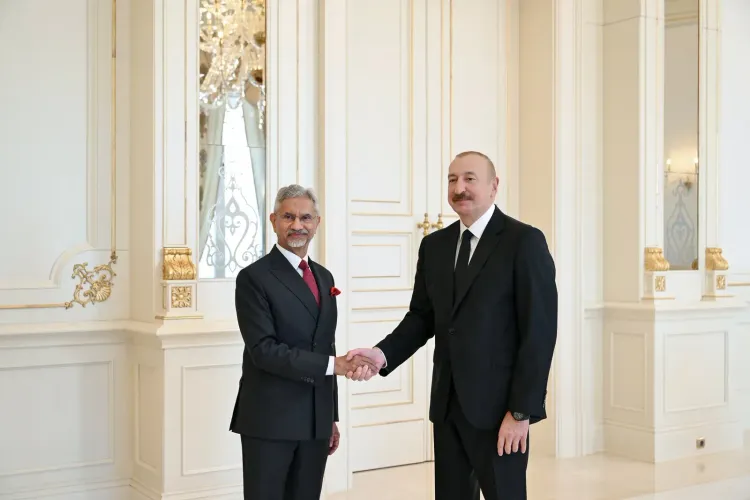
External Affairs Minister Dr. S. Jaishankar called on Azerbaijani President Ilham Aliyev in Baku on October 23, conveying greetings from President Murmu and PM Modi. The meeting focused on strengthening bilateral ties as India deepens Eurasian diplomatic and energy outreach.
Key Takeaways
Jaishankar met Azerbaijani President Ilham Aliyev in Baku on Friday, October 23, 2026 .
Jaishankar conveyed greetings from President Droupadi Murmu and Prime Minister Narendra Modi .
Discussions centred on strengthening the India-Azerbaijan bilateral relationship .
President Aliyev expressed 'positive sentiments' for the shared engagement, according to Jaishankar.
India and Azerbaijan have maintained diplomatic relations since 1992 , following Azerbaijan's independence.
The visit is part of India's wider push to deepen Eurasian connectivity and energy diplomacy through the South Caucasus.
From Baku on a crisp Friday morning, Union External Affairs Minister Dr. S. Jaishankar sat down with Azerbaijani President Ilham Aliyev — carrying personal greetings from President Droupadi Murmu and Prime Minister Narendra Modi, and a straightforward message: India wants more from this relationship.
What Jaishankar Carried into Aliyev's Office
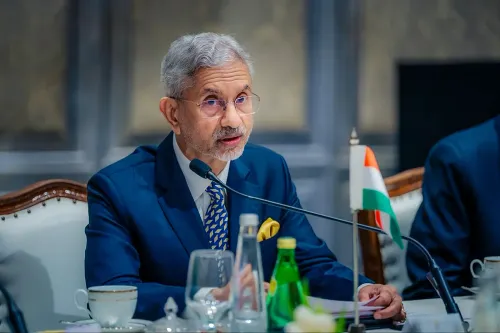
The meeting, held on Friday, October 23, 2026, was framed by Jaishankar as a call aimed at 'strengthening the relationship between our two countries.' He noted Aliyev's 'positive sentiments for this shared endeavour' — diplomatic language that signals receptiveness on the Azerbaijani side without locking in specifics. Conveying greetings from both the President and the Prime Minister signals the visit carries the full institutional weight of New Delhi.
India-Azerbaijan Ties: Three Decades and a New Moment
India and Azerbaijan established formal diplomatic relations in 1992, the year after Baku declared independence from the Soviet Union. For much of the past three decades the relationship has ticked along quietly — cordial but understated. What gives the current moment sharper edges is India's deliberate effort to diversify its energy supply chains and map out new connectivity corridors through the South Caucasus and into Eurasia.
Azerbaijan is a natural pivot in that architecture. President Aliyev, in power since 2003, has steered his country into a position of considerable leverage: a major oil-and-gas exporter sitting at the crossroads of pipelines running west toward Europe and trade routes running north into Russia and east toward Central Asia. For India, which is building out the International North-South Transport Corridor alongside partners including Russia and Iran, Azerbaijan is a geography that simply cannot be bypassed.
Baku in India's Broader Eurasian Play
This is not a dramatic pivot — it is steady diplomatic maintenance of the kind that pays dividends quietly over years. Jaishankar's Baku stop fits a visible pattern: India's External Affairs Ministry has accelerated high-level outreach to South Caucasus and Central Asian states, treating them not as peripheral engagements but as load-bearing pillars of a new Eurasian connectivity strategy. Energy diversification sits at the centre of that calculus.
Whether the warm exchange with Aliyev translates into concrete commercial agreements — in energy, infrastructure, or trade — will be the real measure of momentum in the months ahead.
The flags are up in Baku. Now comes the paperwork.
Point of View
If understated, Indian effort to bank goodwill across the South Caucasus at a time when Eurasian connectivity is becoming a strategic priority. By framing the visit around 'strengthening the relationship' rather than any single deliverable, New Delhi signals it is playing a long game — building the relationship infrastructure before specific deals arrive. Azerbaijan's role as both an energy exporter and a geographic linchpin on the International North-South Transport Corridor makes the personal-greetings format more consequential than it might appear. The test will come in follow-on commercial or connectivity agreements over the next several months.
NationPress
23 Oct 2026
Frequently Asked Questions
Why did Jaishankar visit Azerbaijan in October 2026?
Jaishankar called on President Ilham Aliyev in Baku to convey greetings from President Murmu and PM Modi and to discuss strengthening bilateral ties between India and Azerbaijan.
What is the current state of India-Azerbaijan relations?
India and Azerbaijan have maintained diplomatic relations since 1992. Ties have been cordial but relatively low-key, with growing interest in energy cooperation and Eurasian connectivity routes.
Who is Ilham Aliyev?
Ilham Aliyev is the President of Azerbaijan, in office since 2003. He oversees the country's energy policy and foreign relations in the South Caucasus region.
What is the significance of Azerbaijan for India's foreign policy?
Azerbaijan is a major oil-and-gas exporter and sits on key transit routes linking South Asia to Europe and Russia. It is an important node in India's Eurasian connectivity and energy diversification strategy.
What could come out of Jaishankar's meeting with Aliyev?
Jaishankar noted Aliyev's positive sentiments toward closer ties. Analysts will watch for follow-on joint statements or commercial agreements in energy, trade, or infrastructure over the coming months.