CM Himanta Marks 1,000 Days of Zero Poaching at Kaziranga

Synopsis
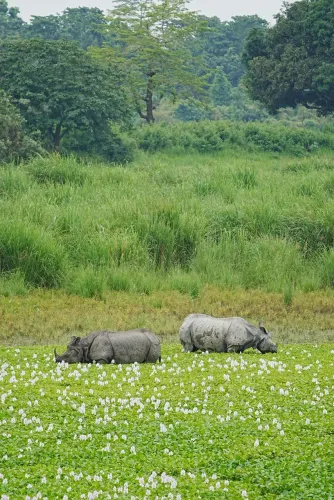
Assam Chief Minister Himanta Biswa Sarma has announced that Kaziranga National Park — home to the world's largest greater one-horned rhino population — has achieved 1,000 consecutive days without a poaching incident, crediting sustained enforcement and an uncompromising state policy stance.
Key Takeaways
Kaziranga National Park has recorded 1,000 consecutive days of zero rhino poaching, according to CM Himanta Biswa Sarma's announcement on 23 October 2026 .
Kaziranga is a UNESCO World Heritage Site in Assam and home to the world's largest population of the greater one-horned rhinoceros .
The milestone builds on the Indian Rhino Vision 2020 framework launched in 2005 , which structured intensified anti-poaching and habitat protection efforts.
Forest guards, local community networks, and tourism operators form the operational backbone of Kaziranga's protection regime.
CM Sarma explicitly committed to sustaining zero-poaching conditions 'in the days ahead', framing the streak as a policy floor rather than a one-off achievement.
Conservation observers will watch whether the model is extended to other Assam reserves and formalised into publicly audited annual reporting.
A milestone that wildlife conservationists have been tracking with quiet intensity arrived on Friday, 23 October 2026 — Assam Chief Minister Himanta Biswa Sarma announced that Kaziranga National Park has crossed 1,000 consecutive days without a single rhino poaching incident, a benchmark his government is calling the reward of 'uncompromising' enforcement.
What 1,000 days actually means for the one-horned rhino
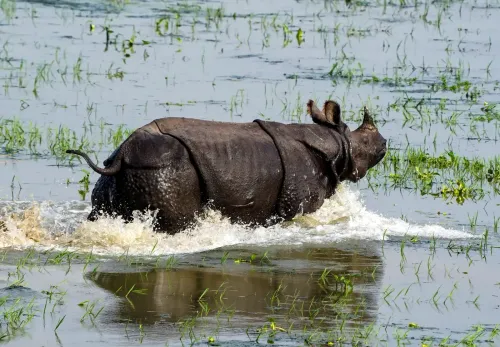
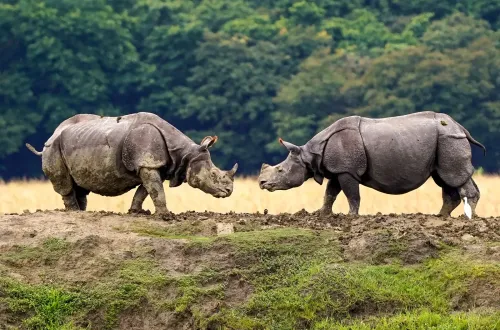
Kaziranga, a UNESCO World Heritage Site in central Assam, holds the world's largest population of the greater one-horned rhinoceros — a species that spent decades under relentless pressure from poachers supplying the illegal horn trade. The park's rhinos were being killed at a pace that alarmed international conservation bodies, making every poaching-free year a cause for measured relief rather than celebration. Three straight years of zero incidents is, by that history, a genuine rupture from the norm.
Sarma posted directly on the achievement, writing: 'After years of being affected by poaching, rhinos in Kaziranga have been safe for over 3 straight years and we will make sure this continues in the days ahead.' The statement pairs a hard number — 1,000 days — with an explicit forward commitment, signalling that this is a policy floor, not a passing statistic.
The enforcement architecture behind the streak
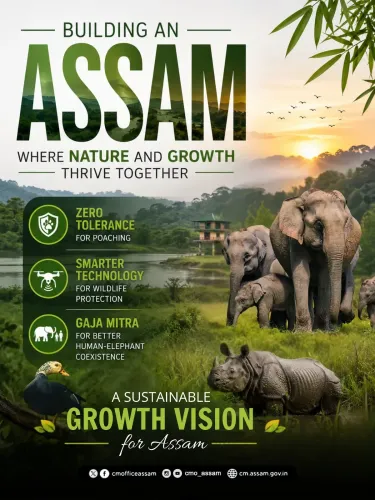
Assam's anti-poaching push at Kaziranga draws on a framework shaped over two decades. Indian Rhino Vision 2020, launched in 2005, set the policy foundation — intensifying surveillance, expanding rhino habitats, and coordinating between forest guards and local communities who live on the park's fringes. Successive state governments built on that scaffolding, deploying stricter enforcement and, more recently, technology-assisted surveillance across the reserve's 430-plus square kilometres.
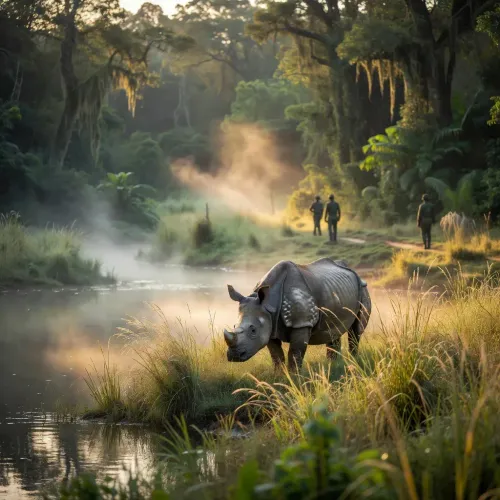
The human layer matters as much as the hardware. Forest guards operating in difficult terrain, local community watch networks, and tourism operators whose livelihoods track directly with the park's health all form the operational spine of Kaziranga's protection regime. When Sarma speaks of 'sustained efforts', this is the machinery he is pointing at.
Where Assam's wildlife policy goes from here
The Chief Minister's closing line — 'we will make sure this continues' — carries a policy signal worth noting. Conservation observers will be watching whether the zero-poaching model at Kaziranga is extended to other protected reserves in Assam, and whether the Assam Forest Department's annual reporting formalises the streak into a verifiable, publicly audited record. The state's biodiversity governance is increasingly being watched as a template for the wider northeast.
For the rhino, a species that once flirted with local extinction, three years of safety inside the world's most important single population is not a footnote. It is the whole story.
Point of View
000-day milestone at Kaziranga is a politically significant data point for CM Sarma, who has made muscular wildlife enforcement a visible pillar of his administration's governance identity. It also reflects a longer arc: conservation in northeast India has historically been entangled with land-use conflicts and insurgency-era border porosity, making a clean multi-year streak a genuine administrative achievement — not merely a communications one. The question the milestone raises is whether Assam can institutionalise the enforcement architecture so it outlasts any single government's political will. Extending the zero-poaching model to other reserves, and anchoring it in transparent departmental reporting, would be the real test of whether this is durable policy or a well-managed statistic.
NationPress
23 Oct 2026
Frequently Asked Questions
How many days has Kaziranga been poaching-free?
Assam CM Himanta Biswa Sarma announced on 23 October 2026 that Kaziranga National Park has recorded 1,000 consecutive days without a rhino poaching incident — over three straight years.
Why is Kaziranga National Park important for rhinos?
Kaziranga is a UNESCO World Heritage Site in Assam and holds the world's largest single population of the greater one-horned rhinoceros, making its protection critical to the global survival of the species.
What is Indian Rhino Vision 2020?
Indian Rhino Vision 2020 was a conservation policy launched in 2005 to increase rhino populations across Assam by intensifying anti-poaching surveillance and expanding protected habitats.
What steps has Assam taken to prevent rhino poaching at Kaziranga?
Assam has deployed stricter enforcement, technology-assisted surveillance, and community watch networks involving local residents and forest guards to protect Kaziranga's rhinos.
Is Kaziranga's zero-poaching record being extended to other parks?
CM Sarma has not announced a formal extension to other reserves as of October 2026, but conservation observers say Kaziranga's model is being watched as a potential template for other protected areas in Assam and the northeast.