CM Dhami Celebrates Karva Chauth with Wife, Honours Tradition
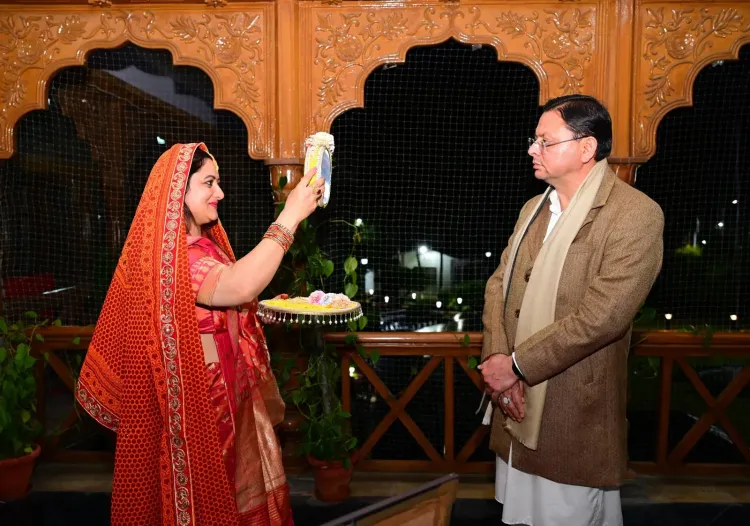
Synopsis
Uttarakhand Chief Minister Pushkar Singh Dhami celebrated Karva Chauth with his wife on 29 October 2026, sharing photographs and a heartfelt reflection on love, devotion, and the enduring value of marital companionship.
Key Takeaways
CM Pushkar Singh Dhami celebrated Karva Chauth on 29 October 2026 with his wife, observing traditional rituals and customs.
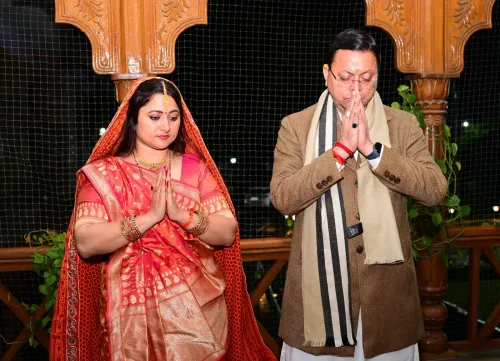
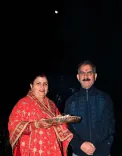
He shared three photographs of the occasion on X, making the personal observance public.
His post expressed gratitude for his wife's love and companionship, using the Sanskrit term ardhangini ('half of myself') to describe her.
Dhami highlighted love, dedication, and 'unshakeable trust' as the core values of married life.
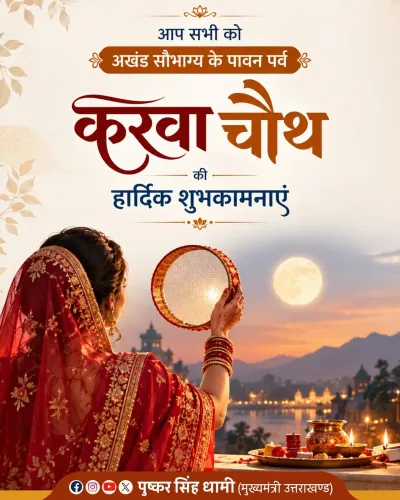
Karva Chauth is a major North Indian Hindu festival in which married women fast from sunrise to moonrise for their husband's long life.
Uttarakhand Chief Minister Pushkar Singh Dhami marked Karva Chauth this year in the way the festival demands — with his wife, with ritual, and with quiet reverence. On Thursday, 29 October 2026, he shared the moment publicly, expressing heartfelt gratitude for his partner's love and companionship.
In a post accompanied by photographs of the occasion, Dhami wrote that he observed the sacred festival 'paaramprik riti-rivazon evam shraddha ke saath' — 'with traditional customs and devotion' — alongside his wife. He reflected on the values of love, dedication, and unshakeable trust that lie at the heart of married life, and offered his thanks for her affection and steadfast presence.
What Karva Chauth Means — and Why Leaders Mark It
Karva Chauth is one of North India's most widely observed Hindu festivals, celebrated primarily by married women who fast from sunrise to moonrise for the long life and well-being of their husbands. The fast is broken only after the moon rises and the husband offers water to his wife. It is a deeply intimate, household observance — and precisely because of that intimacy, politicians sharing it publicly carry a clear message: family, faith, and cultural rootedness.
For BJP leaders in particular, visible participation in Hindu festivals forms a consistent thread of public identity. Dhami, who has served as Chief Minister of Uttarakhand — a state that is home to some of Hinduism's most sacred pilgrimage sites — has long aligned his public persona with the state's spiritual character. Marking Karva Chauth is, in that context, both personal and political shorthand.
A Festival That Belongs to the Home, Brought to the Public Square
What distinguishes this post from routine political communication is its register: no scheme, no announcement, no statistic. Dhami's words are turned inward — toward gratitude, toward his wife, toward the quiet architecture of a long marriage. 'Ardhangini' — the word he uses for his wife — translates literally as 'half of myself', a Sanskrit term that carries centuries of weight about partnership and wholeness.
The three images shared alongside the post offer visual evidence of the celebration, though the Chief Minister keeps the emotional focus on sentiment rather than spectacle. In a media environment that rewards volume, that restraint registers as its own kind of statement.
Karva Chauth 2026 finds CM Dhami pausing the machinery of governance for one evening — and letting a festival older than any office speak for itself.
Point of View
And Dhami is no exception — his Karva Chauth post fits a well-established pattern of cultural signalling that reinforces identity as much as it celebrates tradition. For a Chief Minister of Uttarakhand, a state whose political and spiritual identity are unusually intertwined, such posts carry extra resonance with a core voter base. The intimacy of the language — gratitude to a partner, the weight of the word ardhangini — also serves to humanise a figure more often seen in governance mode. There is no policy content here, but the optics of a sitting CM honouring domestic tradition are themselves a form of soft political communication.
NationPress
30 Oct 2026
Frequently Asked Questions
What is Karva Chauth and when is it celebrated?
Karva Chauth is a North Indian Hindu festival on which married women fast from sunrise to moonrise, praying for their husband's long life and good health. In 2026 it fell on 29 October .
Did CM Pushkar Singh Dhami celebrate Karva Chauth in 2026?
Yes. Uttarakhand Chief Minister Pushkar Singh Dhami shared photographs and a reflective post on X on 29 October 2026 , confirming he observed the festival with his wife following traditional customs.
What did CM Dhami say about Karva Chauth?
Dhami said he celebrated the festival 'with traditional customs and devotion' alongside his wife, and expressed heartfelt gratitude for her love and companionship, emphasising values of love, dedication, and unshakeable trust in marriage.
What does the word ardhangini mean?
Ardhangini is a Sanskrit term meaning 'half of myself' or 'better half', traditionally used to refer to a wife. CM Dhami used the word in his post to describe his wife.
Why do BJP leaders post about Hindu festivals on social media?
BJP leaders commonly share personal observances of major Hindu festivals to reinforce cultural identity and connect with a core voter base that values the public affirmation of traditional and religious values.