Giriraj Singh: India shifting from self-reliance to global manufacturing rival
Synopsis
Union Textiles Minister Giriraj Singh declared on 30 September 2026 that India's manufacturing sector has evolved into a hub of design, technology, and innovation, moving from self-reliance to active global competition — backed by over a decade of Make in India, Atmanirbhar Bharat, and PLI policies.
Key Takeaways
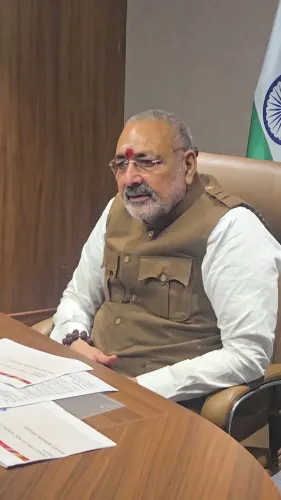
Union Textiles Minister Giriraj Singh posted on 30 September 2026 that India's manufacturing sector is building a new identity in design, technology, innovation, and quality .
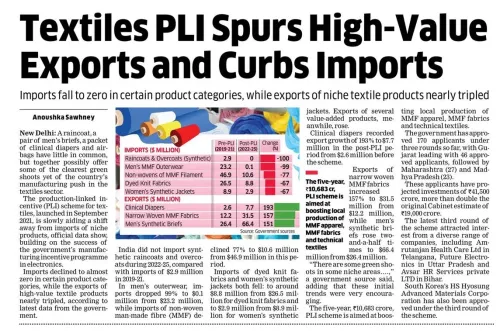
He stated that products once imported from abroad are now being manufactured domestically at scale.
Singh framed India's trajectory as a shift from Atmanirbhar Bharat (self-reliance) to active global competitiveness .
The Make in India programme (launched September 2014 ) and PLI schemes (introduced from 2020 ) form the policy backbone of this push.
Progress on PLI implementations and quarterly manufacturing output and export data will be the key metrics to watch.
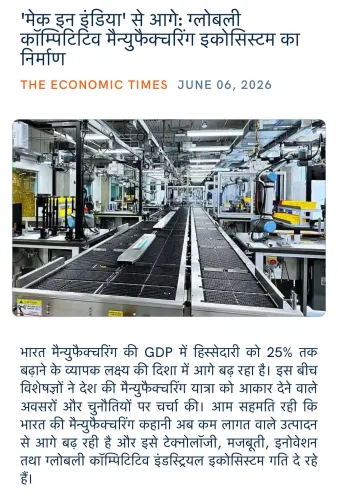
India's factories are no longer just assembling the world's orders — they are designing, innovating, and competing at the top of global value chains. On Wednesday, 30 September 2026, Union Textiles Minister Giriraj Singh posted a pointed assertion on X: that India's manufacturing sector is no longer defined only by production volume, but is now earning a new identity built on design, technology, innovation, and quality.
In the post, the minister wrote: 'भारत का मैन्युफैक्चरिंग सेक्टर उत्पादन के केंद्र के साथ डिजाइन, तकनीक, नवाचार और गुणवत्ता की नई पहचान बन रहा है' — 'India's manufacturing sector is building a new identity in design, technology, innovation and quality, alongside being a centre of production.' He added that products once imported from abroad are now being made domestically at scale, and that India is moving from Atmanirbhar Bharat (self-reliance) toward active global competitiveness.
From import substitution to export ambition
The arc Singh is describing did not happen overnight. Make in India, launched in September 2014, planted the first flag — inviting multinationals and domestic firms to set up production on Indian soil. It was followed by the Atmanirbhar Bharat initiative in May 2020, which sharpened the focus on cutting import dependence across critical sectors. Then came the Production Linked Incentive (PLI) schemes, rolled out from 2020 onwards across multiple industries, offering manufacturers financial incentives tied directly to incremental output and exports. Together, these three layers of policy represent a decade-long build-up — and Singh's post is, in effect, a progress report on that journey.The pivot point: design and tech, not just cheap labour
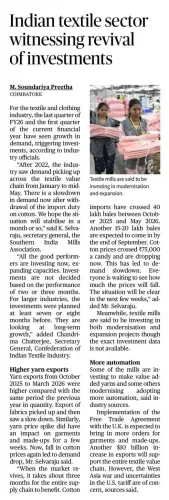
What makes Singh's framing significant is the specific language he uses. Moving beyond cost-competitiveness — long India's manufacturing calling card — he points to design, technology, and innovation as the new differentiators. This signals an ambition to climb higher in global value chains, where margins are thicker and dependency on foreign intellectual property is lower. For MSME exporters and large manufacturing industries alike, that distinction matters enormously: a factory that only assembles is replaceable; one that designs and innovates is not.What the PLI scorecard will reveal
The real test of this narrative lies in the numbers. Analysts and industry watchers will be tracking quarterly manufacturing output data and export figures tied to PLI scheme implementations — the metrics that will either validate or stress-test the minister's confidence. The 'world-class production capacity' Singh invokes will need to show up in India's share of global exports in sectors from textiles and electronics to pharmaceuticals and engineering goods. If the PLI pipeline delivers on its promise, Singh's post may read less like political optimism and more like an early headline on a genuinely historic inflection point for Indian industry.Point of View
' which directly mirrors the government's ambition to move up global value chains. Rhetorically, it also signals confidence that the PLI-led industrial push has matured enough to invite comparison with established manufacturing giants. For the BJP, this narrative serves a dual purpose: it reinforces the Atmanirbhar Bharat brand ahead of any electoral cycle while also making an economic-diplomacy argument to global investors. The real credibility test, however, will be hard export and output data — a story that quarterly statistics alone can confirm or complicate.
NationPress
30 Sept 2026
Frequently Asked Questions
What did Giriraj Singh say about India's manufacturing sector?
Union Textiles Minister Giriraj Singh stated on 30 September 2026 that India's manufacturing sector is now building a new identity in design, technology, innovation, and quality — not just production volume — and is moving from self-reliance toward global competitiveness.
What is the Atmanirbhar Bharat initiative?
Atmanirbhar Bharat, meaning 'Self-Reliant India,' was launched in May 2020 to boost domestic manufacturing and reduce India's dependence on imports across critical sectors.
What are PLI schemes and how do they help India's manufacturing?
Production Linked Incentive (PLI) schemes, introduced from 2020 onwards, offer manufacturers financial incentives based on incremental output and exports, aiming to scale up India's production capacity across multiple industries.
How does Make in India relate to India's global manufacturing ambitions?
Make in India, launched in September 2014, was the first major policy push to attract multinational and domestic companies to manufacture in India, laying the foundation for later initiatives like Atmanirbhar Bharat and the PLI schemes.
What metrics will show whether India's manufacturing push is succeeding?
Analysts watch quarterly manufacturing output data and export figures linked to PLI scheme performance — these numbers will indicate whether India is genuinely climbing global value chains in sectors like textiles, electronics, and engineering goods.