Giriraj Singh: PLI Schemes Powering India's Manufacturing Rise
Synopsis
Union Textiles Minister Giriraj Singh declared on 29 September 2026 that India's PLI schemes are generating new momentum in manufacturing, expanding investment and employment under PM Modi's Atmanirbhar Bharat framework, reinforcing India's push to become a global production hub.
Key Takeaways
Giriraj Singh posted on 29 September 2026 crediting PLI schemes with driving fresh momentum in Indian manufacturing.
The PLI schemes span 14 sectors with a combined government outlay exceeding Rs 2 lakh crore , first announced in May 2020 .
The Textiles PLI , notified after 2021, targets man-made fibre apparel and technical textiles — sectors where India has historically underperformed.
Singh linked the manufacturing push directly to PM Narendra Modi 's Atmanirbhar Bharat (Self-Reliant India) vision.
The policy lineage runs from Make in India (2014) through Atmanirbhar Bharat to PLI — a decade-long effort to raise manufacturing's share of GDP.
Global supply-chain diversification trends have amplified India's pitch as an alternative production destination, with PLI as the financial incentive mechanism.
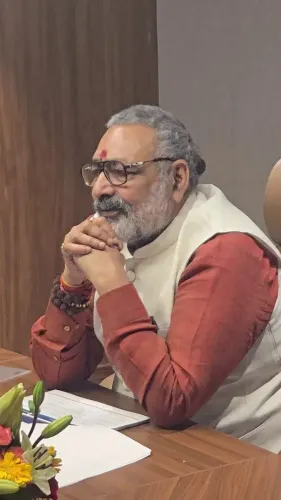
India's factories are being rewired — and Union Textiles Minister Giriraj Singh wants the world to take note. On Tuesday, 29 September 2026, the senior BJP leader took to X to argue that the government's Production Linked Incentive (PLI) schemes are delivering a structural shift in Indian manufacturing, expanding investment, innovation, and employment in tandem.
Posting in Hindi, Singh wrote: 'PLI yojanaon ke madhyam se Bharat ke vinirnaan kshetra ko nayi gati mil rahi hai' — 'Through PLI schemes, India's manufacturing sector is gaining new momentum.' He linked the push directly to Prime Minister Narendra Modi's vision of an Atmanirbhar Bharat (Self-Reliant India), asserting that the country is cementing its identity as a global manufacturing power.
What the PLI Architecture Actually Does
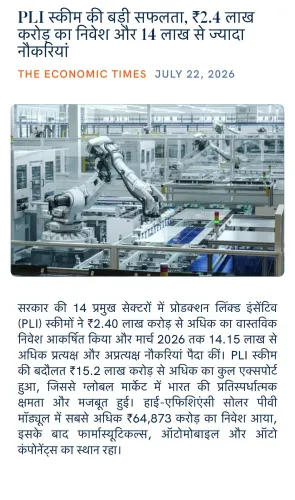
The PLI schemes were first unveiled as part of the Atmanirbhar Bharat package announced in May 2020, then expanded to cover 14 sectors with a combined outlay exceeding Rs 2 lakh crore. The logic is blunt: reward companies financially for every rupee of incremental production they generate above a baseline threshold. No production, no incentive. Scale up, and the government shares the upside.
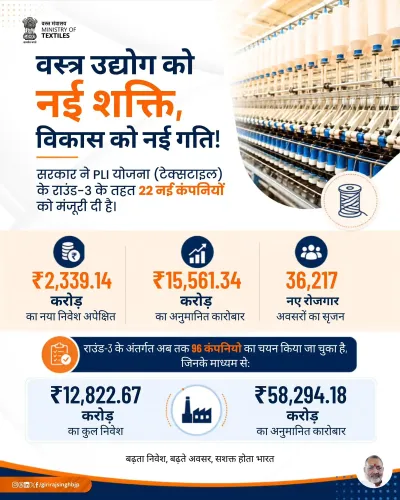
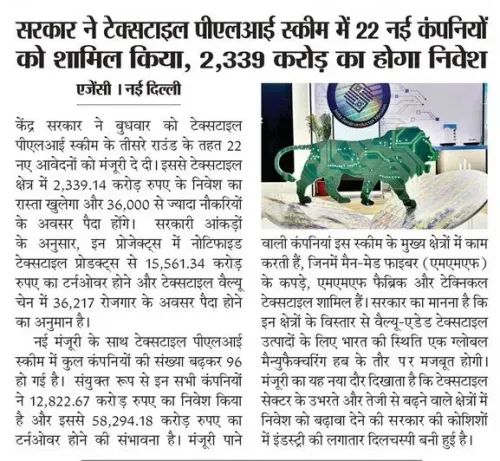
Textiles — Singh's own ministry — was among the sectors that notified PLI guidelines after 2021. The scheme targets man-made fibre apparel and technical textiles, segments where India has historically lagged global competitors. The broader industrial ecosystem, from electronics to pharmaceuticals to food processing, operates under the same incentive architecture.
Atmanirbhar Bharat and the 'Make in India' Through-Line
Singh's post is the latest chapter in a policy narrative that stretches back to the Make in India campaign launched in September 2014. That initiative set the ambition: raise manufacturing's share of GDP and pull global supply chains into Indian territory. PLI is the financial instrument built to actually execute it — converting aspiration into factory-floor output.
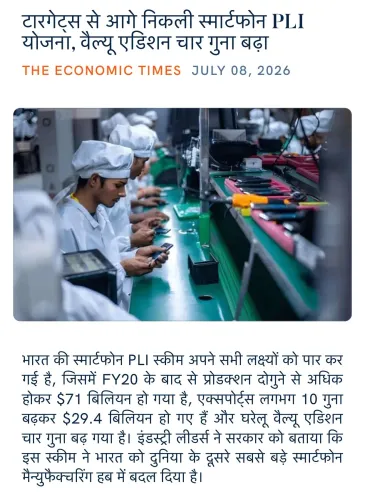
The strategic timing matters. As global companies have actively sought to diversify supply chains away from single-country dependence, India has positioned itself as the credible alternative. Multiple ministries have used PLI guidelines to operationalise that pitch, sector by sector, disbursement cycle by disbursement cycle.
For a minister whose constituency of Begusarai, Bihar sits at the heart of India's industrial heartland ambitions, championing manufacturing momentum is both policy and politics — and right now, the two are pointing in the same direction.
Point of View
The BJP is threading domestic self-reliance with export-readiness, a political framing designed to appeal to both nationalist sentiment and investor confidence. For the Textiles Ministry specifically, the PLI push is an attempt to move India up the value chain from raw cotton to technical textiles — a transition that will define whether the sector can compete with established Asian manufacturing rivals. The real test will come in disbursement data: whether incentive payouts are actually accelerating production or merely rewarding capacity that would have been built anyway.
NationPress
29 Sept 2026
Frequently Asked Questions
What are PLI schemes and how do they work in India?
Production Linked Incentive (PLI) schemes offer financial rewards to companies based on incremental production above a set baseline, covering 14 sectors with a total government outlay exceeding Rs 2 lakh crore. Companies receive incentives only when they actually scale up output, making the scheme performance-driven rather than subsidy-based.
Which sectors are covered under India's PLI scheme?
India's PLI schemes cover 14 sectors including textiles (man-made fibre apparel and technical textiles), electronics, pharmaceuticals, food processing, automobiles, and advanced chemistry cell batteries, among others.
What is Atmanirbhar Bharat and how does it relate to PLI?
Atmanirbhar Bharat, meaning 'Self-Reliant India,' was announced in May 2020 to reduce import dependence and strengthen domestic manufacturing and supply chains. PLI schemes are the primary financial instrument designed to operationalise this vision by incentivising domestic production across key industries.
What did Giriraj Singh say about PLI schemes?
On 29 September 2026, Union Textiles Minister Giriraj Singh posted on X stating that PLI schemes are giving new momentum to India's manufacturing sector, expanding investment, innovation, and employment, and reinforcing India's identity as a global manufacturing power under PM Modi's Atmanirbhar Bharat vision.
How does the Textiles PLI scheme benefit India's textile industry?
The Textiles PLI scheme, notified after 2021, specifically targets man-made fibre apparel and technical textiles — segments where India has historically lagged global competitors — by offering financial incentives tied to incremental production, aiming to move the sector up the value chain.