CM Sukhu defends Rahul Gandhi on Gen-Z issues, cites Rajiv Gandhi legacy
Synopsis
HP CM Sukhvinder Singh Sukhu defended Rahul Gandhi against accusations of exploiting Gen-Z issues for political gain, invoking Rajiv Gandhi's 1988 constitutional amendment lowering the voting age to 18 as proof of the Gandhi family's genuine commitment to youth empowerment.
Key Takeaways
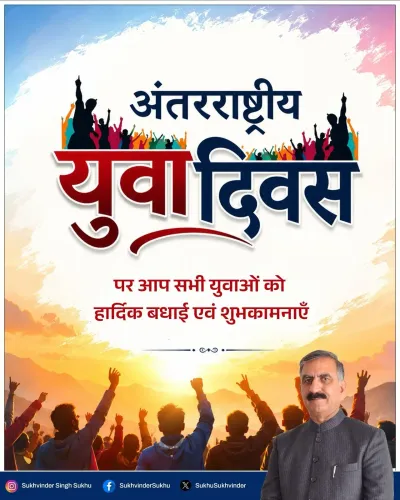
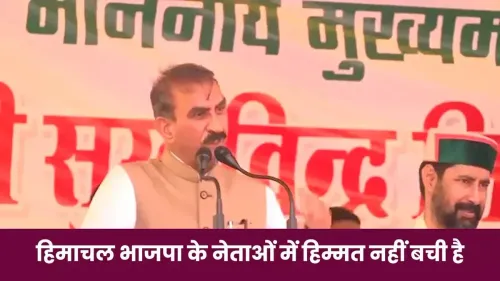
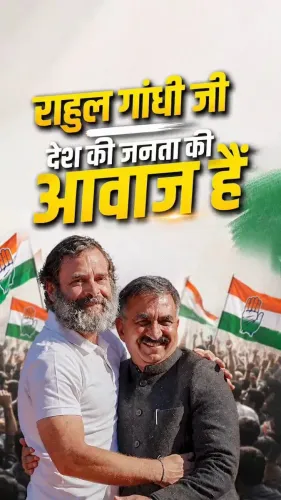
CM Sukhvinder Singh Sukhu posted on 29 September 2026 defending Rahul Gandhi against charges of raising Gen-Z issues for electoral advantage.
Sukhu argued that opposition parties have a constitutional duty to voice the concerns of students, farmers, and women.
He cited the Constitution (Sixty-first Amendment) Act, 1988 , under PM Rajiv Gandhi , which reduced the voting age from 21 to 18 years .
Sukhu dismissed the opportunism charge by noting the next general election is not due until 2029 , making immediate political gain an implausible motive.
The post is part of a recurring Congress communication strategy defending Rahul Gandhi's public advocacy as principled rather than tactical.
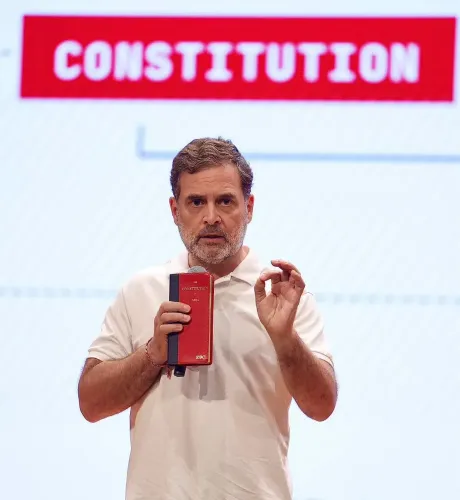
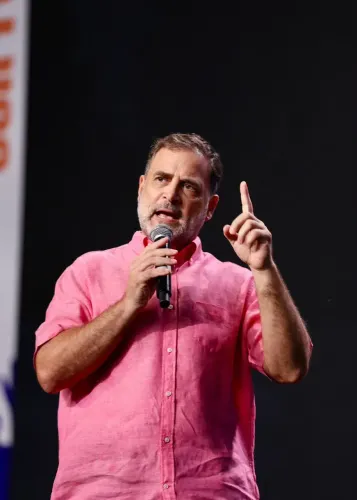
Himachal Pradesh Chief Minister Sukhvinder Singh Sukhu fired back at critics of Rahul Gandhi on Tuesday, 29 September 2026, arguing that the Congress leader raises youth and public issues out of a sense of national service — not electoral calculation — and invoking the Gandhi family's constitutional legacy to make the case.
Sukhu's core argument: opposition duty, not political opportunism
In a post in Hindi, CM Sukhu laid out a direct defence: 'जब भी कोई मुद्दा उठाते हैं, तो उनका उद्देश्य राजनीतिक लाभ लेना नहीं, देश सेवा की भावना से काम करना होता है' — 'Whenever he raises an issue, his purpose is not political gain but to work with a spirit of national service.' He framed opposition politics as a constitutional obligation: to amplify the voices of students, farmers, and women who would otherwise go unheard.
The statement is a direct rebuttal to criticism — the exact source unspecified in the post — that Rahul Gandhi is exploiting Gen-Z concerns for electoral advantage. CM Sukhu dismissed that charge bluntly: with the next general election not due until 2029, he said, the question of chasing 'immediate political gain' simply does not arise.
The Rajiv Gandhi voting-age card
The sharpest rhetorical move in Sukhu's post was historical. He pointed to the Constitution (Sixty-first Amendment) Act, 1988, passed under Prime Minister Rajiv Gandhi, which lowered the voting age from 21 to 18 years — enfranchising tens of millions of young Indians in one legislative stroke. The implication is unmistakable: the Gandhi family has a documented, decades-long record of expanding youth political participation, not merely mining it for votes.
By anchoring Rahul Gandhi's current advocacy in that constitutional moment, Sukhu is doing something deliberate — converting a charge of opportunism into a story of continuity. The argument runs: a family that gave young India the vote cannot credibly be accused of exploiting young India's grievances.
Congress's recurring counter-narrative on Rahul Gandhi
This post fits a well-worn pattern in Congress communication. Senior leaders regularly step in to reframe criticism of Rahul Gandhi — particularly on youth unemployment, agrarian distress, and social justice — as evidence of the party's broader programme rather than personal ambition. CM Sukhu, as one of the party's sitting chief ministers, carries institutional weight when he makes that case.
The timing matters too. State-level polls are expected in several assemblies before 2029, and Congress is keen to consolidate its standing among first-time and young voters — a demographic that the 1988 amendment first brought into the fold and that remains fiercely contested today.
Whether the defence lands will depend on what comes next: concrete Congress proposals on youth employment and education that give the narrative substance beyond the rhetorical. Words from Shimla are a start — policy from Parliament would be the proof.
Point of View
Congress attempts to shift the debate from motive to legacy. The invocation of the 61st Amendment is historically accurate and politically convenient — it reframes a vulnerability (perceived opportunism) as a strength (generational continuity). However, the defence remains rhetorical until Congress translates its youth agenda into concrete legislative or policy proposals. With several state elections on the horizon before 2029, this kind of senior-leader endorsement signals that the party intends to make Gen-Z outreach a sustained plank, not a one-off talking point.
NationPress
29 Sept 2026
Frequently Asked Questions
Why is CM Sukhu defending Rahul Gandhi on Gen-Z issues?
CM Sukhu defended Rahul Gandhi against criticism that he raises youth-related issues for political gain, arguing that voicing public concerns is the constitutional duty of the opposition and that the next election in 2029 makes immediate electoral opportunism an implausible motive.
What is the Constitution 61st Amendment Act 1988?
The Constitution (Sixty-first Amendment) Act, 1988, passed under Prime Minister Rajiv Gandhi, lowered the voting age in India from 21 to 18 years, enfranchising millions of young voters.
What did Sukhu say about Rahul Gandhi and Gen-Z?
Sukhu said it is unfair to accuse Rahul Gandhi of exploiting Gen-Z concerns for political advantage, calling him a 'voice of the younger generation' who raises issues out of a spirit of national service rather than electoral calculation.
When is the next Indian general election?
The next Indian general election is scheduled for 2029, a fact CM Sukhu cited to argue that there is no immediate political incentive for Rahul Gandhi to raise youth issues opportunistically.
What issues does Rahul Gandhi raise for youth according to Congress?
According to CM Sukhu's post, Rahul Gandhi raises issues related to students, youth employment, farmers, and women — framing these as core opposition responsibilities rather than campaign tactics.