Amritsar Rural Police busts arms-narcotics network, seizes AK rifles and 10 kg heroin

Synopsis
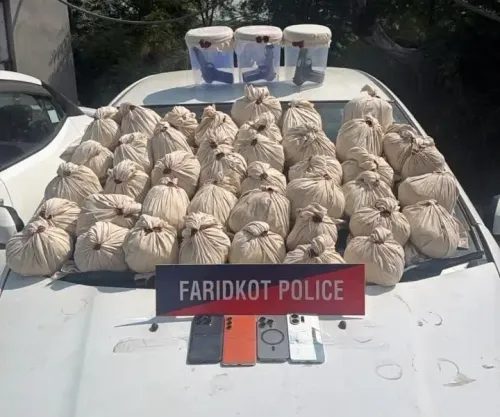
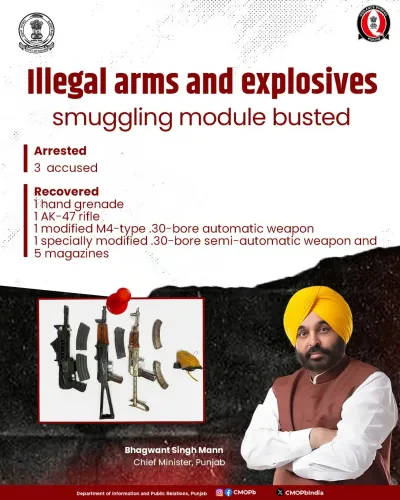
Amritsar Rural Police dismantled an illegal arms-and-narcotics network on 29 September 2026, arresting three accused and recovering 10 kg heroin, two AK rifles, four magazines, and ten live cartridges in a major enforcement breakthrough in Punjab's border belt.
Key Takeaways
3 accused arrested by Amritsar Rural Police after an illegal arms and narcotics supply network was dismantled.
10 kg of heroin recovered — a consignment large enough to supply significant portions of urban demand.
2 AK rifles, 4 magazines and 10 live cartridges seized, indicating a military-grade arms component to the network.
Amritsar is a front-line border district adjacent to Pakistan, a known corridor for cross-border smuggling of both drugs and weapons.
The bust is consistent with a broader pattern of narco-arms trafficking in Punjab's border belt that state police have repeatedly targeted since 2022 .
Investigators are expected to probe links to wider transnational syndicates as the case moves to judicial proceedings.
Ten kilograms of heroin, two AK rifles, four magazines, and ten live cartridges — the haul that Amritsar Rural Police announced on Tuesday, 29 September 2026 tells a familiar but chilling story about the pressure Punjab's border districts face every single day. The Chief Minister's Office of Punjab confirmed the breakthrough, disclosing that three accused have been arrested and an illegal arms-and-narcotics supply network has been dismantled.
What the recovery reveals about Punjab's border threat
Amritsar is not just any district — it sits directly on Punjab's international frontier with Pakistan, making it one of the most contested corridors for cross-border smuggling in the country. The simultaneous recovery of military-grade assault rifles alongside a significant consignment of heroin signals a network that dealt in both contraband streams, a pattern law-enforcement agencies have documented repeatedly across border-adjacent areas.
The seizure of two AK rifles is particularly significant. Assault weapons of that category do not circulate through domestic grey markets; their presence points toward a supply chain with cross-border origins. Paired with 10 kg of heroin — a quantity large enough to supply entire urban pockets — the bust underscores how narco-trafficking and arms smuggling have become intertwined operations in the region.
Bhagwant Mann government's push on border-belt enforcement
Since Bhagwant Mann assumed office as Chief Minister in 2022, the Aam Aadmi Party government has repeatedly flagged cross-border smuggling as a security and public-health emergency. Punjab Police has carried out a series of operations in districts including Amritsar, Tarn Taran, and Gurdaspur — all hugging the international boundary — targeting networks that exploit porous stretches of the frontier.
The announcement from the CMO Punjab official handle amplifies the operational result at the highest political level, signalling that the state government wants these enforcement actions visible to the public — both as a deterrent and as proof of executive will. Three accused are now in custody, and investigators are expected to pursue leads toward any wider syndicate connections.
What investigators will be watching next
The critical question now is whether the three arrested individuals are end-handlers or nodes connected to a larger transnational network. The combination of narcotics and firearms in a single bust often indicates that weapons are used either to protect drug shipments or are traded as currency within the same criminal ecosystem. Identifying the supply chain — from entry point through distribution — will determine how significant this dismantling truly is.
Judicial proceedings against the arrested persons and any fresh recovery of assets or communication devices during remand will be the next markers to watch. For border communities living under the shadow of this trade, a verdict that disrupts the network upstream, not just at the last-mile level, is the outcome that actually changes lives.
Point of View
Publicising the bust through the CMO's official handle is a deliberate governance signal: enforcement is active and politically prioritised, not delegated silently to the police apparatus. The real test, however, lies upstream — whether investigators can trace these rifles and this heroin to their cross-border entry points, or whether the bust remains a last-mile interception that leaves the supply chain intact.
NationPress
30 Sept 2026
Frequently Asked Questions
What did Amritsar Rural Police recover in this operation?
Amritsar Rural Police recovered 10 kg of heroin, 2 AK rifles, 4 magazines, and 10 live cartridges while dismantling an illegal arms and narcotics supply network, and arrested 3 accused.
Where did the Amritsar arms and drug bust take place?
The operation was carried out by Amritsar Rural Police in Amritsar district, Punjab — a border district that shares an international frontier with Pakistan and is a known corridor for cross-border smuggling.
How significant is 10 kg of heroin in a single seizure?
A 10 kg heroin seizure is considered a major bust; at street-level distribution, such a quantity can supply demand across large urban and peri-urban areas, making it a significant disruption to the supply chain.
Why are AK rifles being found in Punjab drug busts?
AK-pattern rifles are not domestically manufactured for civilian use in India; their recovery in Punjab busts points to cross-border origins, and they are typically used to protect high-value drug consignments or traded as currency within the same criminal network.
What is Punjab's track record on tackling cross-border smuggling?
Since 2022, the Bhagwant Mann-led government has consistently directed Punjab Police to intensify operations in border-belt districts including Amritsar, Tarn Taran, and Gurdaspur, resulting in repeated large-scale seizures of narcotics and weapons.