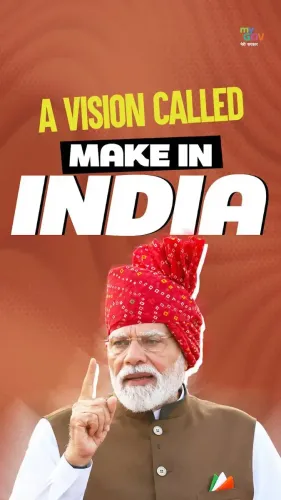
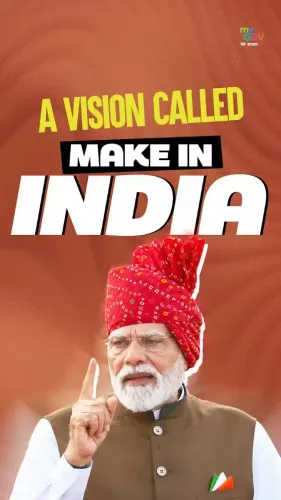
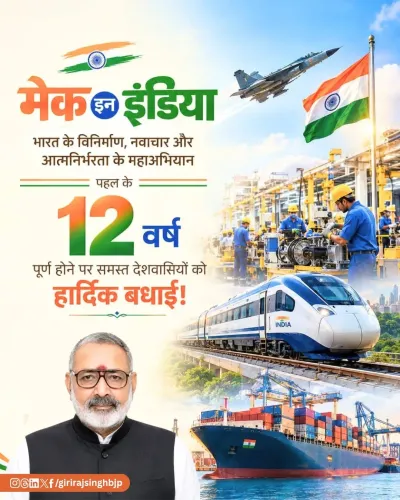
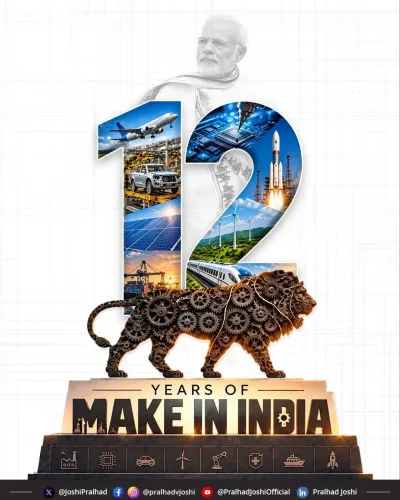
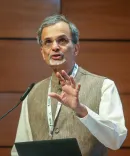
Shivraj Singh Chouhan marks 12 Years of Make in India
Synopsis
Union Agriculture Minister Shivraj Singh Chouhan marked the 12th anniversary of Make in India on 25 September 2026, posting that India has shifted from an import-driven mindset to an export-oriented identity, calling it a self-reliant and prosperous new India.
Key Takeaways
Make in India was launched on 25 September 2014 by Prime Minister Narendra Modi to transform India into a global manufacturing hub.
Chouhan described the initiative as shifting India from an 'import-driven mindset' to an 'export-fuelled flight' over twelve years.
The Atmanirbhar Bharat Abhiyan , launched in May 2020 , extended Make in India's logic by promoting domestic supply chains and export capacity.
The anniversary message aligns with the government's twin economic narrative of self-reliance at home and global competitiveness abroad.
Key sectors watching this milestone include MSMEs , large exporters, and inbound manufacturing investors tied to PLI schemes.
Policy watchers will track FDI inflow data, quarterly manufacturing output, and any new DPIIT announcements tied to the scheme's next phase.
Twelve years ago, a single phrase rewired India's economic ambition. On 25 September 2026, Union Agriculture Minister Shivraj Singh Chouhan marked the anniversary of Make in India with a pointed message on X, framing the initiative as the moment India pivoted from an import-dependent mindset to an export-oriented identity.
Posting in Hindi, Chouhan wrote: 'Import wali soch se Export wali udaan tak... Make in India ne badli Bharat ki tasveer' — 'From an import-driven mindset to an export-fuelled flight... Make in India has transformed India's image.' He added: 'This is a new India — self-reliant and prosperous.'
From a 2014 launch to a 12-year arc
Prime Minister Narendra Modi launched Make in India on 25 September 2014, with an explicit goal of turning India into a global manufacturing destination by attracting foreign investment, easing business regulations, and scaling domestic production across sectors. The lion logo and the rolling gear — both now recognisable shorthand for the initiative — became symbols of that industrial ambition.
Six years later, the Atmanirbhar Bharat Abhiyan, announced in May 2020, deepened that logic: 'vocal for local' production, reinforced supply chains, and an active push to convert domestic strength into export capacity. Chouhan's anniversary message draws a direct line between those two pillars — self-reliance at home, competitiveness abroad.
The import-to-export pivot at the heart of the message
The phrase 'import wali soch' — an import-driven mindset — is doing deliberate political work here. It invokes a pre-2014 economic posture in which India absorbed foreign goods rather than manufacturing and shipping its own. Chouhan's 'export wali udaan' — export-fuelled flight — positions the last twelve years as a structural break from that dependency.
The broader policy lineage supports the framing: successive production-linked incentive schemes, FDI liberalisation across sectors from defence to electronics, and government procurement mandates have all been deployed to integrate Indian manufacturers into global value chains. MSMEs, large exporters, and inbound manufacturing investors are the constituencies this narrative most directly speaks to.
What the anniversary signals ahead
Anniversary messaging of this kind typically precedes or accompanies fresh policy announcements — scheme expansions, new PLI tranches, or DPIIT reviews. Watch for quarterly manufacturing output figures, FDI inflow data for Make in India sectors, and any Parliamentary statements on the initiative's next phase. The government's continued emphasis on pairing 'Atmanirbhar' self-reliance with global export ambition suggests the two-track economic narrative is far from finished.
Twelve years in, the question is no longer whether India can make things — it is whether the world buys enough of them. That gap between domestic capability and global market share is where the next chapter of Make in India will be written.
Point of View
But a political framing device that draws a sharp contrast between a pre-2014 'import mindset' and the current government's manufacturing story. By twinning Make in India with Atmanirbhar Bharat, the message reinforces a decade-long BJP economic narrative in which self-reliance and export ambition are presented as complementary, not competing, goals. The timing matters: anniversary messaging from senior ministers often precedes policy action, and a 12-year milestone gives the government a platform to either announce the initiative's next phase or defend its existing record on manufacturing and FDI. For the opposition, the implicit challenge is to contest that narrative with data — export share, job creation, and real wage growth in manufacturing remain the credibility tests.
NationPress
25 Sept 2026
Frequently Asked Questions
When was Make in India launched?
Make in India was launched on 25 September 2014 by Prime Minister Narendra Modi to position India as a global manufacturing destination.
What is the connection between Make in India and Atmanirbhar Bharat?
Atmanirbhar Bharat Abhiyan , announced in May 2020, built on Make in India by emphasising domestic supply chains, 'vocal for local' production, and converting self-reliance into export capacity.
What did Shivraj Singh Chouhan say about Make in India?
Chouhan posted that Make in India has transformed India from an 'import-driven mindset' to an 'export-fuelled flight,' calling the country self-reliant and prosperous.
What sectors benefit most from Make in India?
The initiative targets a wide range of sectors, but MSMEs , electronics, defence manufacturing, and export-oriented industries have been among the primary beneficiaries of associated PLI schemes and FDI liberalisation.
What should we watch after the Make in India 12th anniversary?
Policy watchers will look for quarterly manufacturing output data, FDI inflow figures for Make in India sectors, and any new production-linked incentive expansions or DPIIT announcements.