Giriraj Singh marks 12 years of Make in India
Synopsis
Union Textiles Minister Giriraj Singh marked the 12th anniversary of Prime Minister Modi's Make in India initiative on 25 September 2026, celebrating India's rise as a global manufacturing hub and its ongoing Atmanirbhar Bharat journey.
Key Takeaways
Make in India was launched on 25 September 2014 by Prime Minister Narendra Modi and completed 12 years on 25 September 2026.
Union Textiles Minister Giriraj Singh congratulated citizens and described India as an 'emerging global manufacturing hub.' The initiative originally targeted 25 broad sectors including textiles, defence, and food processing.
The Atmanirbhar Bharat campaign (2020) extended Make in India by prioritising domestic value addition and reducing import dependence.
Production Linked Incentive (PLI) schemes became the key financial instrument linking both policy frameworks across more than a dozen sectors.
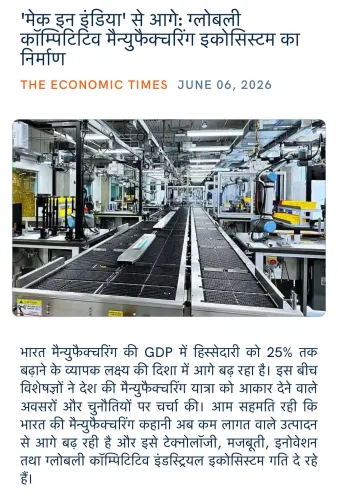
Global supply-chain realignments post-pandemic have created a renewed strategic opening for India's manufacturing scale-up.
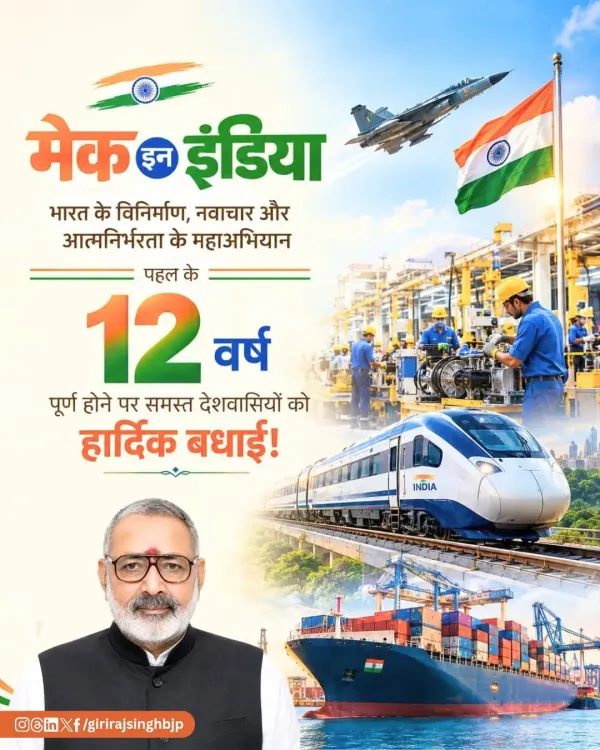
Twelve years after Prime Minister Narendra Modi launched one of independent India's most ambitious industrial bets, Union Textiles Minister Giriraj Singh marked the anniversary of the Make in India initiative on Friday, 25 September 2026, calling on fellow citizens to celebrate a journey that has reshaped the country's manufacturing ambitions.
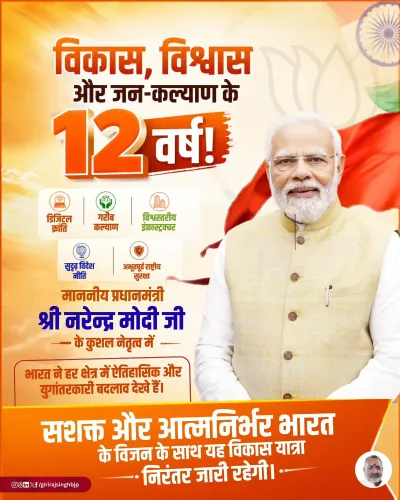
In a post on X, Singh wrote — 'भारत के विनिर्माण, नवाचार और आत्मनिर्भरता के महाअभियान' — hailing Make in India as 'the grand campaign of India's manufacturing, innovation and self-reliance,' and congratulating the country on completing 12 years of the initiative. He described India as 'emerging as a global manufacturing hub' under the Prime Minister's leadership, and underscored the country's march toward self-reliance enriched by indigenous strength, employment, and technology.
A milestone born on 25 September 2014
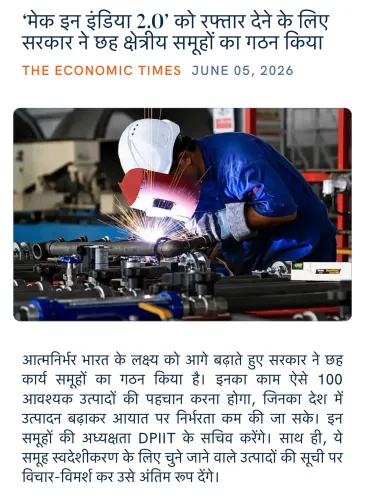
Make in India was launched by Prime Minister Modi on 25 September 2014 with a single, sharp proposition: turn India into a preferred destination for global manufacturing and raise the share of industry in the national economy. The iconic prowling-lion logo — assembled from industrial cogs and gears — became a symbol of the ambition. Successive Union Budgets followed with policy scaffolding: eased foreign direct investment norms, streamlined regulatory approvals, and a concerted push to improve ease of doing business rankings.
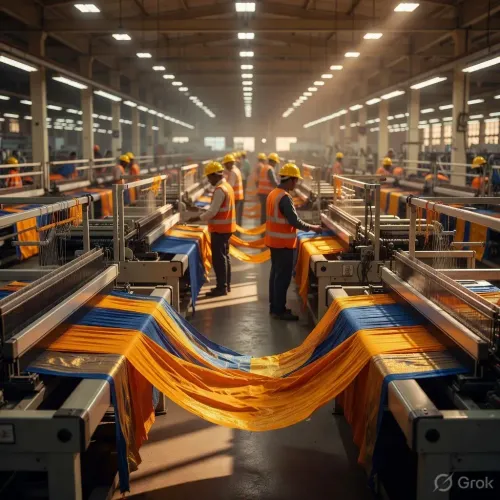
The initiative targeted 25 broad sectors, from defence and aerospace to food processing and textiles — the last being squarely within Singh's own ministerial portfolio. For a minister who oversees one of India's largest employment-generating industries, the anniversary carries direct professional resonance.
How Atmanirbhar Bharat extended the original vision
When the Atmanirbhar Bharat campaign arrived in 2020, it did not replace Make in India — it sharpened it. Where the earlier initiative courted global investment and export integration, Atmanirbharta layered on a demand for domestic value addition and reduced import dependence. The logic: India should not merely assemble for the world but design, produce, and own the supply chain. Production Linked Incentive (PLI) schemes rolled out across more than a dozen sectors became the financial instrument that fused both ideas — rewarding firms that manufactured in India and scaled output above defined thresholds.
Manufacturers, MSMEs, and millions of employment seekers are the direct stakeholders in this twelve-year arc. The PLI framework in textiles alone targeted fresh investment and the creation of a significant number of new jobs in apparel and man-made fibre segments — a pipeline that Singh has championed through his tenure.
Why the 12th anniversary lands differently
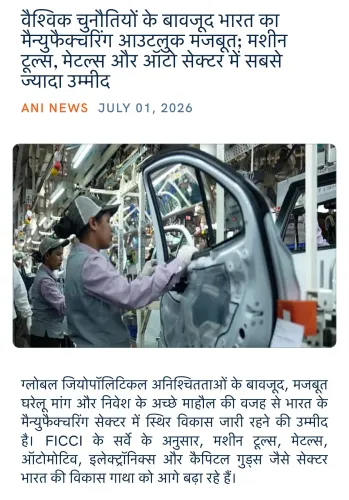
Global supply-chain recalibration — accelerated by geopolitical realignments and a post-pandemic hunt for alternatives to concentrated manufacturing nodes — has given India a structural opening it did not have in 2014. The question that will define the next chapter is whether India converts that opening into durable industrial capacity. Upcoming Union Budget announcements and industry summits are the next real stress-tests for the initiative's momentum.
Giriraj Singh's message, brief as it is, signals that the BJP's political identity remains tightly woven into the Make in India narrative heading into its second decade — and that the government intends to keep the anniversary front of mind with voters and investors alike.
Twelve years in, the cogs on the lion are still turning. Whether they turn fast enough to meet the ambition is the story of the next twelve.
Point of View
Presenting the two not as separate initiatives but as a single unbroken arc. For the ruling party, the anniversary is an opportunity to claim credit for structural shifts in India's industrial landscape at a moment when global supply chains are actively being redrawn. The real test, however, lies in whether upcoming budget and summit announcements translate the narrative into measurable new capacity.
NationPress
25 Sept 2026
Frequently Asked Questions
When was Make in India launched?
Make in India was launched by Prime Minister Narendra Modi on 25 September 2014, completing 12 years in 2026.
What is the goal of Make in India?
Make in India aims to position India as a preferred global manufacturing destination, raise the share of manufacturing in GDP, attract foreign direct investment, and create large-scale employment.
What is the difference between Make in India and Atmanirbhar Bharat?
Make in India focuses on attracting investment and integrating India into global value chains, while Atmanirbhar Bharat (launched 2020) extends that goal by emphasising domestic value addition and reducing India's dependence on imports.
What did Giriraj Singh say about Make in India's 12th anniversary?
Union Textiles Minister Giriraj Singh congratulated the country, called India an 'emerging global manufacturing hub' under PM Modi's leadership, and highlighted indigenous strength, employment, and technology as pillars of India's self-reliance journey.
What are PLI schemes and how do they relate to Make in India?
Production Linked Incentive (PLI) schemes offer financial incentives to companies that manufacture in India and scale output above defined thresholds — they serve as the key fiscal instrument combining the Make in India and Atmanirbhar Bharat frameworks across more than a dozen sectors.