Rajasthan CM's Office: ₹1,220 Cr Spent on School Infra in 2 Years
Synopsis
The Chief Minister's Office of Rajasthan announced that the state government has sanctioned 3,364 school infrastructure works and spent ₹1,220 crore over two years, highlighting CM Bhajanlal Sharma's education development record.
Key Takeaways
3,364 school infrastructure works have been sanctioned by the Rajasthan government in the past two years. ₹1,220 crore has already been spent on these school facility upgrades.
The announcement was made by the Chief Minister's Office of Rajasthan on 25 September 2026 , tagging CM Bhajanlal Sharma .
The Samagra Shiksha Abhiyan is the primary central-state funding pipeline for such school infrastructure works in Rajasthan.
Completion and utilisation reports for the sanctioned works remain the key measure of on-ground impact.
More than 3,364 school infrastructure works sanctioned, over ₹1,220 crore already spent — Rajasthan's Chief Minister's Office put those numbers on record on Friday, 25 September 2026, in a post crediting the state government's two-year push to upgrade facilities in government schools across the state.
The post, tagging Chief Minister Bhajanlal Sharma and carrying the hashtag #आपणो_अग्रणी_राजस्थान ('Our Leading Rajasthan'), frames the expenditure as a marker of the BJP administration's commitment to basic education infrastructure since it took office in December 2023.
3,364 Works, ₹1,220 Crore — What the Numbers Mean
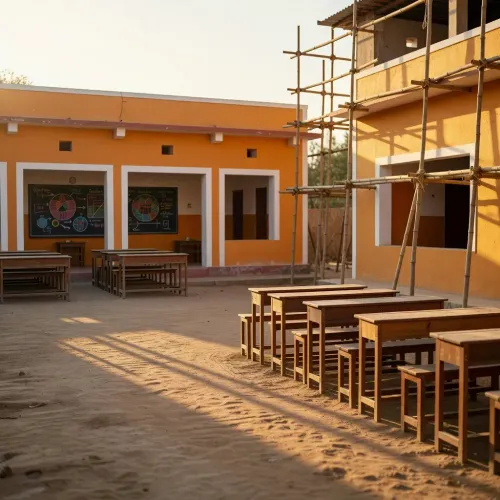
The CMO's statement translates to an average spend of roughly ₹36 lakh per sanctioned work — the kind of unit cost consistent with construction of classrooms, toilets, boundary walls, drinking-water facilities, and lab upgrades that routinely figure in state school development plans. The Samagra Shiksha Abhiyan, a centrally-sponsored scheme that pools central and state funds for school infrastructure, has historically been the primary pipeline for such expenditure in Rajasthan, channelling money to both primary and secondary-level institutions.
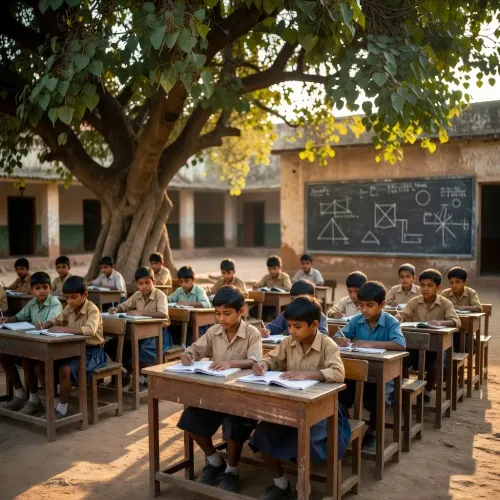
Rajasthan has one of the largest government school networks in India — hundreds of thousands of students in rural and semi-urban areas depend almost entirely on state-run institutions for their education. Infrastructure gaps — from the absence of functional toilets to classrooms without roofs — have long been documented as a driver of dropout rates, particularly among girls.
Sharma's Education Infrastructure Bet
Chief Minister Bhajanlal Sharma, who came to power after the BJP's win in the November 2023 Rajasthan assembly elections, has consistently positioned school upgrades as a visible governance deliverable. Tagging the CM directly in the post signals that the administration wants this spending record associated personally with his tenure — a standard political communication move ahead of budget cycles and annual school enrollment seasons.
The broader pattern here is recognisable: state governments across India increasingly use verified capital expenditure figures on education as a counter to criticism of learning-outcome deficits, arguing that physical infrastructure is a necessary — if not sufficient — foundation for quality schooling. Whether the sanctioned works have been completed, and what share remain under execution, would be the sharper measure of actual progress on the ground.
What the Next Budget Cycle Will Reveal
The real test of this investment will come when the state's education department publishes completion and utilisation reports for the sanctioned works. Annual budget allocations for Samagra Shiksha in Rajasthan, and the state's own matching-fund commitments, will indicate whether the pace of sanctioning and spending is set to hold — or whether the ₹1,220 crore figure represents a front-loaded push that slows in the years ahead.
For now, the Rajasthan government has placed a clear stake in the ground: two years, 3,364 works, ₹1,220 crore. The schools — and the students filling them — will be the final auditors.
Point of View
Positioning infrastructure investment as a proxy for administrative intent. However, capital spending alone does not address Rajasthan's persistent learning-outcome challenges, and the gap between sanctioned works and completed, functional facilities will define whether this investment translates into political and social dividends. The hashtag 'Aapno Agrani Rajasthan' ('Our Leading Rajasthan') signals a broader state-branding effort anchored in development optics.
NationPress
25 Sept 2026
Frequently Asked Questions
How much has Rajasthan spent on school infrastructure in the last two years?
The Rajasthan government has spent ₹1,220 crore on school infrastructure development over the past two years, sanctioning 3,364 works across the state.
Who is the Chief Minister of Rajasthan in 2026?
Bhajanlal Sharma of the BJP has been Chief Minister of Rajasthan since December 2023 , following the party's victory in the November 2023 state assembly elections.
What is Samagra Shiksha Abhiyan and does it fund Rajasthan schools?
Samagra Shiksha Abhiyan is a centrally-sponsored scheme launched in 2018 that provides combined central and state funding for school infrastructure upgrades; it is a primary channel for school facility development in Rajasthan.
What does the hashtag Aapno Agrani Rajasthan mean?
Aapno Agrani Rajasthan is a Hindi/Rajasthani phrase meaning 'Our Leading Rajasthan,' used by the state government as a campaign slogan to brand its development and governance initiatives.
What kind of works are included in Rajasthan school infrastructure projects?
School infrastructure works typically include construction of classrooms, toilets, boundary walls, drinking-water facilities, and laboratory upgrades in government primary and secondary schools.