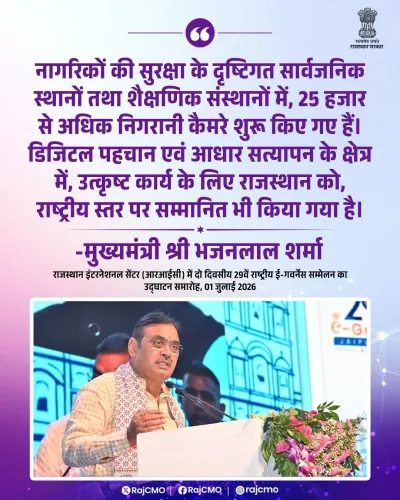
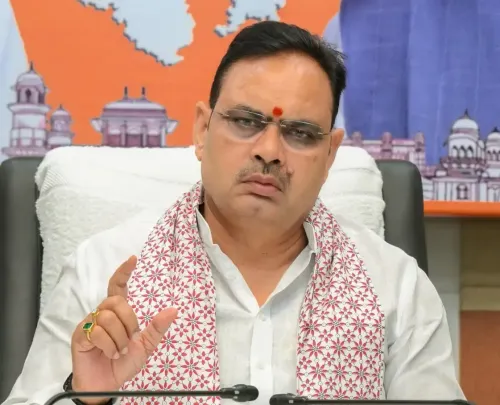
Rajasthan CMO: 65,308 govt schools surveyed across all 41 districts
Synopsis
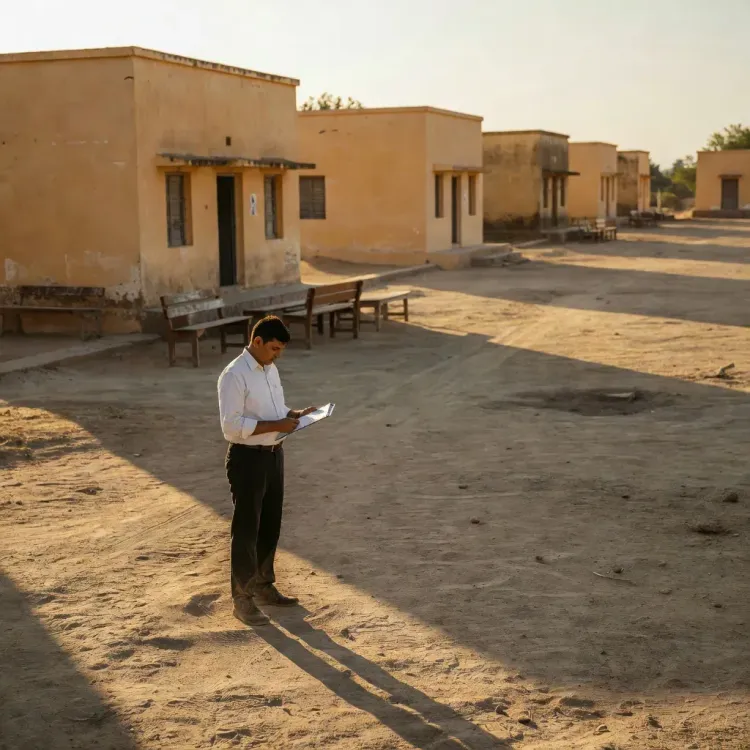
The Rajasthan Chief Minister's Office has announced the completion of an intensive technical survey of all 65,308 government schools across the state's 41 districts, a baseline audit likely to shape school infrastructure spending under the Samagra Shiksha Abhiyan framework.
Key Takeaways
65,308 government schools across all 41 districts of Rajasthan have been covered in the intensive technical survey.
The survey was announced by the Chief Minister's Office of Rajasthan on 25 September 2026 , with CM Bhajanlal Sharma tagged directly.
The exercise is framed under the hashtag #आपणो_अग्रणी_राजस्थान ('Our Leading Rajasthan'), signalling it as a flagship governance milestone.
Technical surveys of this kind feed into Samagra Shiksha Abhiyan annual state project reports that determine central grant allocations.
Survey findings are expected to inform upcoming budget allocations and tendering for school infrastructure upgrades.
A sweeping technical audit has quietly mapped every government school in Rajasthan — all 65,308 of them, spread across all 41 districts of the state. The Chief Minister's Office of Rajasthan announced the completion of the intensive survey on Friday, 25 September 2026, tagging Chief Minister Bhajanlal Sharma in a post that carried the hashtag #आपणो_अग्रणी_राजस्थान ('Our Leading Rajasthan').
What the survey covers — and why the scale matters
The CMO described the exercise as a 'sघन तकनीकी सर्वे' — a 'dense technical survey' — conducted across all state-run schools without exception. At 65,308 schools, the sweep is among the largest single-state school infrastructure assessments attempted in India, touching every corner of Rajasthan from the Thar desert's western fringe to the Hadoti plateau in the east.
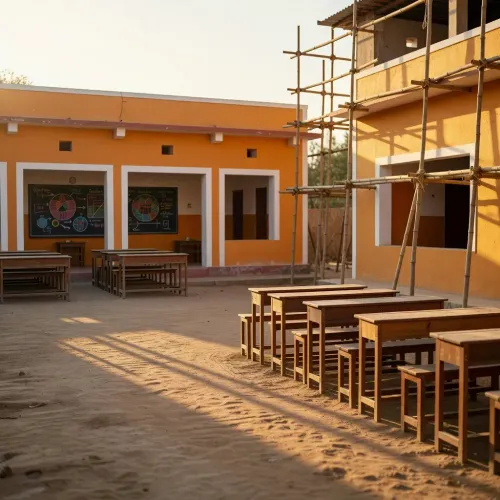
State governments conduct such technical surveys to map physical infrastructure — classrooms, toilets, boundary walls, electricity connections — as well as digital readiness and maintenance backlogs. The data generated typically feeds directly into resource-allocation decisions: which schools get new buildings, which get electrification, and which are prioritised under centrally sponsored programmes.
Samagra Shiksha and the policy framework behind the audit
Rajasthan has conducted periodic school infrastructure assessments under the Samagra Shiksha Abhiyan framework since 2018–19, a centrally sponsored scheme that pools funds across elementary and secondary education. Technical surveys feed annual state project reports submitted to the Union government, which in turn determine grant allocations to the state.
The Bhajanlal Sharma administration, which took office in December 2023, has positioned infrastructure upgrades in government schools as a visible governance priority. A comprehensive baseline survey of this scale gives the administration granular district-level data to negotiate larger central grants and to sequence repair and modernisation work in the upcoming state budget cycle.
What comes next for Rajasthan's 65,308 schools
The survey's real test lies in what follows: whether findings are published, how infrastructure gaps are ranked, and whether the next state budget or education department action plan translates the data into concrete tenders and fund releases. With 41 districts and tens of thousands of schools in the pipeline, even a phased upgrade programme would represent one of the state's largest education infrastructure spends in recent memory.
For the students and teachers inside these schools — many in remote, underserved blocks — the survey is, for now, a promise on paper. The numbers will mean something the day a new classroom goes up or a broken roof comes down.
Point of View
Nearly three years into the BJP administration's term, suggests the data will be weaponised ahead of the next budget cycle to justify large infrastructure spends in education. The real accountability question is downstream: whether survey data becomes public, how gaps are prioritised, and whether allocations reach the most underserved schools — or cluster around politically visible ones.
NationPress
25 Sept 2026
Frequently Asked Questions
How many government schools were surveyed in Rajasthan?
A total of 65,308 government schools across all 41 districts of Rajasthan were covered in the intensive technical survey announced on 25 September 2026.
What is the purpose of the technical survey of Rajasthan schools?
The survey maps infrastructure gaps, digital readiness, and maintenance needs in government schools. The findings feed into state project reports under the Samagra Shiksha Abhiyan , helping the state determine where to direct repair, construction, and modernisation spending.
Who ordered the Rajasthan school survey?
The survey was announced by the Chief Minister's Office of Rajasthan , with Chief Minister Bhajanlal Sharma tagged in the official post, indicating the initiative is being driven at the highest level of the state government.
What is Samagra Shiksha Abhiyan and how is it linked to this survey?
Samagra Shiksha Abhiyan is a centrally sponsored scheme that funds school education infrastructure across India. Rajasthan has used technical surveys since 2018–19 to file annual state project reports under the scheme, which determine how much central grant money the state receives.
What will happen after the Rajasthan school survey is complete?
The next expected steps include publication of survey findings and the incorporation of identified infrastructure gaps into the state's upcoming budget or education department action plan, potentially triggering tenders for school upgrades and repairs.