Jaishankar meets Saudi FM Faisal at Gymnich Forum
Synopsis
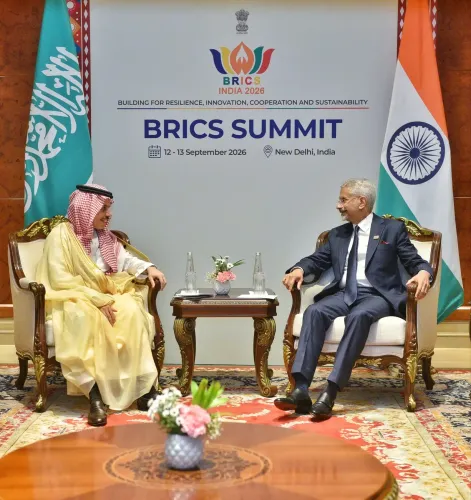
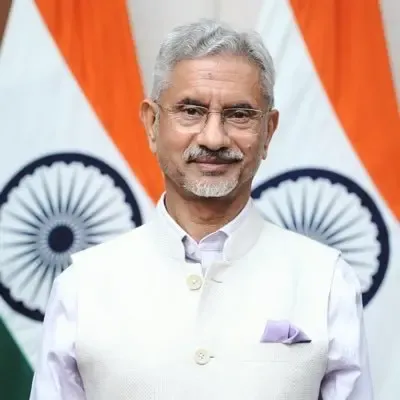
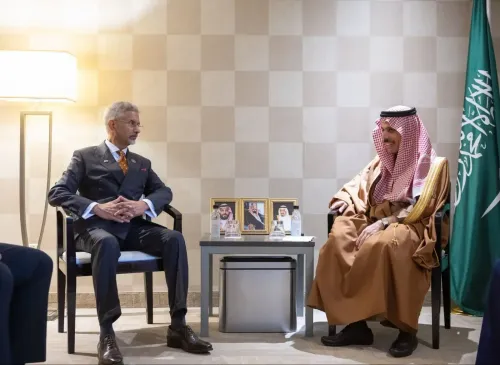
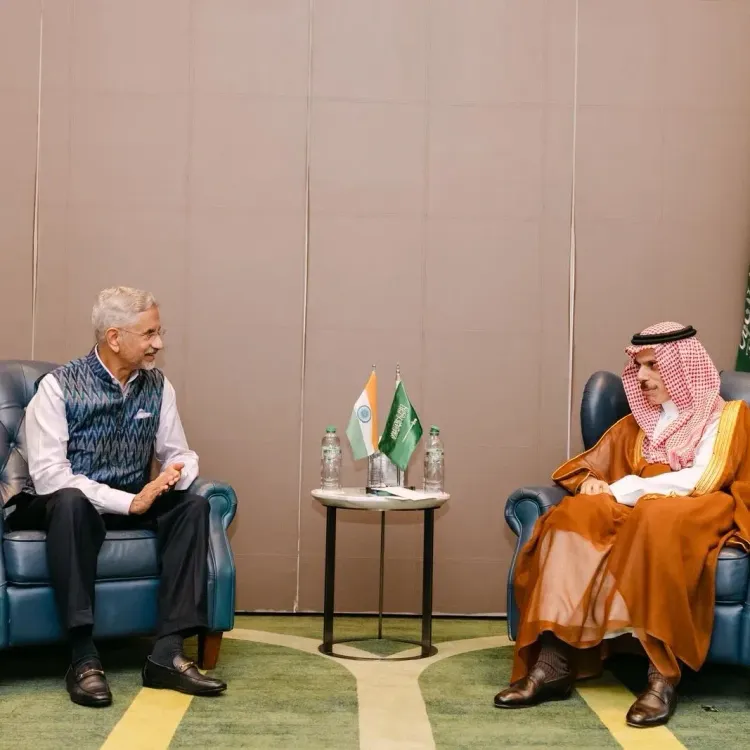
External Affairs Minister Dr. S. Jaishankar met Saudi Foreign Minister Prince Faisal bin Farhan at the Gymnich Forum on 27 May 2026, exchanging assessments on the evolving West Asia situation. The bilateral underscores India's sustained Gulf outreach anchored in energy security, diaspora welfare and regional stability.
Key Takeaways
Jaishankar met Saudi FM Prince Faisal bin Farhan on the sidelines of the Gymnich Forum on 27 May 2026 .
Discussions focused on the 'evolving situation in West Asia/Middle East ,' per Jaishankar's own post.
Saudi Arabia is India's largest regional trading partner and a top crude oil supplier.
More than 2.6 million Indian expatriates reside in Saudi Arabia , giving the bilateral relationship a strong humanitarian dimension.
The meeting continues a pattern of regular high-level engagement under the India-Saudi Arabia Strategic Partnership Council established in 2019 .
Next focus point: the upcoming formal session of the India-Saudi Strategic Partnership Council and potential leadership-level visits before end- 2026 .
Union External Affairs Minister Dr. S. Jaishankar met Saudi Arabia's Foreign Minister Prince Faisal bin Farhan on the sidelines of the Gymnich Forum on Wednesday, 27 May 2026, holding discussions centred on the rapidly evolving situation in West Asia and the Middle East. Jaishankar described the meeting as productive, saying he valued the Saudi minister's 'assessments and insights on the evolving situation in West Asia/Middle East.'
Context
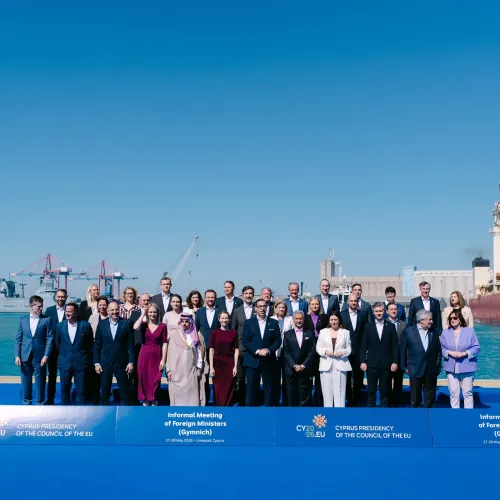
The Gymnich Forum is an informal gathering of European Union foreign ministers, but its sidelines have become a well-established venue for bilateral engagements between EU and non-EU diplomats. Dr. Jaishankar used the occasion to hold a direct conversation with Prince Faisal bin Farhan, who has served as Saudi Arabia's Foreign Minister since 2019 and is the kingdom's primary voice on regional security and energy diplomacy.
The meeting comes against the backdrop of sustained turbulence across West Asia, where shifting alliances, active conflict zones and energy market volatility have significant downstream consequences for India. New Delhi has consistently sought first-hand assessments from Gulf partners to calibrate its own diplomatic and economic responses.
Policy Backdrop
India and Saudi Arabia elevated their relationship to a Strategic Partnership during Prime Minister Narendra Modi's visit to Riyadh in 2016. Three years later, Crown Prince Mohammed bin Salman's visit to New Delhi in 2019 led to the formation of the India-Saudi Arabia Strategic Partnership Council, a high-level mechanism covering energy, trade, defence and people-to-people ties.
Saudi Arabia is India's largest regional trading partner and one of its top suppliers of crude oil, making the kingdom a linchpin of India's energy security calculus. The bilateral relationship also carries deep humanitarian weight: more than 2.6 million Indian expatriates live and work in Saudi Arabia, constituting one of the largest Indian diaspora communities anywhere in the world.
Dr. Jaishankar has engaged Saudi counterparts multiple times between 2022 and 2024 on questions of trade, investment and regional stability, underscoring the regularity and depth of the diplomatic channel. This latest meeting continues that cadence at a multilateral venue.
Stakeholders and Impact
India's energy importers and refiners watch West Asia developments closely, as disruptions to Gulf supply routes translate directly into domestic fuel prices and inflation. Any intelligence shared between the two foreign ministers on regional de-escalation or conflict trajectories feeds into New Delhi's broader energy and logistics planning.
The 2.6 million-strong Indian community in Saudi Arabia also has a direct stake in the stability of the kingdom and the wider region. India's 'Think West' diplomatic doctrine — which treats the Gulf as part of the country's extended neighbourhood — means that welfare diplomacy and strategic diplomacy are pursued simultaneously in every high-level engagement with Riyadh.
Defence and infrastructure exporters are another constituency that tracks India-Saudi ties, given the kingdom's ambitious Vision 2030 diversification programme and its growing appetite for defence procurement and technology partnerships.
What's Next
Attention will now turn to the next formal session of the India-Saudi Arabia Strategic Partnership Council, which serves as the institutional vehicle for translating high-level diplomatic signals into concrete agreements. Sideline meetings such as this one at the Gymnich Forum typically set the agenda and tone for those more structured engagements.
With West Asia remaining in flux, New Delhi's sustained outreach to Riyadh signals that India intends to remain an active, informed stakeholder in regional affairs — one that balances ties with multiple Gulf and Middle Eastern capitals while protecting its core interests in energy security and diaspora welfare.
Point of View
New Delhi's ability to receive candid assessments from Riyadh directly informs both its energy hedging strategy and its broader non-alignment calculus. The regularity of Jaishankar-Saudi contacts since 2022 signals that this channel has matured well beyond ceremonial courtesy. Expect the conversation to feed into India's positioning at upcoming multilateral forums and the next Strategic Partnership Council session.
NationPress
12 Oct 2026
Frequently Asked Questions
Why did Jaishankar meet Saudi FM Faisal bin Farhan at the Gymnich Forum?
The two ministers used the Gymnich Forum sidelines on 27 May 2026 to exchange assessments on the evolving situation in West Asia and the Middle East, a region of critical importance to India's energy security and diaspora welfare.
What is the Gymnich Forum?
The Gymnich Forum is an informal gathering of European Union foreign ministers; its sidelines are frequently used by non-EU diplomats for bilateral meetings, making it a convenient venue for global diplomatic exchanges.
What is the state of India-Saudi Arabia relations in 2026?
India and Saudi Arabia maintain a Strategic Partnership established in 2016 and deepened through the India-Saudi Arabia Strategic Partnership Council formed in 2019, covering energy, trade, defence and people-to-people ties.
How many Indians live in Saudi Arabia?
More than 2.6 million Indian expatriates live and work in Saudi Arabia, making it one of the largest Indian diaspora communities in the world and a key factor in bilateral diplomacy.
What is India's 'Think West' policy?
'Think West' is India's diplomatic doctrine that treats the Gulf and broader West Asia as part of its extended neighbourhood, prioritising energy security, diaspora welfare and counter-terrorism cooperation with countries like Saudi Arabia, UAE and others in the region.