CM Revanth Reddy Orders Crop Shift as El Niño Bites Telangana
Synopsis
Chief Minister Revanth Reddy received an expert panel's El Niño impact report on 30 July 2026 and directed Telangana's Agriculture Department to promote vegetable, millet, pulse and oilseed cultivation with 75 percent seed subsidies, new crop loans, extension officers and direct farmer procurement.
Key Takeaways
Expert committee led by Planning Commission Vice Chairman G.
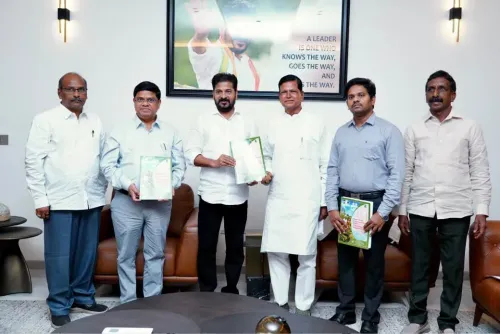
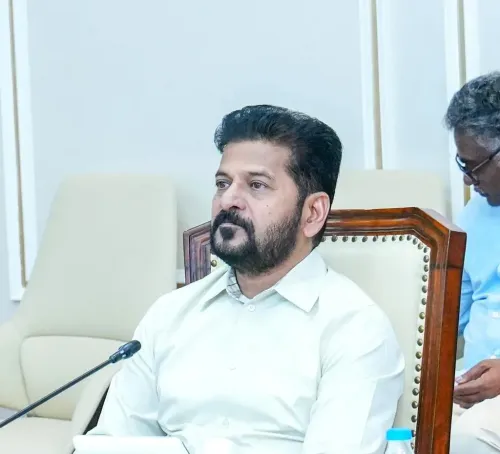
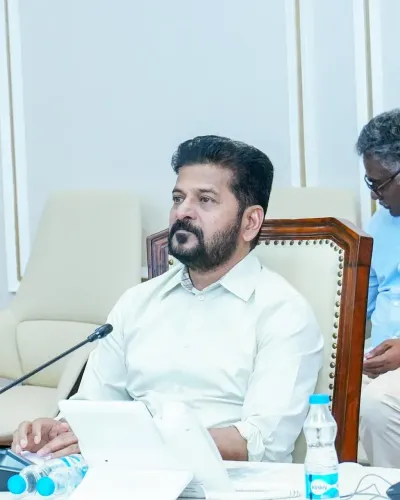
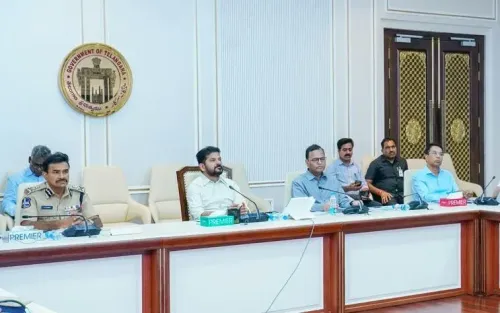
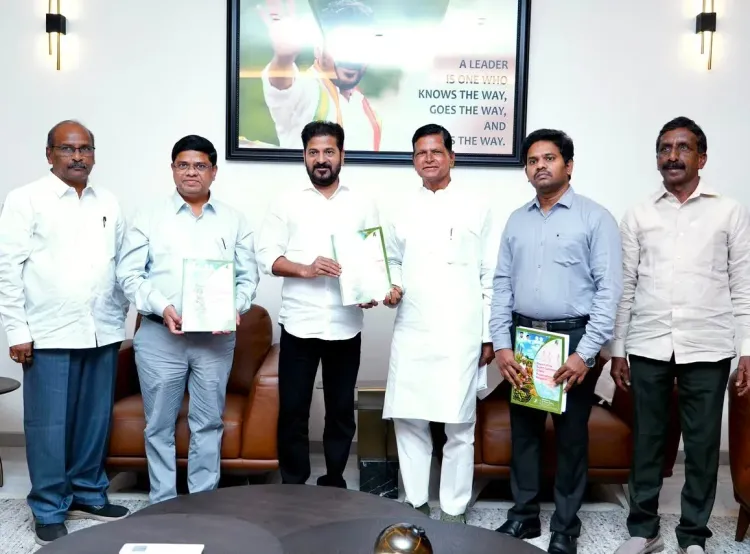
Chinnareddy submitted El Niño and drought-impact report to CM Revanth Reddy at Bodhi Pavilion, MCR HRD Institute on 30 July 2026 .
Report recommends 75 percent subsidised seeds for alternative crops — vegetables, millets, pulses and oilseeds — with village-wise emergency action plans.
CM directed focus on vegetable cultivation near Centralised Kitchens supplying breakfast and mid-day meals to government school students.
Agriculture Department extension officers to be deployed for farmer awareness on organic cultivation and direct procurement from growers.
Report calls for better transport links to Rythu Bazars , financial support for rural dairy units , and village-level monitoring teams.
New crop loans to be sanctioned specifically for farmers switching to alternative crops this season.
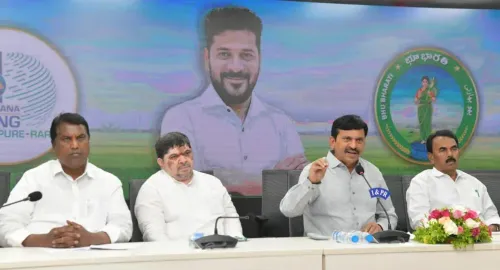
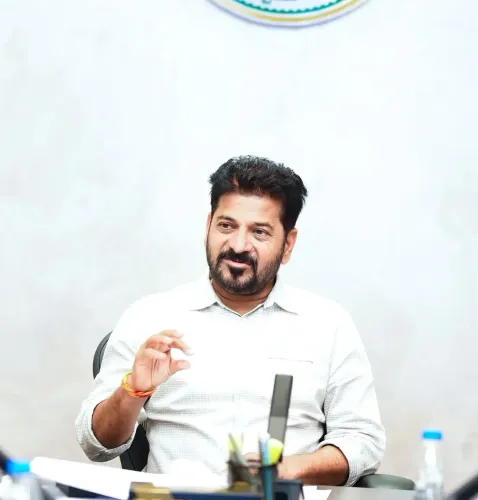
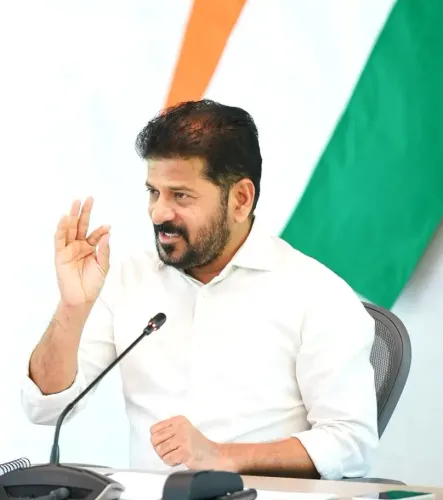
With deficient rains already shrinking sown acreage across Telangana, Chief Minister Revanth Reddy on Thursday, 30 July 2026 received a formal expert-committee report on El Niño impacts and immediately directed the Agriculture Department to pivot the state's farming strategy — pushing vegetables, millets, pulses and oilseeds over water-hungry crops, and promising seeds at a 75 percent subsidy.
The report that landed on the CM's desk
The expert committee, chaired by Telangana State Planning Commission Vice Chairman G. Chinnareddy, presented its findings at the Bodhi Pavilion, MCR HRD Institute, Hyderabad. The report maps El Niño-linked rainfall deficits, documents the resulting fall in cultivated area this season, and lays out an emergency action framework — village by village. It recommends promoting pulses, oilseeds, millets and vegetables as alternatives to paddy, extending 75 percent subsidised seeds to farmers who make the switch, and sanctioning fresh crop loans specifically for alternative crops.
The committee also called for deploying agricultural university scientists as technical advisers to farmers on the ground — a recognition that input subsidies alone rarely change cropping behaviour without hand-holding at the field level.
Vegetable farms feeding school kitchens
One of the sharper directives to emerge from the meeting: the state's newly constructed Centralised Kitchens — built to supply breakfast and mid-day meals to government school students — should anchor a local vegetable supply chain. CM Revanth Reddy instructed officials to encourage vegetable cultivation in the areas surrounding these kitchens, creating a captive, government-backed demand channel for small growers. It is a practical loop: drought-resilient crops grown close to schools, bought directly by the government, reducing both farmer risk and supply-chain cost.
Extension officers, Rythu Bazars and dairy units
The CM directed the Agriculture Department to post extension officers in affected divisions to run farmer-awareness programmes on organic cultivation of vegetables and other crops. Direct procurement from farmers — cutting out middlemen — was flagged as a priority. The committee's report separately recommended improving transport links between Hyderabad-periphery villages and Rythu Bazars, the state's direct-marketing outlets, so that vegetable growers can actually move produce to buyers. It also called for financial support to set up dairy units in rural areas as an additional income buffer, and for village-level monitoring teams to track emergency measure implementation in real time.
Telangana has run the Rythu Bandhu income-support scheme for farmers since 2018, and has periodically nudged cultivation away from paddy during drought years — but the scale and specificity of this committee's village-wise emergency planning marks a more structured response to climate stress than earlier seasonal advisories. The next test is whether the 75 percent seed subsidy and new crop loans reach farmers before the next sowing window closes.
Point of View
Committee-driven response signals that Telangana is treating El Niño not as a one-off weather event but as a recurring climate risk requiring institutional architecture — village-level teams, university scientists, and captive demand via school kitchens. Linking the crop-diversification push to the Centralised Kitchen supply chain is politically smart: it converts a welfare scheme into an agricultural market, giving small vegetable growers a guaranteed buyer. The real measure of ambition, however, will be the speed of seed subsidy disbursal and loan sanction — both of which have historically lagged the sowing calendar in drought years across Indian states.
NationPress
14 Sept 2026
Frequently Asked Questions
What is the Telangana government doing about El Niño and drought in 2026?
The Telangana government received an expert committee report on El Niño impacts on 30 July 2026 and directed the Agriculture Department to promote alternative crops — vegetables, millets, pulses and oilseeds — with 75 percent seed subsidies, new crop loans, and village-level emergency action plans.
What is the 75 percent seed subsidy announced by Telangana?
The expert committee recommended providing seeds for alternative crops such as vegetables, pulses, millets and oilseeds at a 75 percent subsidy to encourage farmers to shift away from water-intensive crops during the current drought season.
What are Rythu Bazars and how do they help Telangana farmers?
Rythu Bazars are government-run direct-marketing outlets where farmers can sell produce without middlemen. The expert committee recommended improving transport links between Hyderabad-area villages and Rythu Bazars specifically to support vegetable growers.
Who led the El Niño expert committee in Telangana?
The expert committee was chaired by G. Chinnareddy , Vice Chairman of the Telangana State Planning Commission, and presented its report to Chief Minister Revanth Reddy at the Bodhi Pavilion, MCR HRD Institute, Hyderabad.
How are Telangana's Centralised Kitchens connected to the crop diversification plan?
CM Revanth Reddy directed that vegetable cultivation be promoted in areas surrounding the state's new Centralised Kitchens — facilities that supply breakfast and mid-day meals to government school students — creating a government-backed local demand channel for small farmers.