CM Revanth Reddy Urges Telangana Farmers to Diversify Kharif Crops
Synopsis
Chief Minister A. Revanth Reddy greeted Telangana farmers on Mrigashira Karte and urged them to adopt crop diversification and rotation for Kharif 2026, citing weather department warnings of possible below-normal rainfall and the state's growing import dependence on pulses and oilseeds.
Key Takeaways
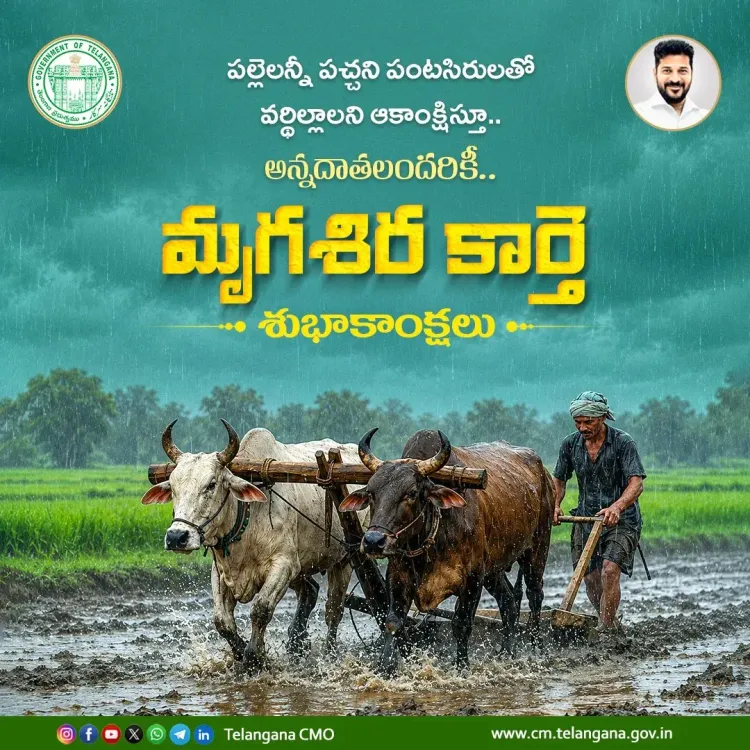
CM Revanth Reddy extended greetings to farmers on Mrigashira Karte , the traditional start of the monsoon sowing season in Telangana.
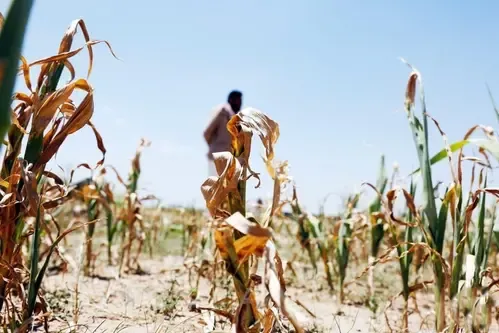
The weather department has flagged the possibility of below-normal rainfall in some parts of Telangana during Kharif 2026 .
Telangana is currently importing pulses, groundnut, green gram, black gram, and sesame due to over-concentration on a limited set of crops.
Crop rotation was recommended by the CM to restore soil fertility, reduce pest pressure, and improve long-term yields.
Farmers were advised to follow guidance from both the State Agriculture Department and the weather department before finalising their sowing plans.
The state's Rythu Bandhu scheme provides direct financial support to farmers ahead of each Kharif season to aid crop planning.
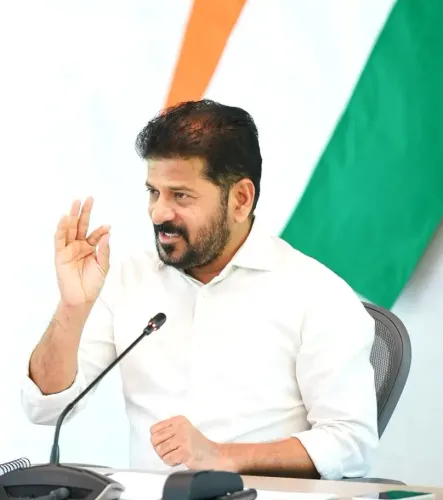
The Chief Minister's Office of Telangana announced on Monday, 8 June 2026 that Chief Minister A. Revanth Reddy has extended greetings to farmers across the state on the occasion of Mrigashira Karte, the traditional astrological marker that signals the start of the monsoon sowing season, while urging cultivators to prepare for Kharif 2026 with crop diversification and weather-informed planning.
Context
Mrigashira Karte (మృగశిర కార్తె) is a deeply rooted agricultural milestone in Telangana and neighbouring Andhra Pradesh, marking the period when farmers traditionally begin preparing fields for the monsoon crop cycle. CM Revanth Reddy expressed hope that 'agriculture should be celebrated as a festival, and the first showers of the season should fill the homes of farmers and agricultural labourers with joy.' The message was shared via the official @TelanganaCMO handle on X.
Policy Backdrop
The Chief Minister's advisory this season carries a pointed economic caution: over-reliance on a narrow range of crops has forced Telangana to import pulses and oilseeds — including lentils, groundnut, green gram, black gram, and sesame — straining both farm incomes and state food security. He called on farmers to heed guidance from the State Agriculture Department and factor in early forecasts from the weather department, which indicate the possibility of below-normal rainfall in certain regions this season.
The Chief Minister also flagged that continuous mono-cropping depletes soil fertility and increases pest pressure over time. He recommended crop rotation as a solution that simultaneously restores soil health and improves long-term yields, aligning with the Telangana Agriculture Department's annual Kharif advisories. The state has in previous seasons promoted diversification to reduce import dependence on pulses and oilseeds, a challenge shared by several Indian states navigating climate variability.
Stakeholders and Impact
Telangana is home to millions of farming households for whom the Kharif season — anchored by crops such as paddy, cotton, maize, and pulses — is the primary income cycle. Agricultural labourers, who depend on seasonal field work, are equally affected by crop choices and rainfall adequacy. The state's Rythu Bandhu scheme, launched in 2018, provides direct investment support to farmers ahead of each sowing season, giving cultivators a financial base to experiment with diversified cropping patterns.
A shift toward pulses, oilseeds, and mixed crops could reduce the state's import bill, improve farm-gate prices for growers of currently scarce commodities, and reduce the vulnerability of the agricultural economy to a single crop's price or yield fluctuation.
What's Next
All eyes will be on actual rainfall distribution across Telangana districts through June and July 2026, particularly in areas flagged for below-normal precipitation. The State Agriculture Department is expected to roll out block-level extension campaigns translating the Chief Minister's broad advisory into specific crop and variety recommendations for different agro-climatic zones. Any supplementary state packages — covering seeds, soil-health cards, or insurance top-ups for diversified crops — will determine how effectively the seasonal message translates into field-level action.
Point of View
The Chief Minister is laying the political groundwork for a more assertive crop-diversification push in the season ahead. The advisory also signals that the Congress-led state government is positioning farmer welfare through the lens of agronomic sustainability rather than input subsidies alone. Whether the message reaches the last-mile farmer will depend on the extension machinery's follow-through in the weeks immediately after sowing decisions are made.
NationPress
27 Oct 2026
Frequently Asked Questions
What is Mrigashira Karte and why is it important for Telangana farmers?
Mrigashira Karte is a traditional astrological period observed in Telangana and Andhra Pradesh that marks the beginning of the monsoon sowing season for Kharif crops. It is considered an auspicious time for farmers to start field preparations, and state governments typically issue agricultural advisories around this period.
What did CM Revanth Reddy say to farmers on Mrigashira Karte 2026?
CM Revanth Reddy extended greetings to farmers and agricultural labourers and urged them to prepare for Kharif 2026 by following crop diversification advice from the State Agriculture Department and taking into account weather department forecasts that indicate possible below-normal rainfall in some areas.
Why is Telangana importing pulses and oilseeds?
Telangana has to import pulses such as green gram and black gram, as well as oilseeds like groundnut and sesame, because farmers have concentrated on a limited range of crops over successive seasons. CM Revanth Reddy cited this as a key reason to adopt crop diversification during Kharif 2026.
What is crop rotation and how does it help Telangana farmers?
Crop rotation involves alternating different types of crops on the same land across seasons. CM Revanth Reddy recommended it because continuous mono-cropping depletes soil nutrients and increases pest problems, while rotation restores soil fertility and can deliver higher yields over the long term.
What is the Rythu Bandhu scheme in Telangana?
Rythu Bandhu is a Telangana government scheme launched in 2018 that provides direct financial investment support to farmers before each agricultural season, including Kharif, to help them meet input costs and plan their cropping decisions.