CM Bhajan Lal joins 15th RCNCA meet on Sardar Sarovar dues
Synopsis
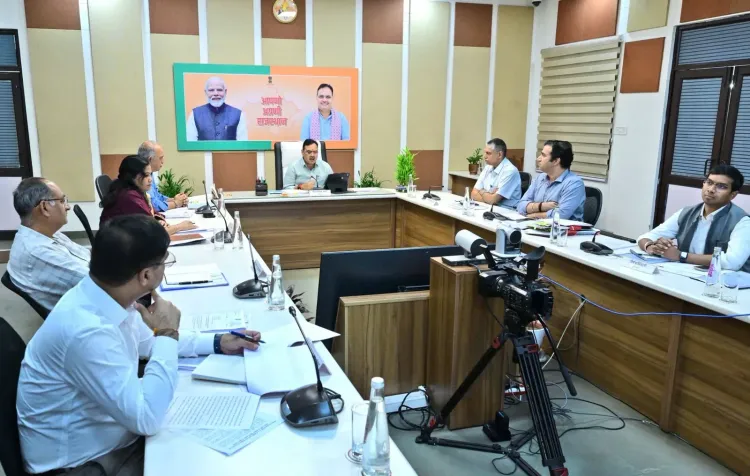
Rajasthan CM Bhajan Lal Sharma participated via video conference in the 15th RCNCA meeting chaired by Union Jal Shakti Minister C. R. Patil on 27 October 2026, where chief ministers of all four Sardar Sarovar basin states discussed finalising decades-old pending dues and a forward action plan.
Key Takeaways
The 15th RCNCA meeting was held on 27 October 2026 , chaired by Union Jal Shakti Minister C.
Rajasthan CM Bhajan Lal Sharma attended via video conferencing along with the chief ministers of Gujarat, Madhya Pradesh, and Maharashtra .
The meeting focused on finalising settlement of decades-old pending dues linked to the Sardar Sarovar Project .
The Narmada Control Authority was established under the 1979 Narmada Water Disputes Tribunal award to oversee cost sharing and water release among four basin states.
CM Sharma linked the meeting's progress to PM Modi's cooperative federalism framework for resolving inter-state water disputes.
Resolution of legacy dues is considered essential for smoother operation of the dam and its canal network, directly impacting farmers across four states .
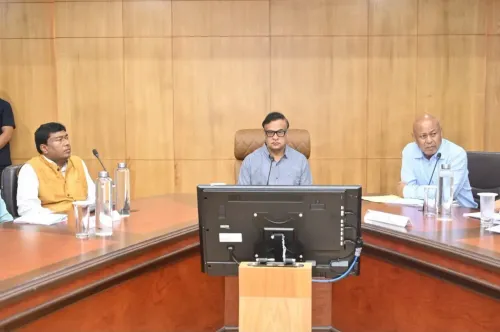
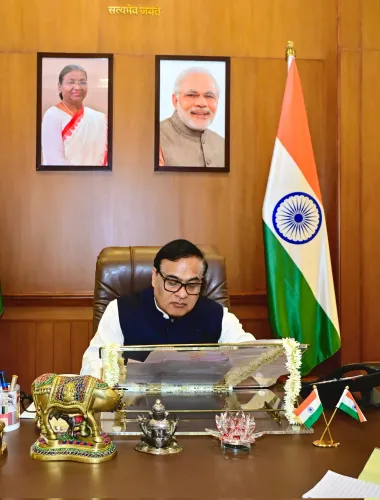
Decades of unresolved financial liabilities over one of India's largest river projects moved a step closer to resolution on Tuesday, 27 October 2026, as Rajasthan Chief Minister Bhajan Lal Sharma joined the 15th meeting of the Review Committee of the Narmada Control Authority (RCNCA) via video conferencing — a high-stakes inter-state huddle chaired by Union Jal Shakti Minister C. R. Patil.
Four chief ministers at one table over Narmada's long-pending dues
The meeting brought together the chief ministers of all four Sardar Sarovar Project basin states under a single forum. Maharashtra Chief Minister Devendra Fadnavis, Madhya Pradesh Chief Minister Dr. Mohan Yadav, and Gujarat Chief Minister Bhupendra Patel were present alongside CM Sharma, signalling the political weight each state is attaching to finally closing out legacy disputes.
The central agenda: finalising the settlement of decades-old pending dues linked to the Sardar Sarovar Project, and charting the road map for the next phase of coordinated action. CM Sharma, posting in Hindi, described the session as a platform for 'aantarrajyiya jal samjhauton ko nayi gati' — giving fresh momentum to inter-state water agreements.
What the Narmada Control Authority actually governs
The Narmada Control Authority (NCA) is no ordinary bureaucratic body. It was established under the landmark 1979 award of the Narmada Water Disputes Tribunal, which divided the river's waters among Gujarat, Madhya Pradesh, Maharashtra, and Rajasthan and tasked the NCA with overseeing project implementation, cost sharing, and water-release schedules ever since. Getting four state governments — each with distinct political and agricultural interests — to agree on apportionment has historically been slow going.
Clearing the pending dues matters practically: unresolved legacy liabilities can stall operation and maintenance funding for the dam and its vast canal network, directly affecting the irrigation supply that farmers across the basin depend on.
Cooperative federalism framing and what Rajasthan stands to gain
CM Sharma framed the meeting explicitly within Prime Minister Narendra Modi's 'cooperative federalism' vision — the idea that Centre-state and inter-state coordination, rather than litigation, should resolve shared resource disputes. Rajasthan, the most downstream of the four states, has a direct stake: its allocated share of Narmada water is critical to arid western districts where groundwater is scarce and farmer distress is a perennial political pressure point.
The RCNCA mechanism is the primary forum through which such coordination is formalised, making its 15th meeting a checkpoint on how effectively that vision is translating into financial and operational reality on the ground.
If the pending dues are cleared and a fresh action plan is locked in, farmers across four states — from Madhya Pradesh's Narmada Valley to Rajasthan's Barmer and Jalore districts — could see more reliable water delivery. The political will was visible on the screen today. The follow-through is what the basin is watching.
Point of View
A priority that has eluded multiple governments since 1979. For Rajasthan, participating visibly at such forums carries domestic political value: the state's BJP government can demonstrate proactive pursuit of water security for its drought-prone west. The cooperative federalism framing by CM Sharma is also a deliberate alignment with the central BJP leadership's preferred narrative on Centre-state relations. Whether the 15th meeting produces binding financial commitments, or remains a consultative step, will determine whether this round of coordination breaks the cycle of deferred dues.
NationPress
27 Oct 2026
Frequently Asked Questions
What is the Narmada Control Authority and why does it matter?
The Narmada Control Authority (NCA) is a statutory body set up under the 1979 Narmada Water Disputes Tribunal award to oversee the implementation of the Sardar Sarovar Project, including water allocation, cost sharing, and operational decisions among Gujarat, Madhya Pradesh, Maharashtra, and Rajasthan.
What were the pending dues discussed at the 15th RCNCA meeting?
The meeting discussed finalising settlement of long-standing financial liabilities linked to the Sardar Sarovar Project that have remained unresolved for decades. Exact figures were not officially disclosed from the 27 October 2026 meeting.
Why is Rajasthan involved in the Sardar Sarovar Project?
Rajasthan is one of the four states awarded a share of Narmada river waters under the 1979 tribunal award. The state's arid western districts depend significantly on Narmada canal water for irrigation.
Who chaired the 15th RCNCA meeting on 27 October 2026?
Union Jal Shakti Minister C. R. Patil chaired the 15th meeting of the Review Committee of the Narmada Control Authority (RCNCA) on 27 October 2026.
What is cooperative federalism in the context of Indian water disputes?
Cooperative federalism, as referenced by CM Bhajan Lal Sharma, refers to the approach of resolving inter-state resource disputes through institutional dialogue and coordination between the Centre and states, rather than prolonged litigation — a framework PM Narendra Modi's government has emphasised in water governance.