CM Fadnavis Pledges State Support for EIM EV Charging Hub in Pune
Synopsis
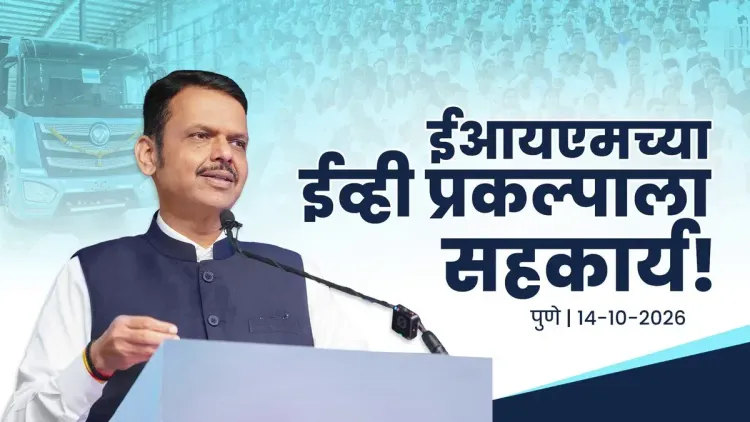
CM Devendra Fadnavis inaugurated EIM's Electric Heavy-Duty Commercial Vehicle Complex in Pune on 14 October 2026, pledging state government support — land, facilities, and full cooperation — for EIM's EV charging and battery swapping network in Maharashtra.
Key Takeaways
CM Devendra Fadnavis inaugurated EIM's Electric Heavy-Duty Commercial Vehicle Complex in Pune on 14 October 2026 .
The Maharashtra state government pledged to provide land and essential facilities for EIM's EV charging and battery swapping stations.
Battery swapping is a critical infrastructure need for heavy commercial vehicles, enabling rapid turnaround versus conventional charging.
Maharashtra's EV Policy 2021 and the Central government's FAME-II scheme form the twin policy backbone enabling such investments.
Pune sits at the centre of Maharashtra's automotive manufacturing corridor, making it a strategic choice for heavy-vehicle electrification pilots.
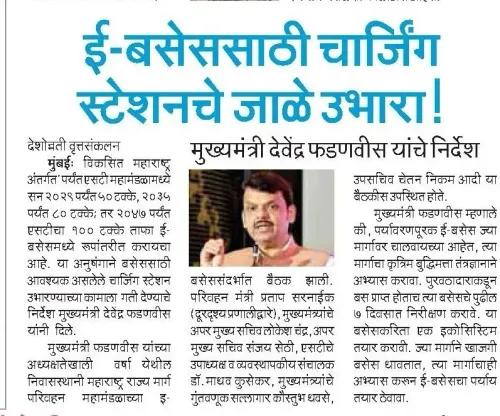
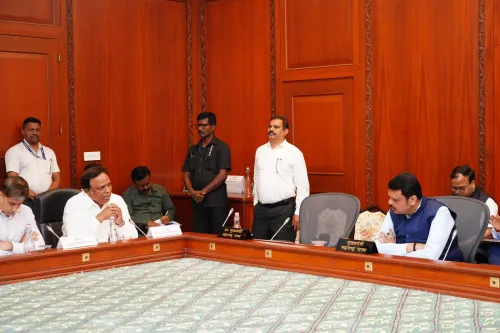
A new electric heavy-duty commercial vehicle complex now stands in Pune — and Maharashtra Chief Minister Devendra Fadnavis has made a clear commitment to back it with land and infrastructure. At the inauguration of EIM's Electric Heavy-Duty Commercial Vehicle Complex on 14 October 2026, Fadnavis announced that the state government will extend full cooperation to provide space and necessary facilities for EIM's charging and battery swapping stations.
What Fadnavis Committed to at the Pune Launch
Speaking at the inauguration, Fadnavis stated — in both Marathi and Hindi — that the state government will do everything possible to make land and essential amenities available for EIM's charging and battery swapping network. The pledge covers not just the current complex but signals a broader facilitation role for the Maharashtra government as EIM scales its infrastructure footprint across the state.
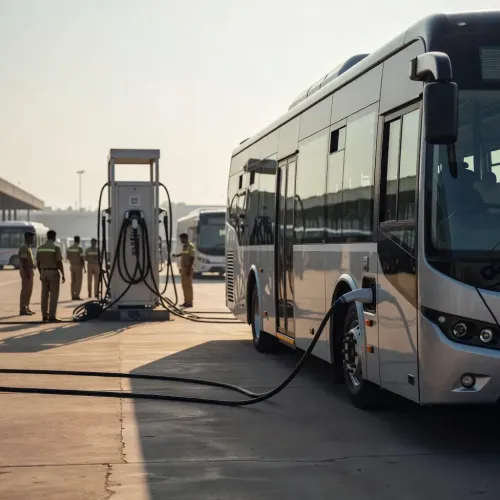
Battery swapping — where a depleted battery pack is exchanged for a fully charged one in minutes — is particularly critical for heavy commercial vehicles such as trucks and buses, which cannot afford long downtime at conventional charging points. For fleet operators, it is the difference between a viable and unviable electric transition.
Pune's Automotive Belt and Maharashtra's EV Push
Pune is not a random venue for this launch. The city anchors one of India's most dense automotive manufacturing corridors, with component makers, assemblers, and logistics fleets concentrated within a tight radius. Maharashtra's Electric Vehicle Policy of 2021 laid the groundwork for exactly this kind of investment, offering incentives for both EV manufacturing and charging infrastructure build-out.
The Central government's FAME-II scheme, operational across Maharashtra since 2019, provided co-funding for public charging stations — creating a financial runway that state-level policy is now extending. Together, the two layers of support have made Maharashtra one of the most actively courted destinations for EV infrastructure investment in India.
Why Heavy Commercial Vehicles Are the Real Test
Passenger EVs have grabbed headlines, but the harder — and higher-stakes — problem is electrifying India's freight and mass-transit fleet. Heavy commercial vehicles account for a disproportionate share of fuel consumption and emissions. Getting them off diesel demands a fundamentally different infrastructure logic: high-capacity chargers, strategically located battery swap points on freight corridors, and guaranteed uptime. Fadnavis's commitment to allocate state land and facilities is a direct response to that operational reality.
If Maharashtra delivers on this pledge, it positions the state not just as a manufacturing hub but as a live testbed for India's heavy-vehicle electrification model — one other states will likely study closely.
Point of View
Which have historically been the biggest chokepoints for charging infrastructure rollout in India. Maharashtra is playing a long game here: by anchoring heavy commercial vehicle electrification in Pune's industrial belt, the state positions itself ahead of competing regions for the next wave of EV supply-chain investment. The move also aligns neatly with the BJP's national narrative of green industrial growth, giving Fadnavis a concrete deliverable to showcase as the party seeks to demonstrate governance credentials in a major state. Whether the promised land allocations materialise at speed will be the real test of this commitment.
NationPress
14 Oct 2026
Frequently Asked Questions
What did CM Devendra Fadnavis announce for EV charging in Maharashtra?
At the inauguration of EIM's Electric Heavy-Duty Commercial Vehicle Complex in Pune on 14 October 2026, CM Fadnavis pledged that the Maharashtra state government will provide land and all necessary facilities for EIM's EV charging and battery swapping stations.
What is battery swapping and why does it matter for commercial vehicles?
Battery swapping replaces a depleted EV battery with a fully charged one in minutes, eliminating long charging downtime. For heavy trucks and buses that run continuous shifts, swapping is far more operationally viable than conventional charging.
What is Maharashtra's Electric Vehicle Policy?
Maharashtra released its Electric Vehicle Policy in 2021, offering incentives for EV manufacturing units and charging infrastructure development across the state, making it one of India's most EV-investment-friendly states.
Why is Pune chosen for EV heavy commercial vehicle infrastructure?
Pune is home to one of India's most concentrated automotive manufacturing and logistics corridors, making it a natural hub for piloting heavy commercial vehicle electrification and supporting supply-chain integration.
What is the FAME scheme and how does it support EV charging in Maharashtra?
FAME (Faster Adoption and Manufacturing of Electric Vehicles), specifically its Phase II launched in 2019, provided Central government co-funding for public charging stations and has been implemented in Maharashtra, complementing the state's own EV policy.