CM Vijay lays stone for Rs 3,108 cr Chennai ring water project
Synopsis
Tamil Nadu Chief Minister C. Joseph Vijay on 14 October 2026 laid the foundation stone for a Rs 3,108.55 crore Ring Main water supply project in Sholinganallur, inspected Okkiyam Maduvu at Karapakkam, and reviewed multi-department flood mitigation preparations ahead of the Northeast Monsoon.
Key Takeaways
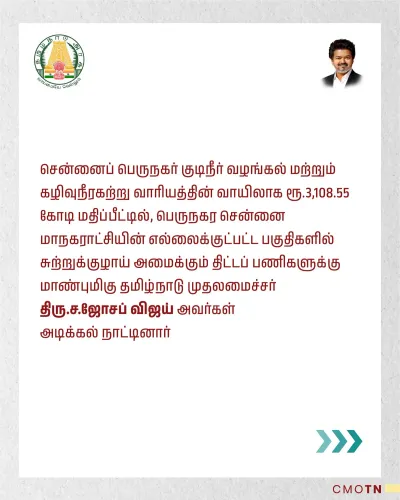
Rs 3,108.55 crore Ring Main System project foundation stone laid at the CMWSSB pumping station in Sholinganallur, Chennai on 14 October 2026 .
The Ring Main pipeline network will serve areas within Greater Chennai Corporation limits, improving distribution reliability through a closed-loop design.
Joseph Vijay personally inspected Okkiyam Maduvu at Karapakkam , a key flood-retention water body on Chennai's southeastern edge.
Flood preparedness of the Water Resources Department , Highways Department , and Greater Chennai Corporation was reviewed ahead of the Northeast Monsoon .
The initiative builds on flood-mitigation and water-supply reforms launched after the devastating 2015 Chennai floods .
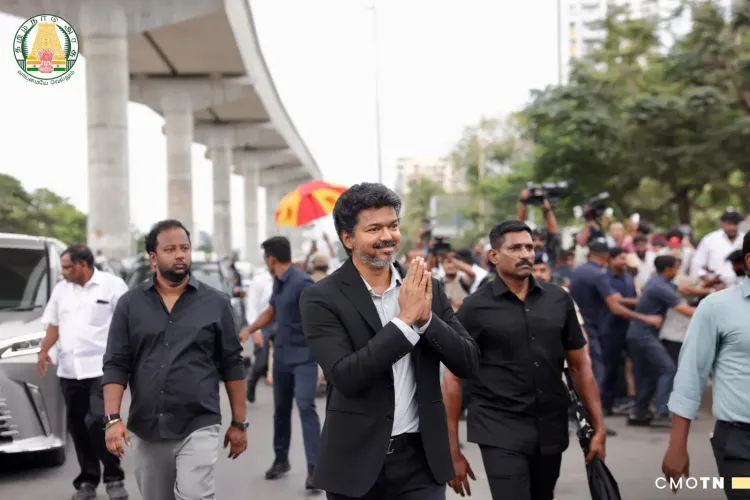
With Chennai's northeast monsoon bearing down and the memory of catastrophic urban floods still shaping policy, Tamil Nadu Chief Minister C. Joseph Vijay stepped into the field on 14 October 2026 — not a conference room — to anchor a Rs 3,108.55 crore overhaul of the city's water supply backbone and personally survey its flood defences.
A foundation stone in Sholinganallur — and what the Ring Main means
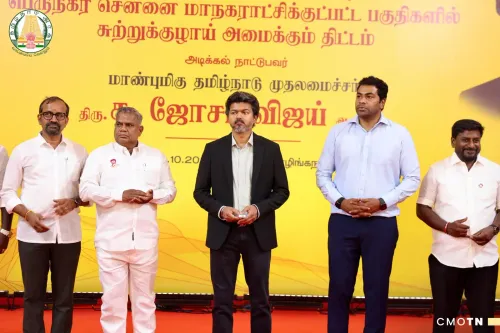
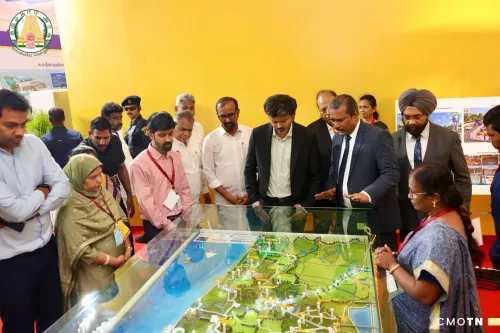
At the Chennai Metropolitan Water Supply and Sewerage Board (CMWSSB) pumping station in Sholinganallur, the Chief Minister laid the foundation stone for the Ring Main System, a pipeline network project to be rolled out across areas within the Greater Chennai Corporation (GCC) limits. The idea behind a ring main is straightforward but powerful: instead of water flowing one-way down a trunk line, a closed loop feeds distribution zones from multiple directions, so a burst or a block at one point does not cut off an entire neighbourhood. For a city that has lurched between water scarcity and flood crisis within the same calendar year, that redundancy is not a luxury — it is arithmetic.
The project will be implemented through the CMWSSB, a state agency that has managed Chennai's water supply and sewerage network for decades. At over Rs 3,108 crore, it ranks among the larger single infrastructure investments the board has seen in recent years.
Okkiyam Maduvu under the CM's eye
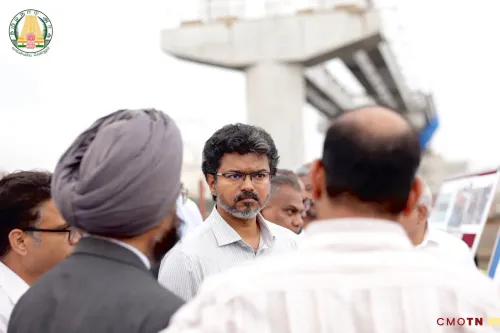
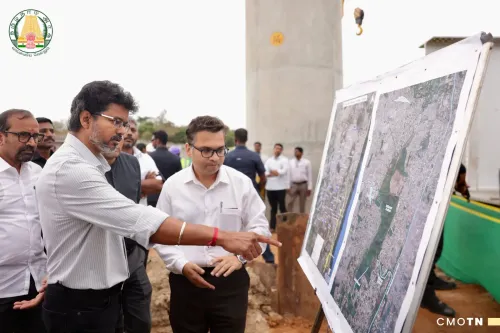
From Sholinganallur, CM Vijay drove to Karapakkam to inspect Okkiyam Maduvu, a crucial flood-retention water body on Chennai's southeastern edge. Okkiyam Maduvu functions as a natural buffer, absorbing excess runoff during heavy rain events and slowly releasing it — the kind of blue-green infrastructure that city planners increasingly credit as a first line of defence against urban inundation. A direct inspection by the Chief Minister signals that the body's condition and capacity are being treated as a live operational concern, not a line item in a departmental report.
Northeast Monsoon prep: water resources, highways, GCC align
The visit doubled as a flood-readiness review. The Chief Minister examined the preparedness of three key agencies — the Water Resources Department, the Highways Department, and the Greater Chennai Corporation — all of which are central to managing the city during the Northeast Monsoon, the October-to-December rainfall season that historically delivers Chennai's heaviest precipitation and its worst waterlogging.
The 2015 Chennai floods reshaped a generation of urban infrastructure thinking in Tamil Nadu. Since then, successive administrations have launched augmentation and mitigation schemes spanning storage tanks, pumping upgrades, storm-water drains, and road de-waterlogging — all requiring the same inter-departmental coordination that CM Vijay reviewed on Wednesday.
What to watch now: how quickly the Ring Main project moves from foundation stone to tendering and land acquisition, and whether the flood preparations reviewed today hold when the monsoon peaks over the city in November.
Point of View
108 crore Ring Main project keeps alive the state's decade-long push to modernise Chennai's colonial-era water grid — a programme that gained political urgency after the 2015 floods exposed how supply and drainage infrastructure were two sides of the same vulnerability. The multi-department flood review signals the administration is keen to avoid being caught flat-footed operationally even as it makes long-term capital commitments. Whether the project's tendering and execution pace matches the headline investment will be the real test of institutional follow-through.
NationPress
14 Oct 2026
Frequently Asked Questions
What is the Ring Main System project in Chennai?
The Ring Main System is a closed-loop pipeline network project worth Rs 3,108.55 crore to be implemented by the Chennai Metropolitan Water Supply and Sewerage Board across areas within Greater Chennai Corporation limits, designed to improve water distribution reliability by supplying zones from multiple directions simultaneously.
What is Okkiyam Maduvu and why did CM Vijay inspect it?
Okkiyam Maduvu is a flood-retention water body located at Karapakkam in southeastern Chennai. CM C. Joseph Vijay inspected it on 14 October 2026 as part of a review of flood mitigation preparations ahead of the Northeast Monsoon season.
When did Tamil Nadu CM Joseph Vijay lay the foundation stone for the water project?
CM C. Joseph Vijay laid the foundation stone on 14 October 2026 at the CMWSSB pumping station in Sholinganallur, Chennai.
Which departments were reviewed for Chennai flood preparedness?
The Water Resources Department, the Highways Department, and the Greater Chennai Corporation were all reviewed by CM Vijay for their flood mitigation preparedness ahead of the Northeast Monsoon.
How much does the Chennai Ring Main System project cost?
The Ring Main System project carries an estimated cost of Rs 3,108 crore and 55 lakh (Rs 3,108.55 crore) and will be executed through the Chennai Metropolitan Water Supply and Sewerage Board.