India's ethanol receipts hit 987 crore litres by September 2026: AIDA data
Synopsis
India's ethanol blending push is hitting its stride — 987 crore litres received by September 2026, with maize alone contributing 413 crore litres. The shift to grain-based feedstocks is reshaping rural income streams while sugar mills deliver near-perfect 97.6% fulfilment. The next frontier: Flex-Fuel Vehicles, Sustainable Aviation Fuel, and Compressed Bio-Gas.
Key Takeaways
Cumulative ethanol receipts under ESY 2025-26 reached 987 crore litres by end of September 2026 , per AIDA data.
Overall supply fulfilment stands at 82.5 per cent against a contracted allocation of 1,197 crore litres .
Grain-based feedstocks contributed 705 crore litres ( 71.4% ), led by maize at 413 crore litres .
Sugar-based feedstocks achieved a near-complete fulfilment rate of 97.6 per cent , supplying 282 of 289 crore litres contracted.
AIDA has called for policy continuity and expansion into FFVs , SAF , and CBG to sustain investment momentum.
India's ethanol blending programme has crossed a significant supply milestone, with cumulative ethanol receipts touching 987 crore litres by the end of September 2026, according to the latest data released by the All India Distillers' Association (AIDA) on 15 October 2026. The figure, recorded under Ethanol Supply Year (ESY) 2025-26, reflects an overall supply fulfilment rate of 82.5 per cent against a total contracted allocation of 1,197 crore litres.
Grain-Based Feedstocks Lead the Way
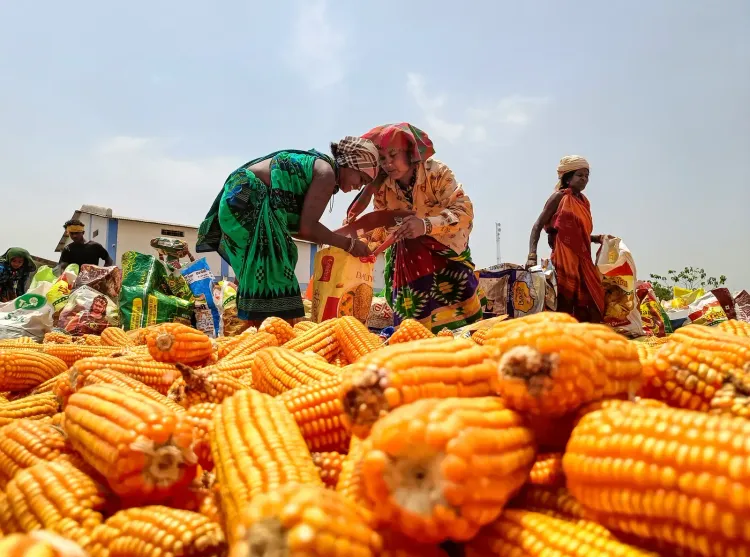
Grain-based feedstocks emerged as the dominant contributor, accounting for 705 crore litres — or 71.4 per cent — of total cumulative receipts. Maize was the single largest grain feedstock, supplying 413 crore litres, which represents over 41 per cent of all ethanol received by oil marketing companies this supply year. Surplus FCI rice contributed 222 crore litres, while damaged foodgrains added a further 70 crore litres.
According to AIDA, the strong reliance on multiple grain streams reflects the domestic ethanol industry's expanding processing capacity and its demonstrated ability to absorb diverse agricultural feedstocks without compromising food security.
Sugar-Based Feedstocks Deliver Near-Perfect Fulfilment
Sugar-based feedstocks — comprising sugarcane juice and heavy molasses — supplied 282 crore litres out of a contracted allocation of 289 crore litres, achieving a fulfilment rate of 97.6 per cent. The near-complete delivery across both B Heavy and C Heavy Molasses categories points to the operational resilience of sugar mills in honouring contracted volumes.
This segment's strong performance is particularly notable given that sugar-based supplies have historically been more vulnerable to seasonal cane availability fluctuations.
What AIDA Said
Bharati Balaji, Deputy Director General of AIDA, said: 'The September-end data clearly illustrates the maturing landscape of India's ethanol ecosystem. Crossing the 980-crore litre mark is a major milestone, with grain-based sources — led by maize at 413 crore litres — contributing over 71 per cent of total supplies. Simultaneously, sugar-based feedstocks have shown remarkable delivery efficiency, fulfilling nearly 98 per cent of their allocated quantities.'
Balaji also underlined the importance of policy consistency and demand diversification, adding: 'Building a robust, multi-feedstock supply network is vital for long-term energy security. As production and supply infrastructure scale up, maintaining policy continuity and expanding utilisation avenues — such as Flex-Fuel Vehicles (FFVs), Sustainable Aviation Fuel (SAF), and Compressed Bio-Gas (CBG) — will be essential to sustain investment momentum and empower agricultural value chains across India.'
Why This Matters for India's Energy and Farm Sectors
India's ethanol blending programme is a cornerstone of the government's strategy to reduce fossil fuel dependence, cut import bills, and provide a stable demand channel for agricultural produce. The pivot toward grain-based feedstocks — particularly maize — has opened new income avenues for non-sugarcane farmers, broadening the programme's rural economic footprint.
This comes amid growing policy interest in scaling ethanol use beyond petrol blending, with SAF and CBG flagged as the next frontiers. With ESY 2025-26 still running, the industry will be watching whether the remaining 210 crore litres of contracted allocation can be fulfilled before the supply year closes.
Point of View
But the more significant shift is structural: maize has quietly displaced sugar as the programme's growth engine, accounting for over 41 per cent of all receipts. That rebalancing matters because it decouples ethanol volumes from sugarcane cycles — historically the programme's biggest vulnerability. The 82.5 per cent fulfilment rate, however, means roughly 210 crore litres of contracted supply remain undelivered, and with the supply year still open, execution risk has not vanished. The real policy test ahead is whether demand-side infrastructure — FFVs on roads, SAF offtake agreements, CBG networks — can be built fast enough to absorb the supply capacity being created, or whether India ends up with an ethanol surplus and no outlet.
NationPress
15 Oct 2026
Frequently Asked Questions
How much ethanol has India received under ESY 2025-26 so far?
India's oil marketing companies had received a cumulative 987 crore litres of ethanol by the end of September 2026 under Ethanol Supply Year 2025-26, against a total contracted allocation of 1,197 crore litres, achieving an overall fulfilment rate of 82.5 per cent, according to AIDA data.
Which feedstock contributes the most to India's ethanol supply?
Maize is the single largest feedstock, contributing 413 crore litres — over 41 per cent of total receipts. Grain-based feedstocks as a whole account for 705 crore litres, or 71.4 per cent of cumulative ethanol received under ESY 2025-26.
How have sugar-based feedstocks performed in ESY 2025-26?
Sugar-based feedstocks, including sugarcane juice and heavy molasses, supplied 282 crore litres out of a contracted 289 crore litres, achieving a 97.6 per cent fulfilment rate — the highest among all feedstock categories.
What is the significance of India's ethanol blending programme?
The programme is central to India's energy security strategy, aiming to reduce dependence on imported fossil fuels and create a stable demand channel for agricultural produce. It also supports rural incomes, particularly for maize and sugarcane farmers, and is being expanded toward new avenues such as Flex-Fuel Vehicles, Sustainable Aviation Fuel, and Compressed Bio-Gas.
What are the next steps for India's ethanol ecosystem?
AIDA has called for policy continuity and the expansion of ethanol utilisation beyond petrol blending into Flex-Fuel Vehicles (FFVs), Sustainable Aviation Fuel (SAF), and Compressed Bio-Gas (CBG). These avenues are seen as critical to sustaining investment in production infrastructure and deepening the programme's agricultural value-chain linkages.