Kishan Reddy Makes the Case for Maize-Based Ethanol

Synopsis
Union Minister G. Kishan Reddy reframes the ethanol water-use debate, highlighting that nearly 40% of India's ethanol now comes from maize. He links a government maize procurement price hike to farmer income gains and positions the blending programme as central to energy security and crop diversification.
Key Takeaways
Union Coal and Mines Minister G.
Kishan Reddy challenged the claim that ethanol production requires 10,000 litres of water per litre, calling it an incomplete picture.
He stated that nearly 40% of India's ethanol is now produced from maize , which has a significantly lower water footprint than sugarcane-based feedstocks.
The National Policy on Biofuels, 2018 expanded permissible feedstocks beyond molasses to include maize and surplus grains, enabling this shift.
In 2022 , the government advanced its 20% ethanol-petrol blending target from 2030 to 2025, accelerating the programme's ambition.
The government has raised the maize procurement price , which Reddy says creates higher income opportunities for lakhs of maize farmers .
The minister framed the programme as addressing energy security, farmer prosperity, and crop diversification simultaneously.
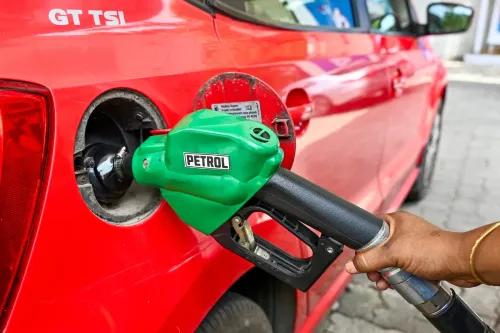
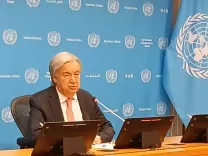
India's ethanol blending story just got a reframe. Union Coal and Mines Minister G. Kishan Reddy took to X on Sunday, 2 August 2026, pushing back on a widely circulated claim about ethanol's water footprint — and making the case that the programme has quietly transformed into something far bigger than a fuel policy.
The post opens by citing a figure that has long shadowed biofuel advocacy: 'It takes 10,000 litres of water to produce 1 litre of ethanol.' Reddy's counter is direct — that number is real, but it belongs to sugarcane-based ethanol, not the feedstock mix India is increasingly relying on today. He says nearly 40% of India's ethanol now comes from maize, a crop that demands significantly less water than sugarcane or molasses.
How India's Ethanol Feedstock Shifted Away from Sugarcane
The pivot did not happen overnight. India launched the Ethanol Blending Programme (EBP) in 2003 with a modest 5% blending target, almost entirely dependent on molasses — a sugarcane by-product — as its feedstock. The problem was structural: sugarcane is one of the most water-intensive crops in the country, grown largely in water-stressed belts of Maharashtra and Uttar Pradesh.
The National Policy on Biofuels, 2018 cracked that dependency open. For the first time, the government formally approved maize, surplus rice, and other coarse grains as permissible ethanol feedstocks — a deliberate move to reduce groundwater pressure while tapping into grain surpluses that otherwise weigh on procurement systems. Then, in 2022, the government accelerated its blending ambition sharply, advancing the 20% ethanol-petrol blending target from 2030 to 2025.
A Procurement Price Hike and What It Means for Maize Farmers
Reddy's post goes beyond the environmental argument. He highlights a recent government increase in the procurement price of maize — a move he frames as creating 'a new avenue of higher incomes for lakhs of maize farmers.' The logic is straightforward: guaranteed offtake at better prices gives farmers in dryland and rain-fed regions a reason to grow maize at scale, diversifying away from crops that strain both soil and water tables.
This fits a broader policy pattern. Maize is grown across Andhra Pradesh, Karnataka, Bihar, Rajasthan, and Madhya Pradesh — states where farmer income support through assured markets carries political as much as agricultural weight. Connecting the ethanol programme to coarse-cereal farmers effectively widens the constituency for biofuel policy.
Energy Security, Not Just Green Optics
The minister frames ethanol blending as a three-in-one proposition: energy security through reduced crude oil imports, farmer prosperity through new grain markets, and crop diversification away from water-guzzling monocultures. India spends hundreds of billions of dollars annually on crude imports; every percentage point of blending achieved domestically chips into that bill.
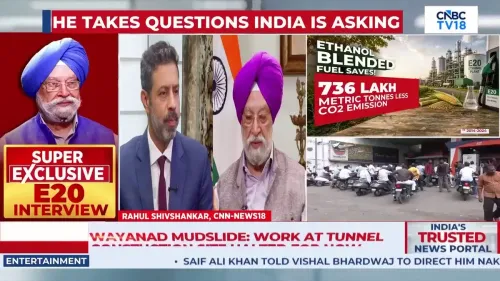
The post closes with a call to 'watch the video to know the complete picture' — suggesting the government is actively trying to counter the negative water-use narrative with its own data-backed communication push.
Whether the blending targets are met on schedule and whether maize procurement prices hold into the next agricultural season will determine if the promise translates into income at the farm gate — and into litres at the fuel pump.
Point of View
And this is a direct attempt to neutralise it with a feedstock-shift narrative. By tying maize procurement prices to farmer incomes, the BJP is also broadening the political base of the biofuel programme beyond sugarcane-belt constituencies. The acceleration of the blending target to 2025 means the government needs public buy-in fast, making messaging like this a policy instrument in itself. Watch whether official blending data and MSP revisions in the next agricultural season back up the optimism on display here.
NationPress
16 Sept 2026
Frequently Asked Questions
Why does G. Kishan Reddy say the 10,000-litre water claim about ethanol is misleading?
He argues the figure applies to sugarcane-based ethanol, not to maize-based ethanol, which requires significantly less water. He says nearly 40% of India's ethanol now comes from maize, making the overall water footprint of the programme much lower than the headline statistic implies.
What is India's Ethanol Blending Programme?
The Ethanol Blending Programme, launched in 2003, mandates mixing ethanol with petrol to reduce crude oil imports and support domestic agriculture. The government advanced its target of 20% ethanol blending from 2030 to 2025.
How does maize feature in India's ethanol production?
The National Policy on Biofuels, 2018 expanded permissible feedstocks beyond sugarcane molasses to include maize and surplus grains. Maize requires less water than sugarcane and is grown across multiple states, making it a more sustainable and geographically diverse source for ethanol.
How do maize farmers benefit from the ethanol blending programme?
The government has increased the procurement price of maize, creating an assured market for coarse-cereal farmers. Reddy says this is generating new income opportunities for lakhs of maize farmers and incentivising crop diversification away from water-intensive alternatives.
What is India's target for ethanol blending with petrol?
India's target is to achieve 20% ethanol blending with petrol. This deadline was originally set for 2030 but was advanced to 2025 by the government in 2022.