India ethanol capacity hits 2,000 crore litres, outpacing E20 demand: CareEdge

Synopsis
India has built more ethanol capacity than it can currently use — 2,000 crore litres against E20 demand of just 1,100 crore litres, with 400 crore litres more coming by FY27. CareEdge Ratings warns that without rapid FFV adoption and E85 infrastructure, this structural oversupply could keep the sector under margin pressure for years.
Key Takeaways
India's ethanol production capacity stands at approximately 2,000 crore litres , with 400 crore litres more expected by FY2027 .
E20 blending demand is only about 1,100 crore litres ; non-fuel demand adds 300–350 crore litres — leaving roughly 700 crore litres in surplus.
Only 60 per cent of offered ethanol is being absorbed; utilisation is forecast to stay at 65–75 per cent for the next three years.
Maharashtra has a 277 crore litre surplus; Tamil Nadu faces a 77 crore litre deficit, highlighting sharp regional imbalances.
Demand could reach 1,600 crore litres by ESY 2029–30 , but only if FFV penetration rises from ~5 per cent to ~20 per cent of new vehicle sales by FY30.
India hit 20 per cent ethanol blending in December 2025 , five years ahead of schedule; MoRTH has drafted rules for E85 and exclusive ethanol fuel.
India's ethanol production capacity has reached approximately 2,000 crore litres, significantly outstripping current blending demand, according to a new report by CareEdge Ratings released on 15 May 2025. An additional 400 crore litres of capacity is expected to come online by fiscal year 2027, deepening an already pronounced supply-demand imbalance.
The Supply-Demand Gap
Demand under the E20 blending programme currently stands at roughly 1,100 crore litres, while non-fuel demand adds another 300–350 crore litres. This means only about 60 per cent of offered ethanol is being absorbed by the market, leaving the sector under significant utilisation pressure.
According to the CareEdge report, roughly 700 crore litres of excess supply relative to absorption has kept margins under strain. The sector is now transitioning into a consolidation phase, with utilisation rates likely to remain in the 65–75 per cent range over the next three years.
Regional Surpluses and Deficits
Capacity addition has been concentrated in select states — principally Uttar Pradesh, Maharashtra, and Karnataka — creating pronounced regional imbalances. Maharashtra carries a surplus of 277 crore litres, while Tamil Nadu faces a deficit of 77 crore litres. This uneven distribution complicates logistics and limits the efficiency of national blending targets.
Correspondingly, Engineering, Procurement, and Construction (EPC) activity has begun to moderate, with industry focus shifting toward brownfield capital expenditure, debottlenecking, and operational efficiencies rather than fresh greenfield expansion.
What the Industry Needs to Absorb Surplus
Niraj Thorat, Assistant Director at CareEdge Ratings, said demand is expected to rise to roughly 1,200 crore litres by ESY 2026–27 and approximately 1,600 crore litres by ESY 2029–30. However, he cautioned that 'achieving this will depend on FFV penetration increasing from roughly 5 per cent of new vehicle sales in FY28 to roughly 20 per cent by FY30, alongside coordinated investments in logistics, storage, and distribution to avoid supply bottlenecks and ensure smooth adoption.'
The report underscored that meaningful demand expansion hinges on scaling up higher ethanol blends — E85 and E100 — and accelerating Flex Fuel Vehicle (FFV) adoption. Without these demand-side triggers, incremental capacity additions are unlikely to be absorbed in the near term.
Policy Backdrop
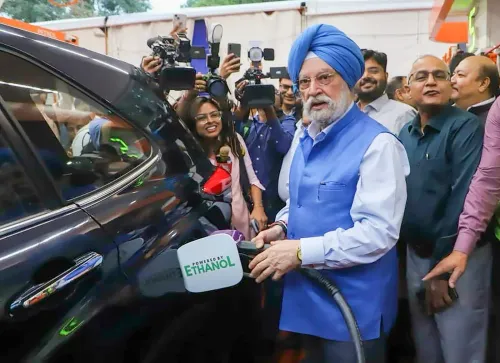
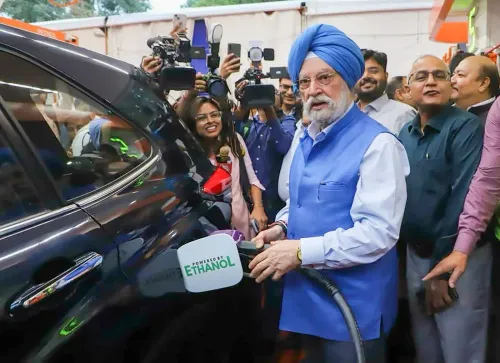
India reached an average 20 per cent ethanol blending level in December 2025, a milestone achieved five years ahead of schedule under the Ethanol Blended Petrol (EBP) Programme. Building on this, the Ministry of Road Transport and Highways (MoRTH) has issued draft amendments to create a regulatory framework for scaling the EBP to E85 or exclusive ethanol fuel.
Ethanol is widely recognised as a sustainable fuel that reduces greenhouse gas emissions, strengthens energy security, and supports agricultural demand — factors that underpin the government's long-term blending ambitions. Whether the industry can align supply, infrastructure, and consumer adoption in time to match that ambition remains the central challenge ahead.
Point of View
But a 700-crore-litre surplus and 60 per cent absorption rate signal that supply-side incentives ran well ahead of consumer and infrastructure readiness. The FFV penetration target — from 5 per cent to 20 per cent of new vehicle sales in just two years — is ambitious to the point of being aspirational without a hard regulatory mandate on automakers. Until E85 and E100 infrastructure is credibly funded and FFV adoption is incentivised at the consumer level, the sector's margin pressure is structural, not cyclical.
NationPress
7 Oct 2026
Frequently Asked Questions
What does India's current ethanol production capacity stand at?
India's ethanol production capacity has reached approximately 2,000 crore litres, according to a CareEdge Ratings report released in May 2025. An additional 400 crore litres is expected to be operational by fiscal year 2027.
Why is there an ethanol surplus in India?
Demand under the E20 blending programme is only around 1,100 crore litres, and non-fuel demand adds 300–350 crore litres, against a supply capacity of 2,000 crore litres. This leaves roughly 700 crore litres of excess supply, with only about 60 per cent of offered ethanol being absorbed.
Which states have the largest ethanol surpluses or deficits?
Capacity is concentrated in Uttar Pradesh, Maharashtra, and Karnataka. Maharashtra has a surplus of 277 crore litres, while Tamil Nadu faces a deficit of 77 crore litres, creating regional imbalances in supply and distribution.
What needs to happen for ethanol demand to grow in India?
According to CareEdge Ratings, demand growth depends on scaling up higher ethanol blends such as E85 and E100, and increasing Flex Fuel Vehicle (FFV) penetration from roughly 5 per cent of new vehicle sales in FY28 to roughly 20 per cent by FY30. Coordinated investment in logistics, storage, and distribution infrastructure is also required.
How far along is India's Ethanol Blended Petrol programme?
India achieved an average 20 per cent ethanol blending level in December 2025, five years ahead of the original schedule. The Ministry of Road Transport and Highways has since issued draft amendments to create a regulatory framework for E85 and exclusive ethanol fuel use.