Centre rules out E-25 petrol rollout, reaffirms E-20 blending standard
Synopsis
The Centre has shut down speculation about an imminent E-25 petrol rollout, reaffirming that India stays at E-20 until science says otherwise. With 20 crore two-wheelers already on blended fuel and maize overtaking rice as the primary feedstock, the programme is quietly reshaping India's energy and agriculture mix — well ahead of public awareness.
Key Takeaways
The Centre has dismissed reports of an imminent E-25 petrol rollout, confirming no decision has been taken beyond the current E-20 standard.
Any future increase in ethanol blending will require scientific testing and technical validation , officials said.
Nearly 20 crore petrol-powered two-wheelers and 20 lakh four-wheelers are already running on E-20 fuel .
Maize now accounts for more than 40 per cent of ethanol supplied under the programme, reducing dependence on paddy.
Ethanol distilleries use 3–5 litres of processed water per litre of ethanol produced — far below the 10,000-litre figure cited in public claims.
The government issued a 10-point clarification in July affirming E-20 is backed by scientific studies and international experience.
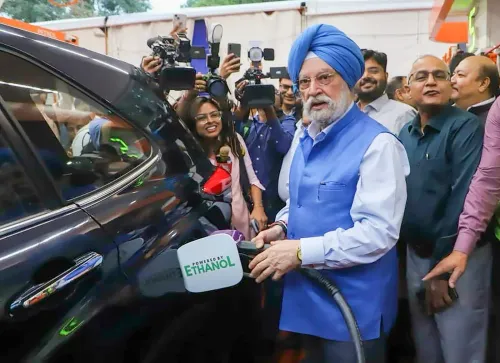
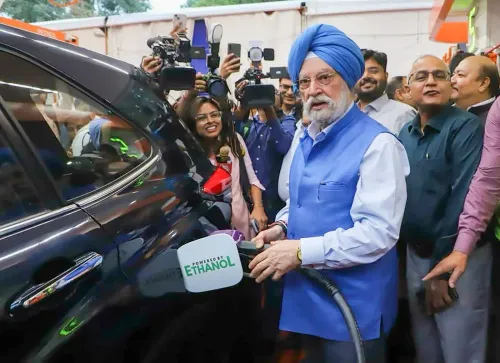
The Centre has firmly dismissed reports of an imminent shift to E-25 petrol, clarifying on 7 July that no decision has been taken to increase ethanol blending beyond the existing E-20 standard and that any future revision will be driven by scientific testing and technical validation. The clarification comes as public debate intensifies over the impact of higher ethanol blending on vehicle performance and fuel efficiency.
What the Government Said
According to government sources, there is 'absolutely no need to worry' about E-20 petrol, which has been in use for more than two-and-a-half years following extensive testing and evaluation. Officials stressed that the transition to ethanol-blended fuel has been carried out in a phased and calibrated manner, underpinned by regulatory safeguards and international precedent.
Earlier in July, the government issued a 10-point clarification on ethanol blending, asserting that petrol containing up to 20 per cent ethanol is supported by scientific studies, global experience, and established safety protocols.
Scale of E-20 Adoption
The programme has already achieved significant scale. Nearly 20 crore petrol-powered two-wheelers and around 20 lakh petrol-powered four-wheelers are currently running on ethanol-blended fuel, according to official figures. This makes India one of the largest markets for ethanol-blended petrol globally.
Addressing Water and Feedstock Concerns
The government also pushed back against claims that producing one litre of ethanol requires 10,000 litres of water. The ministry clarified that ethanol distilleries typically use around 3–5 litres of processed water per litre of ethanol produced, and are increasingly adopting Zero Liquid Discharge systems to recycle water. Officials added that only surplus rice — cleared after meeting national food security requirements — is diverted for ethanol production.
Notably, maize now accounts for more than 40 per cent of ethanol supplied under the programme. Maize requires significantly less irrigation than paddy and is being promoted through higher minimum support prices, the ministry said.
Is E-20 Safe for Vehicles?
Dismissing claims that E-20 is an untested or experimental fuel, the government pointed out that ethanol-blended fuels have been used globally for decades. The domestic rollout followed extensive evaluation, and officials say vehicle manufacturers have been part of the validation process. This is the third major round of public clarifications the government has issued since the E-20 rollout began, reflecting persistent consumer anxiety around engine compatibility and mileage.
What Comes Next
The Centre has not indicated any timeline for moving beyond E-20, making clear that a data-driven, science-first approach will govern any future escalation. Industry observers will watch for updates from the Ministry of Petroleum and Natural Gas as the programme matures and feedstock diversification continues.
Point of View
And dismissing it with data points has not fully worked. More telling is the maize statistic: with over 40 per cent of ethanol now sourced from maize rather than surplus rice, the programme has quietly pivoted its agricultural logic, yet that shift has received almost no public scrutiny. The real policy question is not whether E-25 is coming, but whether India's vehicle fleet — dominated by older two-wheelers not designed for high-blend fuel — can absorb further escalation without a structured retrofit or replacement incentive.
NationPress
6 Oct 2026
Frequently Asked Questions
What is E-25 petrol and has India decided to roll it out?
E-25 petrol refers to fuel blended with 25 per cent ethanol. The Centre has clarified that no decision has been taken to move beyond the current E-20 standard, and any future increase will depend on scientific testing and technical validation.
Is E-20 petrol safe for two-wheelers and cars?
The government says E-20 is safe, citing over two-and-a-half years of use, extensive pre-rollout testing, and decades of global experience with ethanol-blended fuels. Nearly 20 crore two-wheelers and 20 lakh four-wheelers are currently running on E-20 without mandated safety concerns.
How much water is used to produce ethanol for petrol blending?
Ethanol distilleries typically use around 3–5 litres of processed water to produce one litre of ethanol, according to the government. This directly contradicts claims that 10,000 litres of water are required per litre of ethanol produced.
What feedstocks are used to produce ethanol in India?
Maize now accounts for more than 40 per cent of ethanol supplied under the programme, with surplus rice making up much of the remainder. Only rice cleared after meeting national food security requirements is diverted for ethanol production, officials said.
What is India's current ethanol blending target and what comes next?
India is currently at the E-20 standard, meaning petrol is blended with up to 20 per cent ethanol. The government has not announced a timeline for moving to E-25, stating that any escalation will be guided by scientific evidence and technical readiness.