CM Rekha Gupta Highlights Ladakh's Infrastructure Leap Since 2019
Synopsis
Delhi Chief Minister Rekha Gupta highlighted Ladakh's infrastructure transformation since 2019 — roads more than doubled to over 4,000 km, bridges tripled to 75, helipads expanded to 40-plus, and the ₹2,500 crore Nimmu-Padam-Darcha road slashes a 12-hour journey to three hours.
Key Takeaways
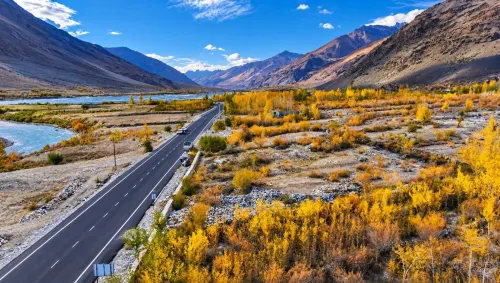
Ladakh's road network has grown from 1,800 km in 2019 to over 4,000 km , more than doubling in under seven years.
Major bridges in Ladakh increased from 19 to approximately 75 and helipads from 7 to over 40 in the same period.
The Nimmu-Padam-Darcha road , built at roughly ₹2,500 crore , reduces a 12-hour journey to approximately 3 hours, benefiting local trade and residents.
The new Leh Airport terminal is expected to strengthen tourism, connectivity, and employment in the union territory.
Ladakh was reorganised as a direct-administration Union Territory in 2019 after the abrogation of Article 370, enabling faster central funding for border infrastructure.
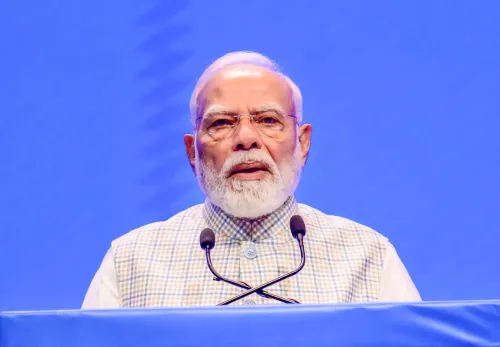
Delhi Chief Minister Rekha Gupta credited Prime Minister Narendra Modi 's leadership for the region's infrastructure leap, contrasting it with decades of relative neglect.
A region once left to the mercy of impassable mountain passes is now being stitched into the national mainstream — road by road, bridge by bridge. Delhi Chief Minister Rekha Gupta, on Thursday, 15 October 2026, pointed to Ladakh's sweeping connectivity transformation under Prime Minister Narendra Modi, citing figures that mark a dramatic departure from the union territory's pre-2019 isolation.
From 1,800 km to 4,000 km: The Road Network That Changed Everything
The numbers in Gupta's post tell a striking story. Where Ladakh had just 1,800 km of roads until 2019, it now boasts over 4,000 km — more than double. Major bridges have grown from 19 to nearly 75, and helipads — lifelines in a terrain where a washed-out road can mean a medical emergency — have expanded from 7 to over 40. In a high-altitude landscape where winters snap supply lines shut for months, each of those numbers is not just a statistic but a lifeline.
The broader policy engine behind this push was the 2019 reorganisation of Jammu and Kashmir, which carved out Ladakh as a separate Union Territory under direct central administration. That shift unlocked significantly higher central funding and enabled the Border Roads Organisation to accelerate projects that had languished for decades under state-level constraints. The civilian economy and strategic border mobility both gained from the same infrastructure pipeline.
Nimmu-Padam-Darcha Road: A 12-Hour Journey Compressed to Three
Perhaps the most tangible win Gupta highlighted is the Nimmu-Padam-Darcha road, built at an investment of approximately ₹2,500 crore. What once demanded a gruelling 12-hour journey now takes roughly 3 hours. For the traders, students, and patients of interior Ladakh, that is not an incremental improvement — it is a fundamental reordering of daily life. Gupta's post notes the road will accelerate local commerce and free up time that communities previously surrendered entirely to the terrain.
The all-weather character of such roads also carries strategic weight. Ladakh shares borders with both Pakistan and China, and rapid-mobility infrastructure in the region has long been a defence-planning priority. The civilian and military dividends of the same tarmac are inseparable here.
Leh Airport's New Terminal and the Tourism Multiplier
Alongside road connectivity, Leh Airport's new terminal forms a central part of Gupta's outline. The expansion is expected to boost passenger handling capacity and signal Ladakh's growing profile as a major tourism destination — a sector already drawing visitors from across the country and abroad to its high-altitude lakes, monasteries, and adventure circuits. Greater air access typically triggers a multiplier: more tourists mean more local employment, more demand for homestays, guides, and local produce, and greater incentive for private investment in hospitality infrastructure.
Gupta framed the cumulative picture as proof of what she described as earlier governments abandoning Ladakh to its geography — 'durgam pahadon ke bharose chhod diya' (left to the mercy of difficult mountains). The contrast she draws is with a post-2019 central policy that treats Ladakh's connectivity deficit as an active problem to be solved, not a permanent fact of altitude.
What Comes Next for Ladakh's Connectivity Agenda
The operationalisation timeline for Leh Airport's new terminal, along with any further tunnel projects announced in upcoming central budget cycles or UT review meetings, will determine how quickly these gains translate into lived experience for Ladakh's approximately 274,000 residents. The policy architecture is in place; the test now is execution speed and the quality of last-mile access for the most remote communities.
Ladakh's transformation from a connectivity black hole into a region of strategic and economic momentum is one of the more consequential administrative experiments of the decade. The infrastructure story is moving fast — the question is whether the social and economic scaffolding can keep pace.
Point of View
Count of bridges, journey-time savings — to anchor the post-2019 reorganisation of Ladakh as a policy success story. By framing the pre-2019 era as abandonment and the present as transformation, the party reinforces its core argument that Article 370's abrogation delivered tangible civilian dividends, not just constitutional realignment. The timing — with Leh Airport's terminal and the Nimmu-Padam-Darcha road both in the news — gives the message specificity that vague 'development' rhetoric rarely achieves. For the opposition, the challenge is not to dispute the construction activity but to raise questions about governance depth: representation, environmental impact, and whether growth benefits are reaching Ladakh's most remote communities.
NationPress
15 Oct 2026
Frequently Asked Questions
How many kilometres of roads does Ladakh have now compared to 2019?
According to Delhi CM Rekha Gupta's post, Ladakh had 1,800 km of roads in 2019; the network has since expanded to over 4,000 km — more than doubling in under seven years.
What is the Nimmu-Padam-Darcha road and why is it important?
The Nimmu-Padam-Darcha road is a strategic all-weather highway in Ladakh built at approximately ₹2,500 crore. It cuts travel time on a key route from 12 hours to roughly 3 hours, improving access for local residents and traders.
What is happening with Leh Airport?
A new terminal is being developed at Leh Airport to enhance passenger capacity, boost tourism, and support employment in Ladakh. Delhi CM Rekha Gupta described it as giving Ladakh's connectivity a 'new flight'.
Why did Ladakh's infrastructure development accelerate after 2019?
In 2019, the central government abrogated Article 370 and carved Ladakh out as a separate Union Territory under direct central administration. This unlocked higher central funding and allowed the Border Roads Organisation to fast-track projects previously delayed by state-level processes.
How many helipads and bridges does Ladakh have now?
As cited by CM Rekha Gupta, major bridges in Ladakh have grown from 19 to approximately 75, and helipads from 7 to over 40 since 2019 — both critical for emergency access in the high-altitude terrain.