India's ethanol supply hits 895 crore litres in ESY 2025-26, grain leads at 70%

Synopsis
India has supplied 895 crore litres of ethanol in ESY 2025-26 — 85% of contracted volume — with grain sources overtaking sugar for the first time as the dominant feedstock. Maize alone contributed 345 crore litres, reshaping the programme's supply architecture. The next challenge isn't production; it's building demand channels fast enough to absorb a rapidly expanding supply base.
Key Takeaways
India supplied 895 crore litres of ethanol by end of August 2026 under ESY 2025-26 , per AIDA data.
This equals roughly 85 per cent of the 1,048 crore litres contracted for the year.
Grain-based feedstocks accounted for 624 crore litres (~70%), with maize leading at 345 crore litres .
Sugar-based feedstocks contributed 271 crore litres , with sugarcane juice at 149 crore litres .
AIDA flagged that expanding production capacity must be matched by new demand avenues in FFVs , CBG , and SAF .
India supplied 895 crore litres of ethanol by the end of August 2026 under the Ethanol Supply Year (ESY) 2025-26, with grain-based feedstocks accounting for nearly 70 per cent of cumulative volumes, according to data released by the All India Distillers' Association (AIDA). The figure represents approximately 85 per cent of the 1,048 crore litres contracted for the period — a milestone that underscores the rapid scaling of India's domestic ethanol ecosystem.
Feedstock Breakdown
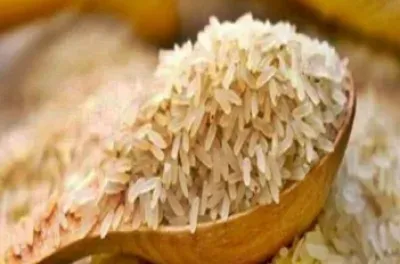
Of the total 895 crore litres supplied, grain-based feedstocks contributed 624 crore litres, while sugar-based feedstocks accounted for 271 crore litres. Among grain sources, maize emerged as the single largest contributor at 345 crore litres. Surplus rice procured from the Food Corporation of India (FCI) supplied 214 crore litres, and damaged food grains added another 64 crore litres.
Within the sugar segment, sugarcane juice led with 149 crore litres, followed by B-heavy molasses at 107 crore litres and C-heavy molasses at 15 crore litres.
What AIDA Said
Bharati Balaji, Deputy Director General of AIDA, noted that the dominance of grain-based sources — particularly maize and surplus FCI rice — reflects the strategic diversification of India's ethanol supply chain. 'The diversity of feedstocks strengthens India's ethanol programme by allowing the industry to utilise multiple domestic agricultural resources,' she said.
AIDA characterised the data as evidence of a maturing supply ecosystem that is progressively reducing dependence on any single feedstock pathway — a structural resilience that earlier, sugar-centric blending rounds lacked.
The Demand Challenge Ahead
Despite the supply-side progress, AIDA flagged a growing concern: as domestic ethanol production capacity continues to expand, ensuring adequate and predictable demand avenues will become increasingly critical. The association warned that supply growth could outpace current absorption channels if new end-use markets are not developed in parallel.
Notably, this concern is expected to intensify as India moves beyond the current ethanol-blending programme for petrol and seeks to scale ethanol utilisation across flex-fuel vehicles (FFVs), compressed biogas (CBG), sustainable aviation fuel (SAF), and other industrial applications.
Broader Context
India's push to blend 20 per cent ethanol with petrol by 2025-26 — a target set under the national biofuel policy — has driven rapid capacity addition across distilleries over the past four years. The shift toward grain-based feedstocks, particularly maize, has been a deliberate policy lever to reduce sugar-sector volatility and deploy surplus agricultural produce. This is the first ESY where grain sources have so decisively outpaced sugar-based supply — marking a structural shift in the programme's feedstock architecture.
With blending targets already close to achievement, the next phase of India's ethanol ambition hinges on diversifying into aviation and mobility fuels, where demand frameworks are still being formulated.
Point of View
Yet the demand scaffolding for the next phase — flex-fuel vehicles, sustainable aviation fuel, compressed biogas — remains embryonic. The programme's trajectory so far has been supply-led; the next chapter must be demand-architected, or surplus ethanol risks sitting idle in tanks rather than engines. Policymakers need to move faster on FFV mandates and SAF blending norms before capacity overtakes markets.
NationPress
13 Sept 2026
Frequently Asked Questions
How much ethanol has India supplied under ESY 2025-26 so far?
India supplied 895 crore litres of ethanol by the end of August 2026 under the Ethanol Supply Year (ESY) 2025-26, according to AIDA data. This represents approximately 85 per cent of the 1,048 crore litres contracted for the period.
Which feedstock contributed the most to India's ethanol supply in 2025-26?
Maize was the single largest feedstock contributor at 345 crore litres, followed by surplus FCI rice at 214 crore litres. Grain-based sources collectively supplied 624 crore litres — nearly 70 per cent of the total.
Why is grain overtaking sugar as the dominant ethanol feedstock in India?
India's policy has deliberately encouraged grain-based ethanol — particularly maize and surplus rice — to reduce dependence on the sugar sector and utilise agricultural surpluses more efficiently. This diversification also insulates the blending programme from sugar price volatility and seasonal supply swings.
What is the key challenge facing India's ethanol programme going forward?
AIDA has flagged that as ethanol production capacity expands rapidly, ensuring adequate and predictable demand will become critical. The association has pointed to flex-fuel vehicles (FFVs), compressed biogas (CBG), and sustainable aviation fuel (SAF) as the key demand channels that need to be developed urgently.
What is India's ethanol blending target and how close is it?
India has targeted 20 per cent ethanol blending with petrol by ESY 2025-26 under its national biofuel policy. Reaching 85 per cent of contracted supply volumes by August suggests the programme is on track, though the final blending percentage for the full year has not yet been disclosed.