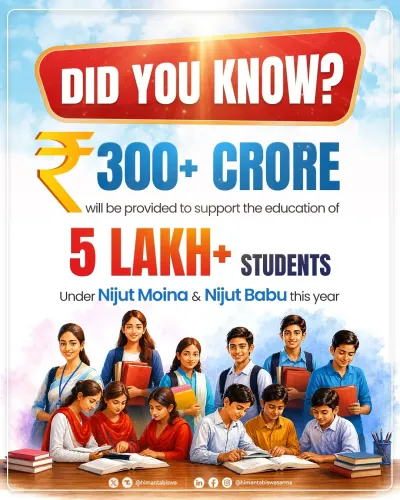
Assam CM Office: ₹58.59 cr for 5.42 lakh students under Nijut Moina-Babu

Synopsis
Assam's Chief Minister's Office has announced disbursement of ₹58.59 crore to over 5.42 lakh students under the Nijut Moina and Nijut Babu schemes, providing tiered monthly stipends from Class XI through postgraduate level to curb dropout rates.
Key Takeaways
4,39,598 girl students will receive a combined ₹48.22 crore under the Nijut Moina scheme.
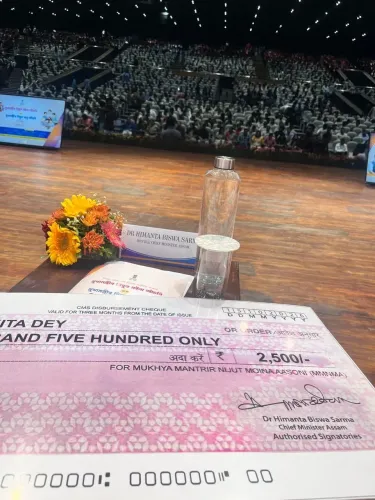
Monthly stipends under Nijut Moina: ₹800 (Classes XI–XII), ₹1,250 (undergraduate), ₹2,500 (postgraduate).
1,02,501 boy students will receive ₹10.37 crore under the Nijut Babu scheme.
Monthly stipends under Nijut Babu: ₹1,000 (undergraduate), ₹2,000 (postgraduate).
Combined outlay across both schemes totals ₹58.59 crore for over 5.42 lakh beneficiaries .
Both schemes use a tiered structure designed to support students at the education levels where dropout risk is highest.
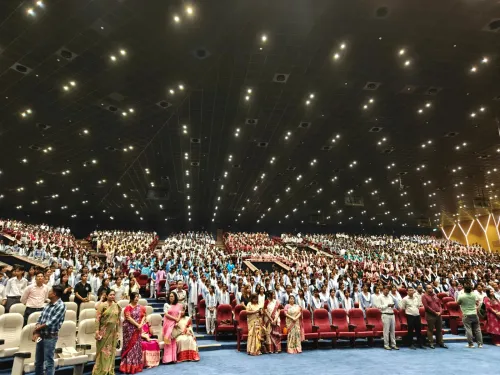
More than 5.42 lakh students across Assam are set to receive direct monthly cash support for their education — a combined disbursement of ₹58.59 crore under two state welfare schemes announced by the Chief Minister's Office of Assam on Thursday, 15 October 2026.
₹48.22 crore flowing to 4.39 lakh girls under Nijut Moina
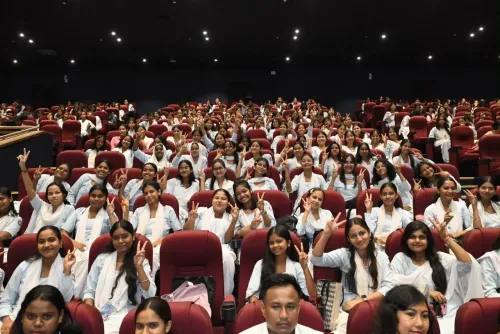
The larger of the two tranches belongs to Nijut Moina, Assam's flagship girl-student assistance programme. Under this round, 4,39,598 girl students will collectively receive ₹48.22 crore. The monthly stipends are tiered by level: ₹800 per month for students in Classes XI and XII, ₹1,250 per month for undergraduates, and ₹2,500 per month for postgraduate students.
The graduated structure is deliberate — the amounts rise as a student climbs the academic ladder, at precisely the stage where financial pressure most often forces early exit. Dropout rates in India historically spike at the transition from school to college, and again before postgraduate enrolment, both points where Nijut Moina now plants a financial floor.
Nijut Babu extends the net to 1.02 lakh boys
Running alongside it, Nijut Babu — the scheme's counterpart for male students — will disburse ₹10.37 crore to 1,02,501 boys. Monthly support under this scheme is set at ₹1,000 for undergraduate and ₹2,000 for postgraduate studies. Nijut Babu does not cover Classes XI–XII, reflecting the programme's focus on higher-education retention specifically for boys.
Together, the two schemes cover a wide cross-section of Assam's student population — from a Class XI girl in a district college town to a postgraduate scholar at a state university — with a single policy lever: keep the money coming every month, remove the excuse to drop out.
Assam's broader push on student welfare
Indian state governments have increasingly leaned on targeted direct-benefit schemes to address enrollment gaps in higher education. Assam has been among the more active states on this front, layering multiple student welfare programmes across gender and education level. The twin-scheme model — separate tracks for girls and boys with different stipend scales — acknowledges that the barriers to continued education are not identical across genders or across the school-to-college divide.
With ₹58.59 crore committed across both schemes in this single cycle, the scale of the outlay underscores how central direct student support has become to Assam's education policy calculus. The real test, as always, will be the speed and completeness of actual disbursement — and whether the students most at risk of dropping out are the ones the money actually reaches first.
Point of View
The state is effectively pricing the cost of staying enrolled, which is a sharper intervention than flat-rate grants. The gender differentiation — girls covered from Class XI, boys only from undergraduate — reflects acknowledged data on where each cohort is most vulnerable to dropping out. Whether this model influences other northeastern or aspirational states will depend on how cleanly Assam can demonstrate last-mile disbursement at this scale.
NationPress
15 Oct 2026
Frequently Asked Questions
What is the Nijut Moina scheme in Assam?
Nijut Moina is an Assam government scheme that provides monthly financial assistance to girl students at the Class XI–XII, undergraduate and postgraduate levels to support their continued education and reduce dropout rates.
How much money do girl students get under Nijut Moina?
Under Nijut Moina, girl students receive ₹800 per month for Classes XI–XII, ₹1,250 per month for undergraduate studies, and ₹2,500 per month for postgraduate studies.
What is the Nijut Babu scheme and who is eligible?
Nijut Babu is Assam's monthly stipend scheme for boy students pursuing undergraduate or postgraduate education. Eligible students receive ₹1,000 per month for undergraduate and ₹2,000 per month for postgraduate studies.
How many students benefit from Nijut Moina and Nijut Babu in 2026?
In the latest disbursement cycle announced on 15 October 2026 , 4,39,598 girls benefit under Nijut Moina and 1,02,501 boys under Nijut Babu — over 5.42 lakh students in total.
What is the total amount disbursed under both Assam student schemes?
The combined disbursement is ₹58.59 crore — ₹48.22 crore under Nijut Moina and ₹10.37 crore under Nijut Babu.