How Will India's BRICS Chairmanship Emphasize a Humanity-First Approach?
Synopsis
As India prepares to chair BRICS in 2026, External Affairs Minister S. Jaishankar emphasizes a strategic focus on humanity and people-centric development. This initiative aims to unite member nations for collective global welfare, addressing intertwined challenges while fostering cooperation and innovation. Discover how India plans to lead BRICS into a sustainable future.
Key Takeaways
Humanity-first and people-centric approach emphasized.
Focus on collaboration and sustainability.
Four key priorities: Resilience, Innovation, Cooperation, and Sustainability.
20th anniversary of BRICS in 2026.
Logo represents unity and diversity among member nations.
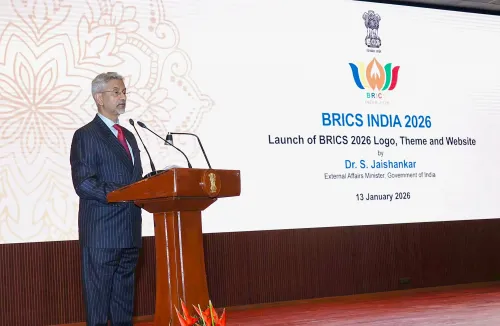
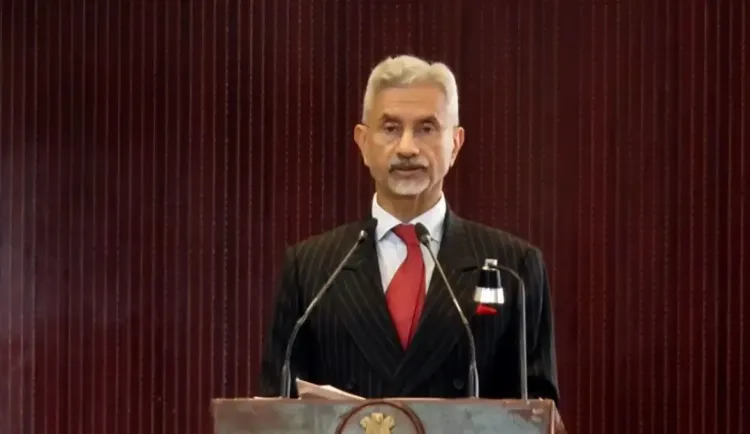
New Delhi, Jan 13 (NationPress) The External Affairs Minister (EAM) S. Jaishankar stated on Tuesday that India is embracing its BRICS chairship with a humanity-first and people-centric strategy aimed at uniting the collective capabilities of member nations for enhanced global welfare.
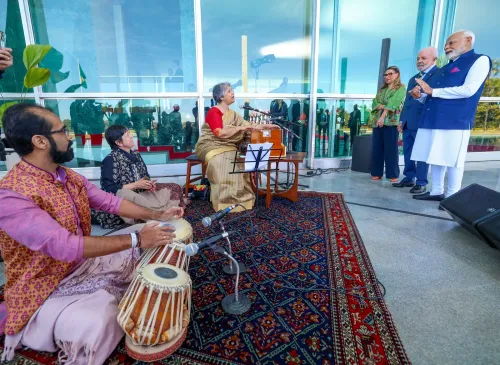
During the unveiling of the BRICS India 2026 website, logo, and theme, EAM Jaishankar highlighted that BRICS has broadened its agenda and membership over the years to adapt to evolving global dynamics, while maintaining its commitment to people-focused development, encouraging dialogue, and promoting effective collaboration.
Offering greetings for Makar Sankranti, Lohri, Magh Bihu, and Pongal, the EAM remarked, "Just like these festivals represent hope, renewal, and goodwill, India's BRICS chairship will strive to harness the collective strengths of BRICS nations for enhanced global welfare. As India gears up to take on the BRICS chairship in 2026, it does so at a pivotal point in the group's evolution."
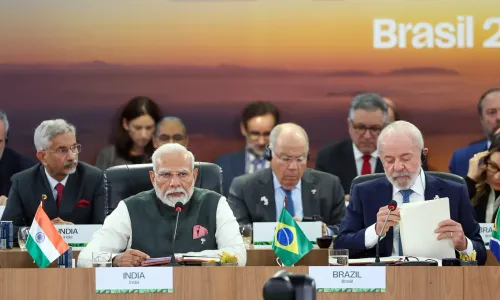
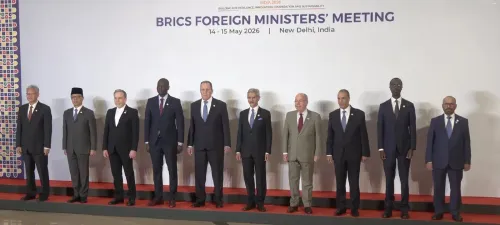
In 2026, BRICS will mark its 20th anniversary, having grown into a significant platform for collaboration among emerging markets and developing economies.
"The present global landscape presents complex and intertwined challenges, including geopolitical uncertainties, intricate economic conditions, climate-related risks, technological advancements, and ongoing development disparities affecting nations across various regions," he added.
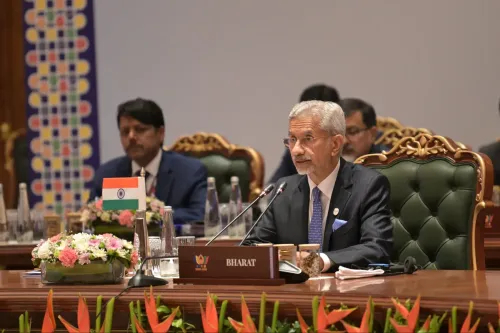
Emphasizing India's approach for its BRICS chairship, EAM Jaishankar stated, "In this scenario, BRICS serves as a vital forum for encouraging dialogue and collaboration, while providing actionable responses that consider national priorities at different developmental stages. India approaches its chairmanship with a humanity-first and people-centric perspective, guided by Prime Minister Narendra Modi's vision."
He mentioned that the theme for India's chairmanship, 'Building Resilience, Innovation, Cooperation, and Sustainability', reflects India's conviction that collaboration among BRICS members can effectively tackle shared challenges in a balanced and inclusive way.
This theme underscores the importance of enhancing capacities, fostering innovation, and ensuring sustainable development for the collective good.
Discussing the logo for India's BRICS chairship, he noted, "The logo revealed today embodies this approach. It merges elements of tradition and modernity, with petals that incorporate the colors of all BRICS member nations, signifying unity, diversity, and a strong sense of shared purpose. The logo illustrates that BRICS derives strength from the collective contributions of its members while honoring their unique identities."
He announced that India’s chairmanship will focus on four main priorities: Resilience, Innovation, Cooperation, and Sustainability, providing a coherent framework across three foundational pillars: political and security, economic and financial, and cultural and people-to-people exchanges.
"Under the Resilience pillar, India aims to collaborate with BRICS partners to enhance institutional capacities and build resilience in areas such as agriculture, health, disaster risk reduction, energy, and supply chains, including through cooperative frameworks that boost collective preparedness and response. Innovation continues to be a key driver of global economic progress," EAM Jaishankar stated.
He further expressed that the implementation of new and emerging technologies is crucial for addressing socio-economic challenges, particularly those faced by developing nations, while upholding a people-centric approach. He emphasized that enhanced collaboration in sectors such as startups, MSMEs, and emerging technologies could significantly contribute to creating a more equitable world.
"India equally prioritizes collaboration and sustainability and will strive to advance climate action, promote clean energy, and support sustainable development paths that are fair and considerate of national circumstances," concluded the EAM.
Point of View
India's approach to its BRICS chairmanship is commendable, showcasing a commitment to global welfare and cooperation. The emphasis on a humanity-first and people-centric strategy aligns with India's role as a leader among emerging economies, fostering dialogue and collaboration at a time when global challenges require united responses.
NationPress
3 Oct 2026
Frequently Asked Questions
What is the main focus of India's BRICS chairmanship?
India's BRICS chairmanship will focus on a humanity-first and people-centric approach, aiming to unite the collective capabilities of member nations for enhanced global welfare.
When will India assume the BRICS chairmanship?
India will assume the BRICS chairmanship in 2026, coinciding with the 20th anniversary of BRICS.
What are the key priorities of India's BRICS chairmanship?
The key priorities include Resilience, Innovation, Cooperation, and Sustainability, focusing on political, economic, and cultural exchanges.
How does India plan to address global challenges through BRICS?
India plans to enhance institutional capacities, promote innovation, and ensure sustainable development while addressing shared global challenges.
What is the significance of the BRICS logo unveiled by India?
The logo reflects a blend of tradition and modernity, incorporating the colors of all BRICS member nations, symbolizing unity, diversity, and shared purpose.