CM Yogi Hails Cabinet Nod for VISTAR Statistics Scheme

Synopsis
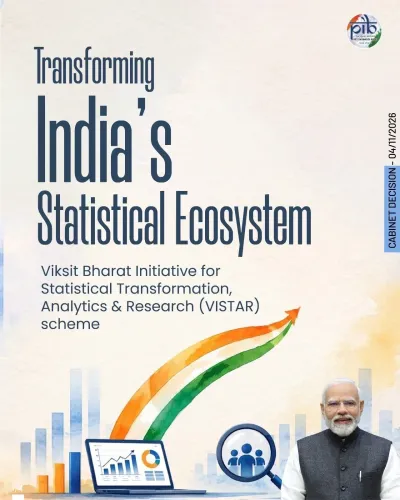
The Union Cabinet under PM Modi has approved VISTAR, a five-year scheme to overhaul India's statistical surveys, methodological research, and digital data systems. UP CM Yogi Adityanath hailed the move as a key step toward evidence-based governance under the Viksit Bharat framework.
Key Takeaways
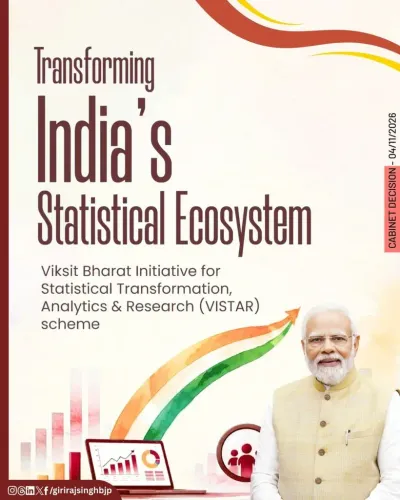
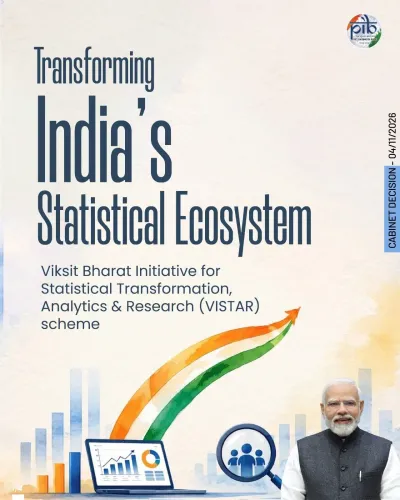
VISTAR — Viksit Bharat Initiative for Statistical Transformation, Analysis and Research — approved by the Union Cabinet on 4 November 2026 .
Scheme runs for five years: 2026-27 to 2030-31 , covering surveys, methodological research, digital transformation and national data administration.
Nodal ministry is MoSPI (Ministry of Statistics and Programme Implementation) .
The scheme fits the Viksit Bharat 2047 framework, aiming to build a reliable data foundation for India's development goals.
Detailed budget allocations and implementation guidelines are anticipated in the Union Budget 2026-27 .
Reform lineage traces back to the Rangarajan Commission (2001) and the National Statistical Commission (2005) .
India's official data architecture just got a five-year mandate for reinvention. Uttar Pradesh Chief Minister Yogi Adityanath on Wednesday, 4 November 2026 welcomed the Union Cabinet's approval of the 'Viksit Bharat Initiative — Statistical Transformation, Analysis and Research' (VISTAR) scheme, calling the decision worthy of celebration and expressing heartfelt gratitude to Prime Minister Narendra Modi.
Posting on X, CM Yogi wrote in Hindi: 'अभिनंदनीय है' — 'this is commendable' — praising the Cabinet chaired by PM Modi for greenlighting VISTAR for the period 2026-27 to 2030-31. The scheme, he noted, will promote a holistic approach to conducting surveys, methodological research, digital transformation, and the administration of national data, while simultaneously upgrading India's official statistical system.
What VISTAR Sets Out to Fix
India's statistical machinery has long carried the scars of under-investment: outdated survey methodologies, fragmented data systems, and gaps in timeliness that hampered evidence-based policymaking — gaps thrown into sharp relief during the COVID-19 pandemic. VISTAR is the latest in a lineage of reform efforts that stretches back to the Rangarajan Commission report of 2001, which led to the constitution of the National Statistical Commission in 2005. That commission was itself a reckoning — an acknowledgement that India's data architecture needed structural, not cosmetic, repair.
The nodal body responsible for carrying VISTAR forward will be the Ministry of Statistics and Programme Implementation (MoSPI), which coordinates official statistical activity across the country. The five-year window aligns the scheme with the broader Viksit Bharat framework — Prime Minister Modi's vision of a fully developed India by 2047. You cannot build a developed economy on guesswork; you need data you can trust.
Digital Transformation at the Core
The VISTAR scheme's emphasis on digital transformation signals a deliberate push to integrate India's statistical operations with modern data infrastructure. Policymakers are watching closely for how the scheme will interact with the National Data Governance Framework Policy — a parallel digital-governance initiative aimed at making government data more accessible and machine-readable. The convergence of these two tracks could meaningfully change how India's planners see the country they are trying to shape.
Detailed implementation guidelines and budget allocations for VISTAR are expected to be spelled out in the Union Budget 2026-27, giving analysts their first real look at the financial muscle behind the ambition.
For a government that has staked much of its legacy on the promise of a 'Viksit Bharat', the credibility of that promise will ultimately rest on the quality of the numbers used to measure it — and VISTAR is the bet that those numbers will finally be good enough.
Point of View
Acknowledging that development claims require verifiable data. For CM Yogi Adityanath, publicly welcoming the scheme reinforces his alignment with the Centre's governance modernisation agenda ahead of the next electoral cycle. The scheme also reflects a broader administrative consensus — built since 2005 — that India's statistical infrastructure has historically been a weak link in policymaking. Whether VISTAR can deliver on its promise will depend heavily on the budget commitments revealed in 2026-27 and the speed of integration with the National Data Governance Framework.
NationPress
5 Nov 2026
Frequently Asked Questions
What is the VISTAR scheme approved by the Union Cabinet?
VISTAR stands for Viksit Bharat Initiative — Statistical Transformation, Analysis and Research. It is a central scheme approved by the Union Cabinet for the period 2026-27 to 2030-31, aimed at modernising India's survey systems, methodological research, digital data infrastructure, and the administration of national statistics.
Which ministry will implement the VISTAR scheme?
The Ministry of Statistics and Programme Implementation (MoSPI) is the nodal ministry responsible for implementing and coordinating the VISTAR scheme.
How does VISTAR relate to Viksit Bharat?
VISTAR is explicitly framed as part of the 'Viksit Bharat' (Developed India) initiative, PM Modi's overarching vision of making India a fully developed nation by 2047. Reliable, modern statistics are considered foundational to achieving and measuring that goal.
Why did CM Yogi Adityanath comment on the VISTAR scheme?
CM Yogi Adityanath posted on X to welcome and commend the Union Cabinet's approval of VISTAR, expressing gratitude to PM Modi and highlighting the scheme's potential to strengthen India's official statistical system.
What is the history of statistics reform in India?
India's statistical reform has a long lineage. The Rangarajan Commission report in 2001 recommended an overhaul of the country's statistical architecture, leading to the constitution of the National Statistical Commission in 2005. VISTAR is the latest multi-year effort to address ongoing gaps in data quality and timeliness.