BRICS 2026: India steers historic deadlock as Iran-UAE rift splits summit
Synopsis
For the first time in BRICS history, a ministerial summit ended without a joint statement — and it happened on India's watch. The Iran-UAE fault line, a direct consequence of the 2024 expansion, cracked open in New Delhi, forcing India to substitute a Chair's Statement for consensus. It is a stress test that reveals how a larger BRICS is also a more fractured one.
Key Takeaways
The BRICS Foreign Ministers' Summit in New Delhi on 14–15 May 2026 ended without a joint statement — a first in the bloc's history.
Iran and the UAE , both admitted in the 2024 BRICS expansion , clashed over West Asia conflict, blocking consensus.
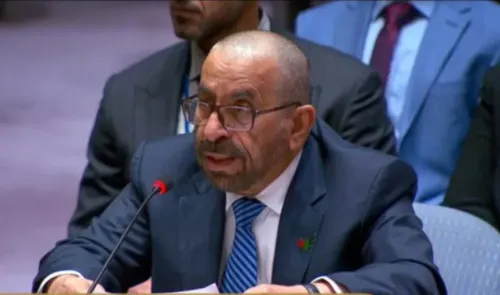
Iranian FM Abbas Araghchi urged condemnation of alleged US and Israeli violations; UAE Minister Khalifa bin Shaheen Al Marar rejected the remarks.
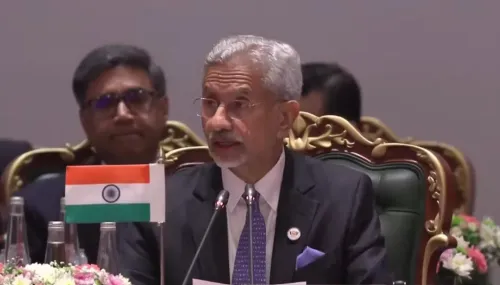
Jaishankar acknowledged 'differing views' among members on West Asia; India released a Chair's Statement and Outcome Document instead.
China's foreign minister was reportedly absent, with Beijing focused on the concurrent US-China summit in Beijing between Donald Trump and Xi Jinping .
The meeting was originally intended to set the agenda for the BRICS heads-of-state summit in September 2026 .
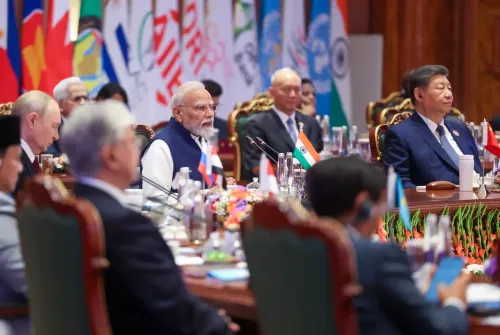
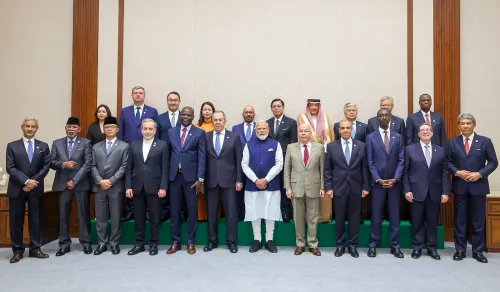
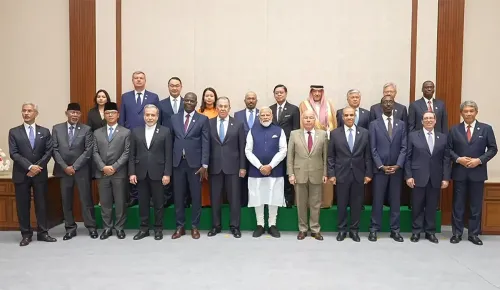
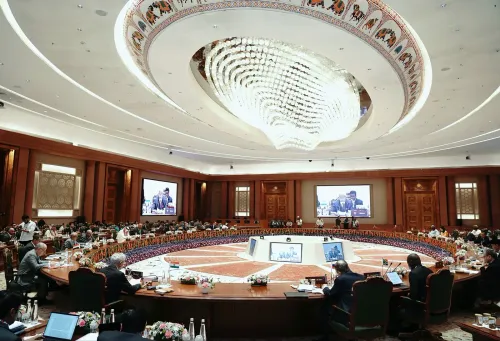
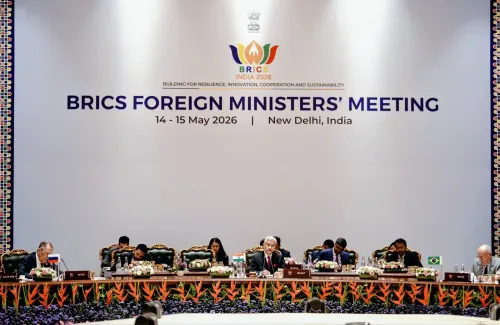
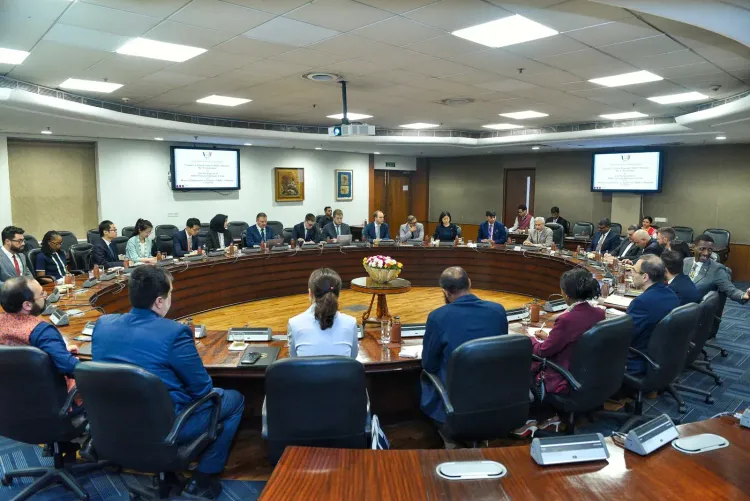
India navigated an unprecedented diplomatic crisis at the BRICS Foreign Ministers' Summit held in New Delhi on 14–15 May 2026, as deep divisions between Iran and the United Arab Emirates (UAE) prevented the bloc from issuing a joint statement for the first time in its history. The two-day ministerial meeting, chaired by India, concluded instead with a Chair's Statement and an Outcome Document — a significant departure from established BRICS practice, according to a report in the Sunday Independent.
Why the Joint Statement Failed
The breakdown, according to the report, stemmed from contradictions baked into the 2024 BRICS expansion — strongly backed by China — which brought both Iran and the UAE into the grouping despite their longstanding regional rivalry. Iranian Foreign Minister Abbas Araghchi reportedly urged BRICS members to condemn alleged 'violations of international law by the United States and Israel.' UAE Minister of State Khalifa bin Shaheen Al Marar rejected those remarks outright and accused Iran of attempting to justify attacks against Gulf nations. With no consensus possible, a customary joint communiqué was off the table.
China's Absence and the US-China Factor
The summit's dynamics were further complicated by the concurrent US-China summit in Beijing, where US President Donald Trump held talks with Chinese President Xi Jinping. China's foreign minister was reportedly absent from the New Delhi meeting as Beijing focused on hosting the American delegation — a notable signal of where Beijing's immediate priorities lay, and one that left a visible gap in the BRICS proceedings.
What India Said
External Affairs Minister S. Jaishankar, chairing the summit, acknowledged without hesitation: 'There were differing views among some members regarding the situation in West Asia/the Middle East.' India's BRICS Sherpa and Ministry of External Affairs Secretary Sudhakar Dalela maintained that the Outcome Document still reflected the 'common position' of members on almost all subjects — framing the result as a managed divergence rather than a collapse.
Agenda Overshadowed by West Asia Conflict
The ministerial meeting was originally convened to prepare for the BRICS heads-of-state summit scheduled for September 2026, with discussions planned around trade finance, local currency settlements, UN reforms, and the New Development Bank (NDB). However, the ongoing conflict involving Iran, Israel, and the United States consumed much of the available diplomatic bandwidth, pushing the core economic agenda to the margins.
India's 'Pragmatic Realism' Assessed
The Sunday Independent report concluded that India's handling of the summit reflected 'pragmatic realism,' arguing that BRICS should currently be viewed as a flexible cooperation platform rather than a fully unified geopolitical bloc. India's approach, the report argued, demonstrated the importance of remaining constructively engaged while carefully managing the internal contradictions of an expanded grouping that now spans rival regional powers. This is the first time in the bloc's history that a ministerial summit has ended without a joint statement — a marker of how consequential the 2024 enlargement has proven to be.
Point of View
Prioritising bloc size over internal coherence. India, now holding the chair, is left managing a contradiction it did not create. The deeper question is whether a BRICS that cannot agree on West Asia can credibly advance its core agenda of trade finance and de-dollarisation. 'Pragmatic realism' is a dignified framing, but it also describes a bloc that is becoming harder to steer the larger it grows.
NationPress
14 Oct 2026
Frequently Asked Questions
Why did the BRICS 2026 ministerial summit end without a joint statement?
Deep divisions between Iran and the UAE over the West Asia conflict prevented consensus among member nations. It was the first time in BRICS history that a ministerial meeting concluded without a customary joint statement, with India instead releasing a Chair's Statement and Outcome Document.
What triggered the Iran-UAE clash at the BRICS summit?
Iranian Foreign Minister Abbas Araghchi reportedly urged BRICS members to condemn alleged violations of international law by the United States and Israel. UAE Minister of State Khalifa bin Shaheen Al Marar rejected those remarks and accused Iran of seeking to justify attacks on Gulf nations, making consensus impossible.
How did India handle the BRICS deadlock?
As chair, External Affairs Minister S. Jaishankar acknowledged the divisions openly and released a Chair's Statement along with an Outcome Document rather than forcing a diluted joint communiqué. India's BRICS Sherpa Sudhakar Dalela said the document still reflected a common position on most subjects.
Why was China's foreign minister absent from the BRICS summit?
China's foreign minister was reportedly absent because Beijing was simultaneously hosting US President Donald Trump for a US-China summit with President Xi Jinping, signalling that Washington-Beijing ties took priority over the New Delhi ministerial.
What was the original agenda of the BRICS Foreign Ministers' Summit?
The meeting was intended to prepare for the BRICS heads-of-state summit scheduled for September 2026, covering trade finance, local currency settlements, UN reforms, and the New Development Bank. The West Asia conflict overshadowed much of that agenda.