India's BRICS chairmanship offers pragmatic diplomacy model amid superpower rivalries
Synopsis
India chaired a BRICS foreign ministers' meeting that ended without a joint statement for the first time ever — a breakdown rooted in China's 2024 decision to admit both Iran and the UAE despite their deep rivalry. Rather than forcing false consensus, India held the line with pragmatic realism, even as China's foreign minister skipped the meeting to host US officials in Beijing. The episode exposes the structural fault lines now running through the world's most-watched emerging-economy bloc.
Key Takeaways
The BRICS Foreign Ministers' Meeting in New Delhi on 14–15 May ended without a joint statement — a first in the bloc's history.
Sharp divisions between Iran and the UAE , both admitted in the 2024 expansion , made consensus impossible.
India issued a chair's statement and outcome document acknowledging 'differing views among some members.' China's Foreign Minister was absent from the BRICS meeting, hosting a US delegation in Beijing simultaneously.
A report in South Africa's Independent Online described India's handling as a model of pragmatic realism for middle powers navigating superpower dynamics.
The 2024 BRICS expansion , championed by China , is cited as prioritising 'Chinese leverage over bloc harmony.'
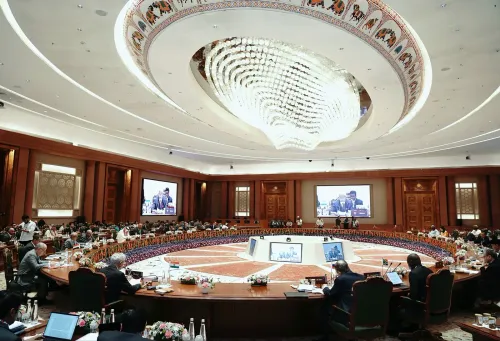
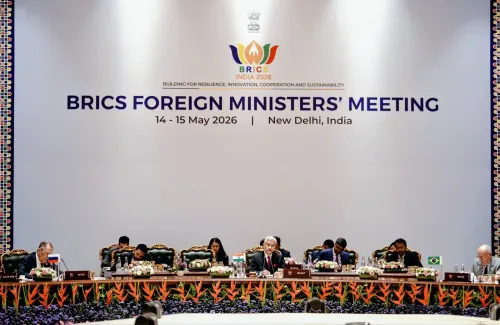
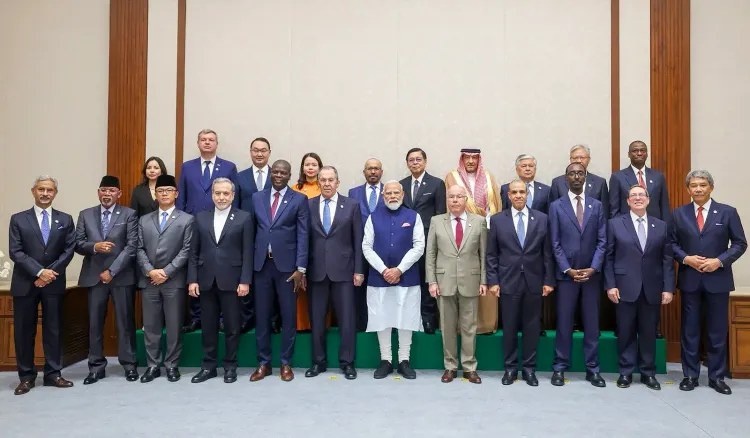
India's measured stewardship of the BRICS Foreign Ministers' Meeting in New Delhi on 14–15 May has drawn international attention as a template for navigating great-power tensions, according to a report in South African newspaper Independent Online. The meeting, chaired by India, concluded without a joint statement — a first in the bloc's history — yet analysts argue India's handling of the impasse demonstrated rare diplomatic discipline.
Why There Was No Joint Statement
The May 14–15 meeting ended with a chair's statement and an outcome document instead of a consensus communiqué, with the documents explicitly acknowledging 'differing views among some members.' The breakdown stemmed from sharp divisions between Iran and the United Arab Emirates (UAE), whose longstanding rivalry made a unified position impossible. It marked the first time in BRICS history that the foreign ministers' gathering failed to produce a joint statement.
China's Absence and the Superpower Dynamic
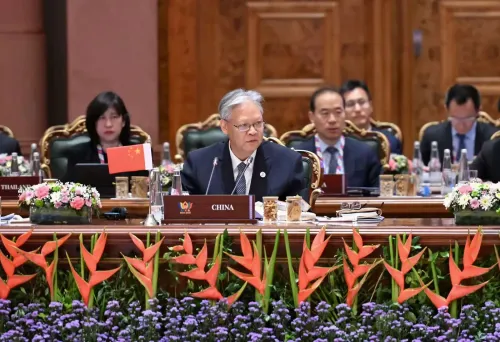
As the deadlock unfolded in New Delhi, China's top leadership was simultaneously hosting a US delegation in Beijing — with the Chinese Foreign Minister notably absent from the BRICS meeting to receive American officials. The report observed that this pattern reflects a broader superpower tendency: great powers such as the US and China maintain direct, high-level diplomatic channels with each other, even as their strategic moves generate friction among smaller and middle powers within multilateral forums.
'The parallel events underscored a consistent pattern: China advanced its broader geopolitical architecture on its own terms, even when the resulting frictions left the rest of BRICS preoccupied with infighting rather than projecting unified Global-South leadership,' the report noted.
The 2024 Expansion and Its Fallout
The roots of the New Delhi impasse, the report argued, lie in the 2024 BRICS expansion — strongly championed by China — which admitted both Iran and the UAE as full members despite their entrenched rivalries and Iran's conflicts with most Arab League states. According to the analysis, the expansion served 'Beijing's strategic calculus' more than the collective cohesion of the group. Iran's entry, the report said, was a 'calculated risk that prioritised Chinese leverage over bloc harmony.'
This left India, as chair, to manage the predictable regional crisis that followed — a crisis it did not create but was obligated to contain.
India's Approach: Pragmatic Realism
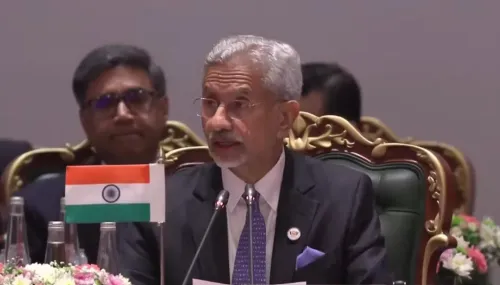
Rather than withdrawing in frustration or forcing a false consensus, India's approach, as characterised by the report, was one of pragmatic realism. The recommended posture: 'Remain constructively engaged in the forum, skillfully manage the resulting contradictions and crises, extract whatever practical gains are realistically available, and maintain the clear-eyed discipline not to pretend that the bloc can yet speak with one coherent voice on volatile security issues.'
Notably, this is not merely a reactive stance — it reflects a deliberate Indian foreign policy philosophy that has defined New Delhi's engagement with multilateral groupings across the past decade, from the Shanghai Cooperation Organisation (SCO) to the G20.
What This Means for BRICS Going Forward
The episode raises a structural question about BRICS' future: whether a grouping that now spans geopolitical adversaries — Gulf states and Iran, India and China, Russia and Western-aligned new entrants — can sustain even a minimal common agenda. For now, analysts suggest the bloc's value lies less in collective declarations and more in bilateral and sub-group engagement on the sidelines. India's next diplomatic test will be how it manages the bloc's evolving agenda through the remainder of its stewardship.
Point of View
But that reading inverts the causality. China engineered a structurally incoherent expansion by admitting Iran and the UAE simultaneously, then sent its foreign minister to Beijing to host American officials while India managed the wreckage. India's pragmatic realism — holding the forum together without pretending to a unity that does not exist — is arguably the more honest and durable approach to multilateralism. The deeper question is whether BRICS, now spanning geopolitical adversaries, retains enough common ground to justify its brand as a unified Global South voice, or whether it is becoming a loose network whose real value is bilateral and sub-group engagement rather than collective declarations.
NationPress
14 Oct 2026
Frequently Asked Questions
Why did the BRICS Foreign Ministers' Meeting in New Delhi end without a joint statement?
The meeting ended without a joint statement because of irreconcilable divisions between Iran and the UAE, both admitted as full members in the 2024 BRICS expansion. A chair's statement and outcome document were released instead, acknowledging 'differing views among some members' — the first time in BRICS history that the foreign ministers' gathering failed to produce a consensus communiqué.
What is India's approach to managing BRICS divisions?
India's approach has been described as pragmatic realism — remaining constructively engaged, managing contradictions without forcing false consensus, and extracting practical gains where available. Rather than walking away or overstating bloc unity, New Delhi held the forum together as chair while acknowledging genuine disagreements.
How did China's role contribute to the BRICS impasse?
China championed the 2024 expansion that admitted both Iran and the UAE despite their longstanding rivalry, a move analysts say prioritised Chinese strategic leverage over bloc cohesion. Additionally, China's Foreign Minister was absent from the New Delhi meeting, hosting US officials in Beijing simultaneously — underlining Beijing's tendency to advance its own geopolitical agenda independently of BRICS dynamics.
What does the absence of a joint statement mean for BRICS?
It signals that the bloc, now enlarged to include geopolitical adversaries, struggles to maintain even a minimal common position on volatile security issues. Analysts suggest BRICS' near-term value may lie more in bilateral and sub-group engagement on the sidelines than in collective declarations.
Which countries' rivalry caused the breakdown at the New Delhi BRICS meeting?
The breakdown was primarily caused by divisions between Iran and the United Arab Emirates (UAE), which have longstanding rivalries and whose simultaneous membership — following the 2024 expansion — made consensus on security-related language impossible.