BRICS FMM: China envoy hails India's Chair statement as sign of broad consensus
Synopsis
India skipped a joint statement at the BRICS Foreign Ministers' Meeting over West Asia divisions — yet China's Ambassador called it a demonstration of 'broad consensus.' That diplomatic gap between New Delhi's caution and Beijing's optimism is the real story heading into China's BRICS chairmanship next year.
Key Takeaways
China's Ambassador Xu Feihong congratulated India for hosting the BRICS Foreign Ministers' Meeting in New Delhi on 15 May 2025 .
India issued a Chair's Statement instead of a joint statement, citing differing views on the West Asia/Middle East situation among members.
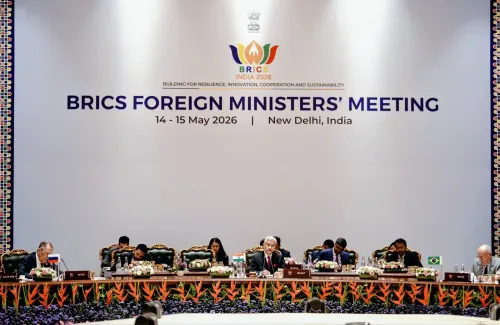
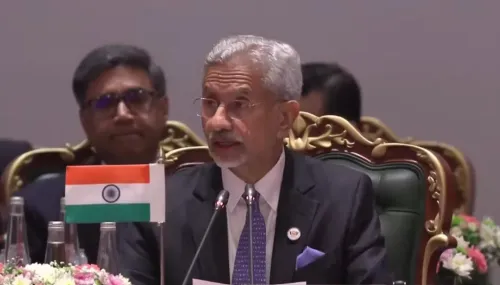
The meeting was chaired by External Affairs Minister S.
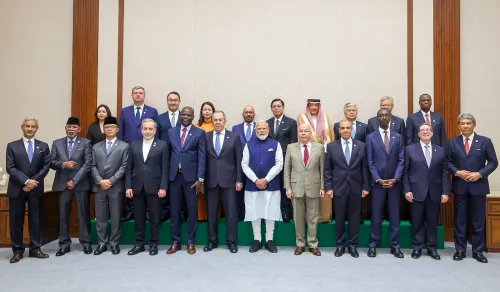
Jaishankar with participation from BRICS members and partner nations.
Ministers strongly condemned violations of international humanitarian law , including attacks on civilians and obstruction of humanitarian access.
China takes over as incoming BRICS Chair and has signalled readiness to 'deepen solidarity and cooperation' with all partners.
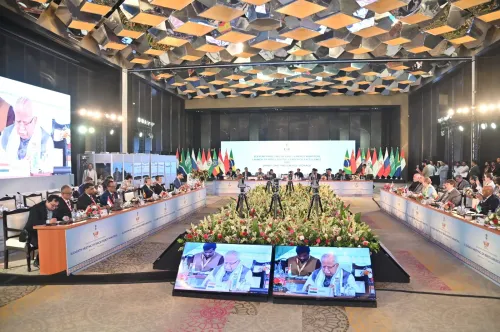
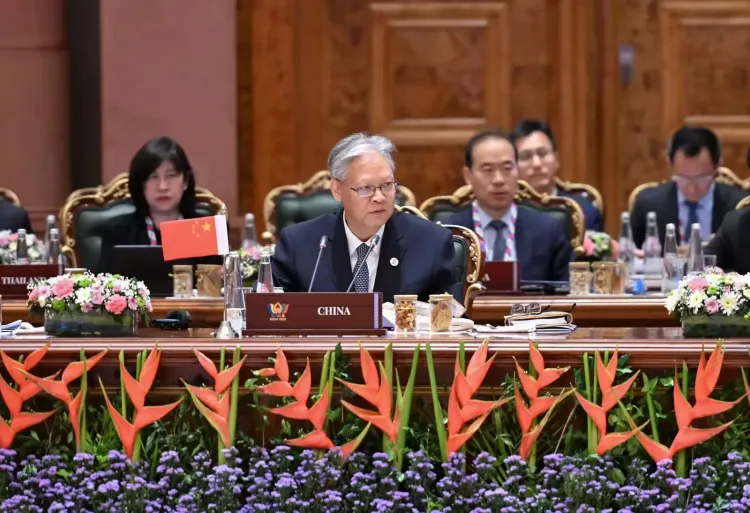
China's Ambassador to India, Xu Feihong, on Friday, 15 May congratulated India for successfully hosting the BRICS Foreign Ministers' Meeting (FMM) in New Delhi, calling the Chair's Statement and Outcome Document a demonstration of broad consensus on international and regional issues, global governance reform, and the future direction of BRICS.
What the Chinese Ambassador Said
In a post on X, Xu Feihong wrote: 'Congratulations to India on successfully hosting the BRICS FMM. In the face of a complex global landscape, BRICS countries engaged in in-depth and constructive discussions on a wide range of issues.'
He added: 'The Chair's Statement and Outcome Document demonstrate broad consensus on international and regional issues, the future development of BRICS, as well as reform of global governance and the multilateral system. As incoming Chair, China stands ready to work with all partners to deepen solidarity and cooperation, and looks forward to welcoming colleagues to China next year.'
Why India Issued a Chair's Statement, Not a Joint Statement
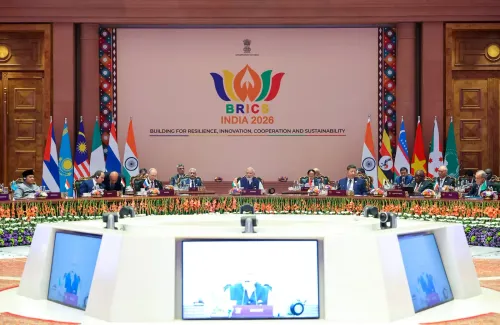
India chose to release a Chair's Statement rather than a joint communiqué at the close of the two-day meeting, citing differing views among members on the situation in West Asia and the Middle East. The meeting was chaired by External Affairs Minister S. Jaishankar and included foreign ministers and senior representatives from BRICS member countries and partner nations.
This distinction matters: a Chair's Statement reflects the host's synthesis of discussions and does not require consensus sign-off from all members, unlike a joint statement. The move signals that BRICS — now a significantly expanded grouping — is navigating real fault lines on geopolitical flashpoints.
Key Positions on Humanitarian Law and the Middle East
The BRICS foreign ministers collectively reaffirmed their commitment to strengthening multilateral cooperation to address humanitarian crises worldwide. They strongly condemned all violations of international humanitarian law, including deliberate attacks against civilians, destruction of civilian infrastructure, and obstruction of humanitarian access.
On the West Asia/Middle East situation, the Chair's Statement acknowledged that 'there were differing views among some members.' The range of perspectives articulated included the need for an early resolution of the crisis, the value of dialogue and diplomacy, respect for sovereignty and territorial integrity, upholding international law, ensuring safe maritime commerce through international waterways, and the protection of civilian lives. Several members also stressed the impact of recent developments on the global economic situation.
China's Role as Incoming BRICS Chair
China takes over the BRICS chairmanship next year, and Ambassador Xu Feihong's statement signals Beijing's intent to position itself as a unifying force within the bloc. His framing of the New Delhi meeting as evidence of 'broad consensus' is notably more optimistic than India's own decision to forgo a joint statement — a diplomatic nuance worth watching as the chairmanship transitions.
As BRICS continues to expand its membership and partner-nation framework, managing internal divergences on conflict zones will remain a central challenge for successive chairs.
Point of View
Not a factual description of what happened in the room. As Beijing assumes the chairmanship, it inherits the same fault lines: an expanded BRICS that includes countries on opposing sides of Middle East tensions cannot easily produce unified positions. The harder question is whether BRICS's value lies in consensus at all, or in the forum itself — and whether India's candid acknowledgement of disagreement is actually a more credible model for the bloc's future.
NationPress
29 Sept 2026
Frequently Asked Questions
What was the BRICS Foreign Ministers' Meeting held in New Delhi about?
The two-day BRICS Foreign Ministers' Meeting in New Delhi on 15 May 2025 brought together foreign ministers and senior representatives from BRICS member countries and partner nations to discuss international and regional issues, global governance reform, and the future development of BRICS. It was chaired by External Affairs Minister S. Jaishankar.
Why did India issue a Chair's Statement instead of a joint statement at the BRICS FMM?
India opted for a Chair's Statement because there were differing views among BRICS members on the situation in West Asia and the Middle East. A Chair's Statement reflects the host's synthesis of discussions and does not require unanimous agreement, unlike a joint statement.
What did China's Ambassador Xu Feihong say about the BRICS meeting outcome?
Ambassador Xu Feihong posted on X that the Chair's Statement and Outcome Document demonstrate broad consensus on international and regional issues, global governance reform, and the future of BRICS. He also confirmed China's readiness, as incoming BRICS Chair, to deepen solidarity and cooperation with all partners.
What positions did BRICS ministers take on international humanitarian law?
The ministers strongly condemned all violations of international humanitarian law, including deliberate attacks on civilians, destruction of civilian infrastructure, and obstruction of humanitarian access. They also underlined the need for accountability for such violations.
Which country holds the BRICS chairmanship next?
China takes over as the incoming BRICS Chair following India's 2025 tenure. Ambassador Xu Feihong indicated that China looks forward to welcoming BRICS colleagues for the next ministerial meeting.