Rijiju hails India's stable democracy on Independence Day
Synopsis
On Independence Day 2026, Union Minister Kiren Rijiju praised India's stable political mandate, vibrant democracy, independent judiciary and Constitution, arguing the world is increasingly recognising India's institutional strength — with a direct nod to Prime Minister Narendra Modi.
Key Takeaways
Union Parliamentary Affairs Minister Kiren Rijiju posted on 15 August 2026 , India's Independence Day, highlighting four pillars of national strength.
The four pillars named: a stable political mandate, a stable government, a vibrant democracy, and a strong judiciary — all guided by the Constitution of India .
Rijiju directly tagged Prime Minister Narendra Modi , framing the BJP government's electoral mandates as the foundation of India's global standing.
The post reflects a consistent BJP communications pattern of linking internal political continuity with rising international respect for India.
India's Constitution, adopted in 1950 , was placed as the capstone — the document that 'gives direction to all of us.'
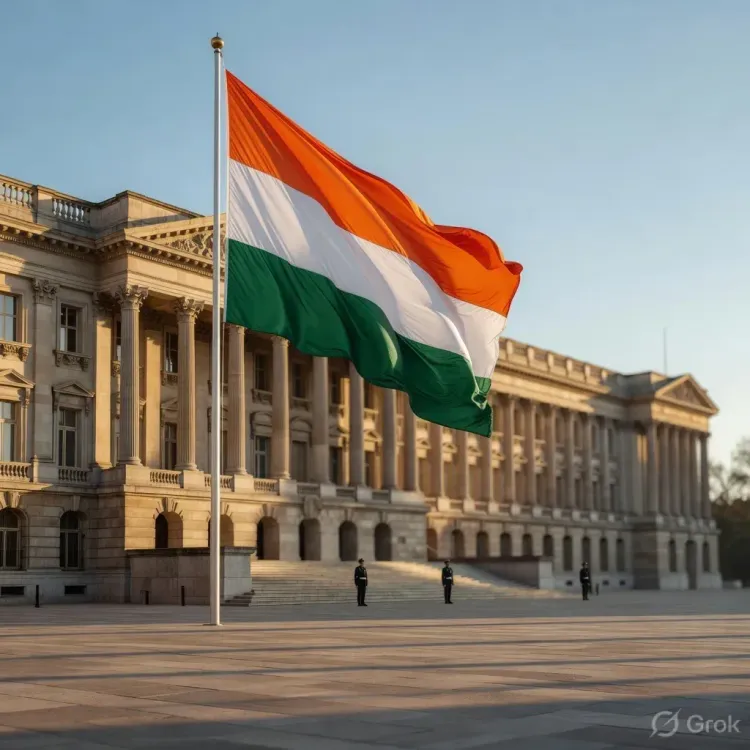
On Independence Day, 15 August 2026, Union Parliamentary Affairs and Minority Affairs Minister Kiren Rijiju invoked the pillars of India's republic — a stable political mandate, a vibrant democracy, a strong judiciary, and the Constitution — to argue that the world is finally taking notice of what India has built over nearly eight decades of self-rule.
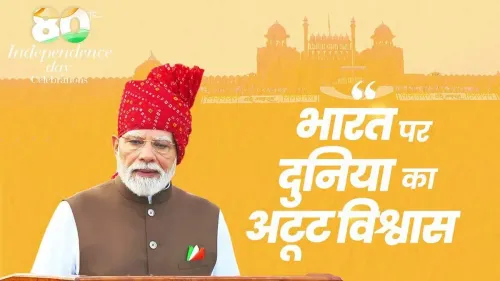
Rijiju posted in Hindi: 'आज भारत दुनिया के लिए एक स्वीकृत और सम्मानीय देश के रुप में बन रहा है' — 'Today, India is emerging as an accepted and respected nation for the world.' He credited Prime Minister Narendra Modi directly, tagging him in the post under the hashtag #IndiaIndependenceDay.
Four pillars Rijiju put on the record
The minister's framing was deliberate and structured: a stable political mandate, a stable government, a vibrant democracy, and a strong judiciary — all anchored by the Constitution of India, adopted in 1950. That is not casual Independence Day rhetoric. It is a four-point brief for India's international credibility, delivered on the most symbolic date on the national calendar.
The sequence matters. Rijiju placed the Constitution last — as the document that 'gives direction to all of us' — elevating it above electoral outcomes and institutional performance. In a political climate where constitutional values are frequently contested in public debate, that ordering is a statement in itself.
Modi's mandate as a diplomatic calling card
The BJP government under Narendra Modi has consistently presented its successive electoral mandates — in 2014 and 2019 — as evidence of democratic legitimacy that distinguishes India on the world stage. Rijiju's post extends that argument: stable governance at home translates into respect abroad. The phrase 'the world is now beginning to recognise our capability' signals that this is framed as an earned reputation, not a claimed one.
India, the world's largest democracy, has in recent years leaned into its institutional framework — free elections, an independent judiciary, constitutional supremacy — as soft-power assets in multilateral diplomacy. Senior ministers amplifying that message on Independence Day is part of an established communications pattern, but the directness of Rijiju's enumeration gives it a manifesto-like quality.
Seventy-nine years after independence, the argument India is making to the world is structural: it is not just a large economy or a strategic partner — it is a proven, self-correcting democratic republic. Whether that message lands in foreign capitals is the question the coming diplomatic season will begin to answer.
Point of View
The message targets an international audience sceptical of emerging-market democracies. The timing on Independence Day maximises symbolic weight while insulating the statement from immediate political scrutiny. It also reinforces Modi's personal brand as the guarantor of that stability, ahead of what is likely to be an active diplomatic calendar.
NationPress
29 Sept 2026
Frequently Asked Questions
What did Kiren Rijiju say on Independence Day 2026?
Rijiju said India is becoming an accepted and respected nation in the world, crediting its stable political mandate, vibrant democracy, strong judiciary, and the Constitution — and tagged Prime Minister Narendra Modi in the post.
Why did Rijiju mention the Constitution of India in his Independence Day post?
Rijiju placed the Constitution as the guiding document behind all of India's institutional strengths, framing it as the foundation that gives direction to citizens and institutions alike.
What is the significance of India's Independence Day 2026?
15 August 2026 marks India's 79th Independence Day, commemorating freedom from British rule in 1947 and celebrated annually with official ceremonies, flag hoisting, and public messaging from senior leaders.
How does the BJP link India's democracy to global standing?
The BJP has consistently argued that successive stable electoral mandates — in 2014 and 2019 under Narendra Modi — demonstrate democratic legitimacy that enhances India's credibility and respect in multilateral and bilateral diplomacy.
Who is Kiren Rijiju?
Kiren Rijiju is a senior BJP leader from Arunachal Pradesh serving as Union Minister of Parliamentary Affairs and Minister of Minority Affairs in the Narendra Modi government.