BRICS Delhi meet kept core agenda intact despite Gulf War tensions
Synopsis
Despite Iran and UAE delegates clashing over the Gulf War inside the room, the BRICS Foreign Ministers' meeting in New Delhi produced a 63-paragraph outcome document that advanced India's full priority list — from UN Security Council reform to Digital Public Infrastructure. The bloc's reported 'demise' looks premature, but the real stress test arrives at the Delhi leaders' summit in September.
Key Takeaways
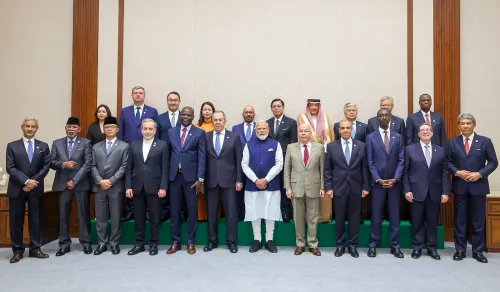
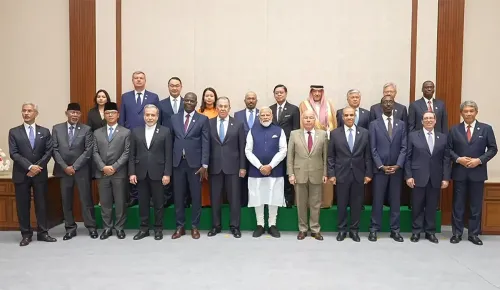
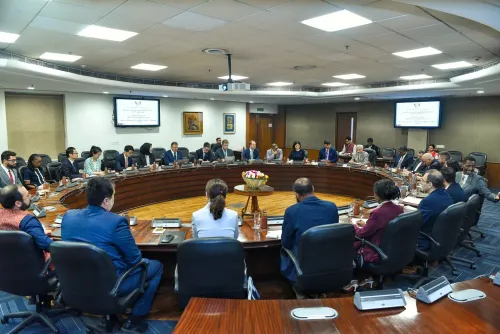
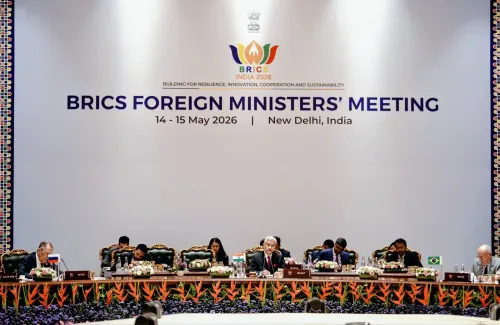
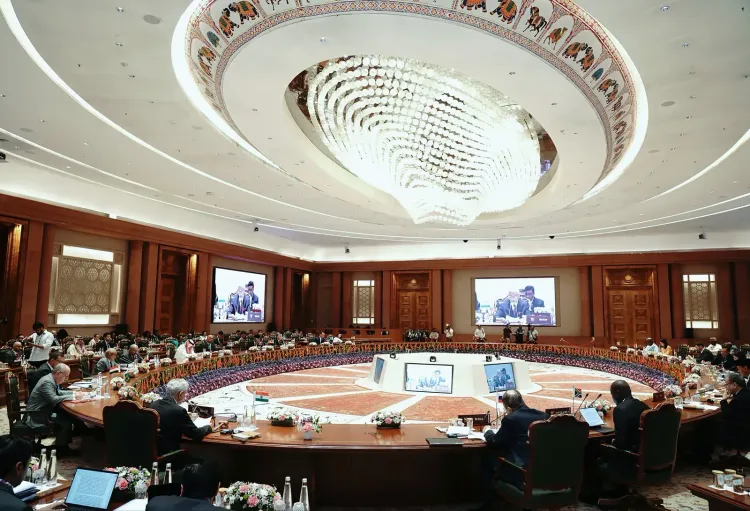
BRICS Foreign Ministers met in New Delhi on 14-15 May 2026 under India's 2026 chairship .
Members opted for a Chair's Statement and Outcome Document of 63 paragraphs instead of a joint communiqué.
Jaishankar acknowledged 'differing views' among members on the Gulf War , with Iran and the UAE at odds.
The outcome document reflected India's priorities: UN Security Council reform , food security , DPI , and counter-terrorism .
The Delhi leaders' summit is expected in September 2026 , serving as the next major test for the bloc's cohesion.
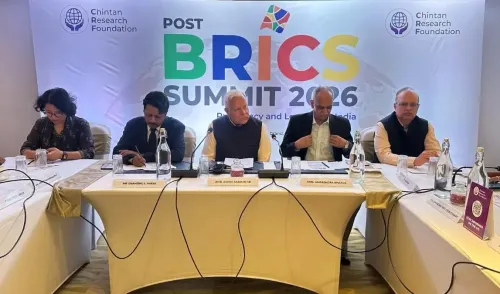
The BRICS Foreign Ministers' Meeting held in New Delhi on 14-15 May 2026 under India's 2026 chairship demonstrated that the bloc has successfully shielded its central agenda from the geopolitical pressures of the ongoing Gulf War, according to an analysis by the Politeia Research Foundation (PRF). The think tank cautioned, however, that the harder tests lie ahead and that 'quiet and smart diplomacy' will be indispensable for the upcoming Delhi summit, likely in September 2026.
A Chair's Statement Instead of a Joint Communiqué
In a notable procedural departure, member nations agreed not to release a joint statement following the two-day meeting. Instead, they settled on a 'Chair's Statement and Outcome Document' — a 63-paragraph document that, according to India's BRICS Sherpa and Ministry of External Affairs Secretary Sudhakar Dalela, reflected the 'common position' of members on nearly all subjects discussed.
The PRF analysis noted that a close reading of the document reveals meaningful forward movement on the bloc's core agenda despite persistent disagreements over the Gulf War. 'Some observers who rushed to announce the demise or downfall of BRICS may have got it wrong,' the report stated.
Gulf War Fault Lines Inside the Room
The meeting had been widely anticipated as a flashpoint. Delegates from Iran and the UAE — both BRICS members — were expected to trade accusations over the outbreak of armed hostilities and the continuing conflict involving Israel and the US. The tension did surface.
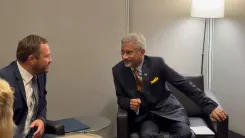
External Affairs Minister (EAM) S. Jaishankar, chairing the session, acknowledged the divisions without equivocation: 'There were differing views among some members regarding the situation in West Asia/the Middle East,' he said. Most participants, however, converged on a call for early resolution through dialogue and diplomacy, with shared emphasis on respect for sovereignty and territorial integrity.
There was also broad agreement on protecting safe maritime trade routes and civilian infrastructure — a convergence point that cut across the bloc's internal fault lines on the war itself.
India's Priorities Reflected in the Outcome Document
The PRF report highlighted that the outcome document mirrored almost all of India's key priorities for its chairship year. These included stronger language on UN Security Council reform, disaster management, food security, Digital Public Infrastructure (DPI), and counter-terrorism — areas where New Delhi has consistently pushed for sharper BRICS commitments.
This comes amid a broader Indian diplomatic effort to use its chairship to consolidate the bloc's institutional architecture rather than allow geopolitical noise to derail the agenda. Notably, the meeting served as a bridge between the Rio de Janeiro summit of July 2025 and the forthcoming Delhi summit.
What Comes Next
The Delhi summit, expected in September 2026, will be the definitive test of whether the bloc can translate the Foreign Ministers' convergence into durable commitments. The PRF analysis underscored that the foreign ministers' meeting was not an endpoint but a staging ground — with a 'rich menu of ideas and proposals' still to be addressed at the leaders' level. How India manages the Iran-UAE fault line and sustains momentum on its domestic priorities will shape the summit's legacy.
Point of View
For now. But procedural ingenuity is not the same as strategic consensus. India managed to get its full priority list into the outcome document, which is a real achievement, yet the Iran-UAE fault line is structural, not situational. If the Gulf War persists into September, the Delhi leaders' summit will face a far less manageable version of the same tension. India's chairship success will ultimately be judged not by the language in a 63-paragraph document but by whether the bloc emerges from Delhi with credible, enforceable commitments — particularly on UN Security Council reform, where BRICS rhetoric has long outrun results.
NationPress
25 Sept 2026
Frequently Asked Questions
What was decided at the BRICS Foreign Ministers' Meeting in New Delhi?
The meeting, held on 14-15 May 2026, produced a 63-paragraph Chair's Statement and Outcome Document instead of a traditional joint communiqué. The document reflected the common positions of member nations on nearly all subjects, including UN Security Council reform, food security, and counter-terrorism.
How did the Gulf War affect the BRICS meeting in New Delhi?
Delegates from Iran and the UAE clashed over the Gulf War, with EAM S. Jaishankar acknowledging 'differing views' on the West Asia situation. Despite this, most members converged on calls for dialogue, respect for sovereignty, and protection of maritime trade routes and civilian infrastructure.
Why did BRICS members not issue a joint statement?
Members agreed to forgo a joint communiqué and instead adopt a Chair's Statement and Outcome Document, a procedural choice that allowed the bloc to present a unified front without forcing consensus on contentious issues such as the Gulf War.
When is the BRICS Delhi leaders' summit expected?
The Delhi summit is expected to take place in September 2026. The Foreign Ministers' meeting was designed as a preparatory bridge between the July 2025 Rio de Janeiro summit and the upcoming Delhi gathering.
What are India's key priorities for its BRICS chairship?
India's priorities include stronger commitments on UN Security Council reform, disaster management, food security, Digital Public Infrastructure (DPI), and counter-terrorism — all of which were reflected in the outcome document from the New Delhi meeting.