Ranchi AQI hits 193 post-Diwali as air quality turns 'Unhealthy' in several areas
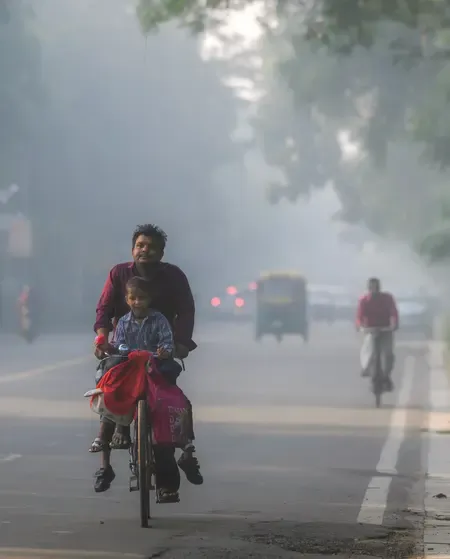
Synopsis
Ranchi's air quality crossed into 'Unhealthy' territory just days after Diwali, with Sector 2 recording an AQI of 193 on 9 November. PM2.5 from firecracker smoke, compounded by seasonal temperature drops and reduced wind, is trapping pollutants close to ground level — a pattern that puts children and those with respiratory conditions at immediate risk.
Key Takeaways
Ranchi's AQI reached 193 in Sector 2 on 9 November 2026 , the highest reading recorded in the post-Diwali spike.
Daily average AQI rose from 142–152 on 7 November to 156–164 on 8 November, then further on 9 November.
Deepatoli (191) , Dhumsa Toli (189) , Gandhi Nagar Colony (189) , and Koker Chowk (186) also recorded elevated readings.
PM2.5 is the dominant pollutant; firecrackers, vehicle emissions, dust, and seasonal weather all contribute.
Dr Jitendra Kumar of CCL Hospital, Gandhinagar advised vulnerable groups — children, the elderly, and those with respiratory conditions — to avoid outdoor activity during early morning and late evening.
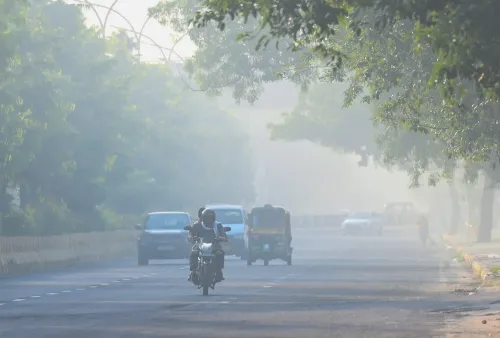
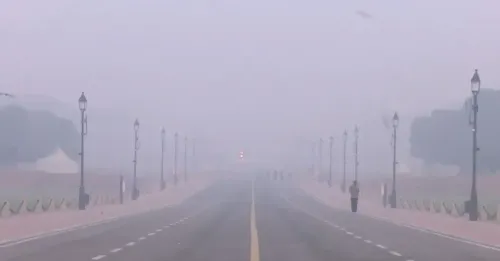
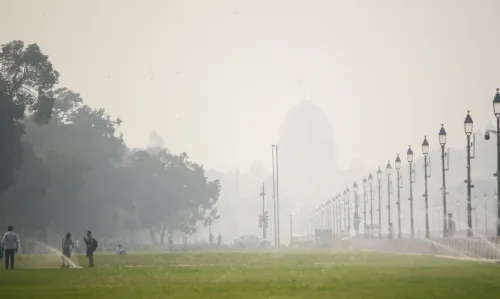
Air quality in Ranchi, the capital of Jharkhand, has deteriorated sharply in the three days following Diwali celebrations, with the city's Air Quality Index (AQI) climbing to 193 in several localities by 9 November 2026. The spike, driven largely by firecracker smoke and fine particulate matter, has pushed parts of the city into the 'Unhealthy' pollution category.
How Pollution Levels Have Risen
According to available data, Ranchi's daily average AQI ranged between 142 and 152 on 7 November, placing the city in the 'Moderate' category. By 8 November, readings climbed to between 156 and 164. Real-time measurements recorded across different times on 9 November showed the AQI fluctuating between 163 and 189, with several localities reporting even higher levels.
The sharpest readings were logged at Sector 2, which recorded the highest AQI of 193, followed closely by Deepatoli at 191. Dhumsa Toli and Gandhi Nagar Colony each registered 189, while Koker Chowk recorded 186.
Key Pollutant and Contributing Factors
According to the data, PM2.5 — fine particulate matter with a diameter of 2.5 micrometres or less — remains the dominant pollutant affecting Ranchi's air. Smoke and fine particles released by firecrackers are among the primary contributors to the recent spike.
However, experts caution that firecrackers are not the sole cause. Vehicle emissions, construction dust, and prevailing weather conditions also play a role. Notably, the decline in temperatures and reduced wind speeds typical of November allow pollutants to remain suspended in the atmosphere for longer periods. Pollution levels are expected to be most pronounced during night and early morning hours, when limited atmospheric dispersion concentrates fine particles closer to ground level.
Health Risks and Medical Advice
PM2.5 particles are particularly hazardous because their microscopic size enables them to penetrate deep into the lungs upon inhalation. Children, elderly individuals, and those with pre-existing respiratory conditions face the greatest risk of adverse health effects.
Dr Jitendra Kumar, senior physician at CCL Hospital in Gandhinagar, Ranchi, advised vulnerable groups to limit time outdoors during early morning and late evening hours. He also recommended avoiding strenuous physical activity in open spaces during these periods.
What to Expect in the Coming Days
Sunshine and increased atmospheric movement during daytime hours may cause some fluctuation in pollution readings throughout the day. However, the combination of seasonal weather patterns and residual firecracker pollutants suggests elevated AQI levels could persist across the city in the near term. Residents — particularly those in vulnerable categories — are urged to monitor local air quality updates and take appropriate precautions.
Point of View
School-level precaution notices, and enforced emission curbs that go beyond routine post-event commentary. The firecracker debate often overshadows the structural contributors — ageing vehicle fleets and unregulated construction dust — that keep Ranchi's baseline AQI elevated even outside festive seasons.
NationPress
9 Nov 2026
Frequently Asked Questions
What is Ranchi's AQI after Diwali 2026?
Ranchi's AQI reached 193 in Sector 2 on 9 November 2026 , placing it in the 'Unhealthy' category. Readings across other localities ranged between 163 and 191, up from a 'Moderate' range of 142–152 on 7 November.
What is causing the rise in Ranchi's air pollution?
PM2.5 fine particulate matter — released primarily by firecrackers during Diwali — is the dominant pollutant. Vehicle emissions, construction dust, and seasonal weather factors such as lower temperatures and reduced wind speeds are also contributing to pollutants remaining suspended in the air for longer.
Who is most at risk from the Ranchi air pollution spike?
Children, elderly individuals, and those with pre-existing respiratory conditions are most vulnerable to elevated PM2.5 levels. Senior physician Dr Jitendra Kumar of CCL Hospital, Gandhinagar, has advised these groups to limit outdoor exposure, especially during early morning and late evening hours.
Which areas in Ranchi have the highest AQI readings?
As of 9 November 2026, Sector 2 recorded the highest AQI at 193, followed by Deepatoli at 191, Dhumsa Toli and Gandhi Nagar Colony at 189 each, and Koker Chowk at 186.
Will Ranchi's air quality improve in the coming days?
Daytime sunshine and increased atmospheric movement may cause some improvement during the day. However, reduced wind speeds and falling temperatures typical of November are likely to keep AQI elevated — particularly during night and early morning hours — in the near term.