CM Mohan Yadav Prays at Ujjain, Flags ₹800 Cr Simhastha Push
Synopsis
MP Chief Minister Dr. Mohan Yadav observed Govardhan Puja in Ujjain, performing cow worship at Tilakeshwar Gaushala and a Shiva abhishek at the ancient Tilakeshwar Mahadev Temple. He also announced approximately ₹800 crore in new construction, roads, and pilgrim facilities for the Simhastha-2028 Kumbh Mela.
Key Takeaways
Mohan Yadav visited Ujjain on 9 November 2026 for Govardhan Puja , performing rituals at the Tilakeshwar Gaushala and Tilakeshwar Mahadev Temple.
He called for cow service ( gauseva ) to become a year-round civic practice, not a single-day observance.
The Chief Minister announced approximately ₹800 crore in new infrastructure — roads, construction, and pilgrim amenities — for Simhastha-2028 .
Simhastha is a 12-yearly Kumbh Mela held in Ujjain; the last edition was in 2016 .
Preparations are described as progressing 'at a rapid pace,' with the goal of a grand and well-organised 2028 event.
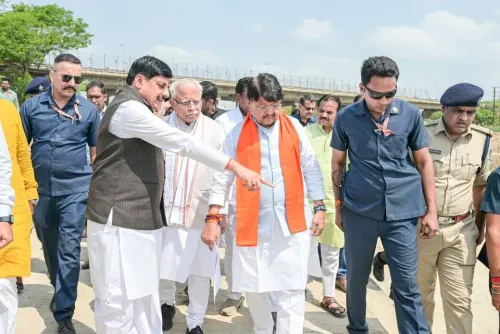
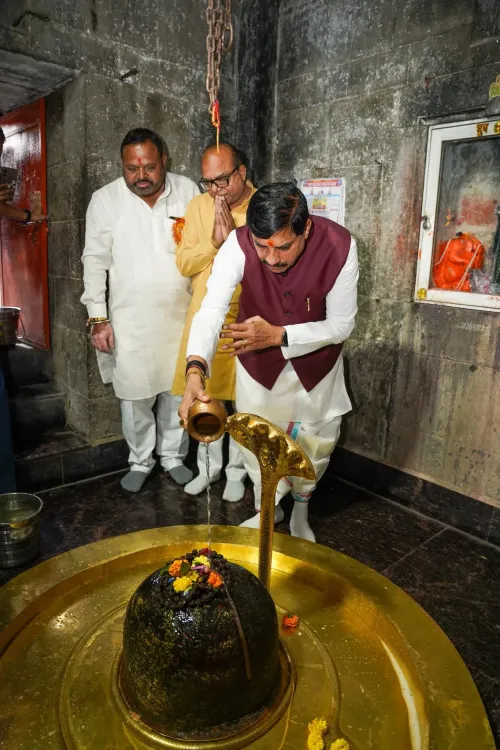
On the auspicious occasion of Govardhan Puja, Madhya Pradesh Chief Minister Dr. Mohan Yadav travelled to Ujjain on Monday, 9 November 2026, performing gau puja (cow worship) at the Tilakeshwar Gaushala and conducting an abhishek (ritual anointing) of Lord Shiva at the ancient Tilakeshwar Mahadev Temple — invoking welfare and prosperity for all residents of Madhya Pradesh. Then, almost in the same breath, he dropped a number that reframes the visit entirely: ₹800 crore in new infrastructure for Ujjain ahead of Simhastha-2028.
Govardhan Puja at Tilakeshwar — Ritual and Resolve
Posting photographs from the gaushala and the temple, Dr. Yadav declared that cow service must not remain confined to a single day of worship. 'Our collective resolve is that gauseva (cow service) should not be limited to puja alone but must become an inseparable part of our lives,' he wrote, calling on every citizen to contribute to the protection and promotion of cattle. The twin act — gau puja followed by a Shiva abhishek at one of Ujjain's oldest temples — situates the Chief Minister squarely within the city's deeply layered sacred geography.
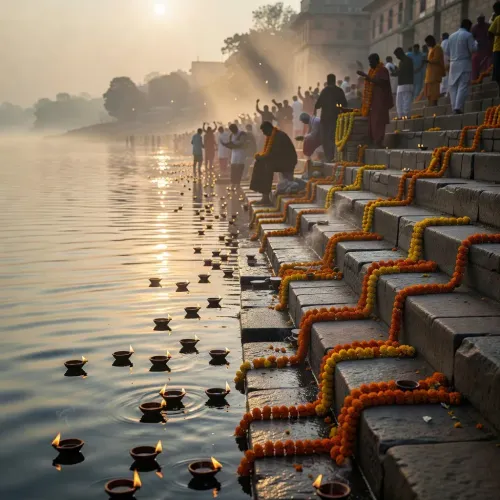
Ujjain is not incidentally chosen. The city on the Shipra river is one of the seven sacred Hindu saptapuris and the permanent home of the Simhastha Kumbh Mela, which cycles back every 12 years. The last edition, in 2016, drew tens of millions of pilgrims and was accompanied by significant state-funded infrastructure upgrades. That precedent now shapes every calculation for the next cycle.
₹800 Crore and the Race to Simhastha-2028
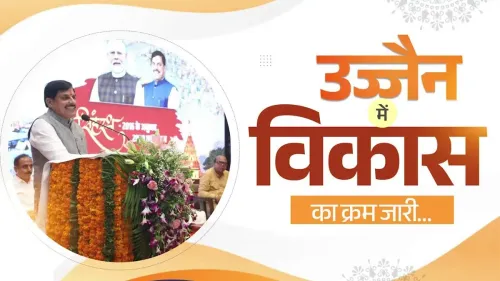
Dr. Yadav announced that preparations for Simhastha-2028 are 'progressing at a rapid pace,' with approximately ₹800 crore in new construction works, road expansions, and pilgrim-amenity projects already under way. The stated goal: a 'grand and well-organised' event that can absorb and serve the enormous crowds the Kumbh consistently draws. For a city the size of Ujjain, an infrastructure injection of this scale reshapes not just the pilgrimage experience but the city's daily urban fabric for years beyond the mela itself.
The 2016 Simhastha set a high bar — ghats were rebuilt, roads widened, and temporary tent cities organised with military precision. The 2028 edition will arrive against a backdrop of heightened national expectations, a more scrutinising social-media audience, and the precedent of large Kumbh events at Prayagraj that have themselves become benchmarks for logistics and spectacle. Starting the infrastructure conversation in 2026 — a full two years out — signals that the state government intends to run well ahead of the deadline rather than scramble at the finish.
Cow Conservation as Governance Priority
Woven into today's ceremonial visit is a persistent policy signal from the BJP-governed state: that gauseva belongs not just in temples and gaushalas but in legislative priority lists. Madhya Pradesh has previously enacted cow-protection legislation and runs a network of state-supported gaushalas. By framing the Govardhan Puja visit as a call to civic action — 'every individual should contribute' — Dr. Yadav attempts to convert a religious observance into an ongoing public campaign rather than a one-day photo opportunity.
The convergence of festival piety, heritage infrastructure, and political signalling in a single Ujjain visit is deliberate and densely layered. With Simhastha-2028 on the horizon, every rupee announced and every ritual performed in this city now carries a double register — devotion and deadline.
Ujjain's sacred clock is ticking. How the ₹800-crore blueprint translates from announcement to completed ghats, roads, and facilities will be the real test of the state's ambition before the next great confluence begins.
Point of View
A playbook that BJP-led state governments have refined into an effective governance narrative — where religious occasions become platforms for policy visibility. The ₹800-crore disclosure, made two years before Simhastha-2028, is timed to build public confidence and deter opposition charges of last-minute scrambling. Ujjain's centrality to Madhya Pradesh's cultural identity means every Simhastha cycle doubles as an electoral-cycle asset, and beginning the communication drumbeat in 2026 is as much political groundwork as it is project management. Whether the announced outlays translate into verifiable, on-schedule delivery will ultimately determine how effectively the government can claim the Simhastha mantle heading into the next electoral horizon.
NationPress
9 Nov 2026
Frequently Asked Questions
What is Simhastha 2028 in Ujjain?
Simhastha is a major Kumbh Mela held every 12 years in Ujjain, Madhya Pradesh, on the banks of the Shipra river. The 2028 edition follows the previous one in 2016 and is expected to draw tens of millions of pilgrims from across the country and abroad.
Why did CM Mohan Yadav visit Ujjain on Govardhan Puja?
Chief Minister Dr. Mohan Yadav visited Ujjain on 9 November 2026 to perform cow worship at the Tilakeshwar Gaushala and conduct a Shiva abhishek at the ancient Tilakeshwar Mahadev Temple on the occasion of Govardhan Puja. He also used the visit to announce infrastructure investments for Simhastha-2028.
How much money has MP government announced for Simhastha 2028 preparations?
Chief Minister Dr. Mohan Yadav announced approximately ₹800 crore in new construction works, road expansion, and pilgrim amenity projects in Ujjain as part of Simhastha-2028 preparations.
What is Govardhan Puja and why is it celebrated?
Govardhan Puja is a Hindu festival celebrated the day after Diwali, commemorating Lord Krishna's act of lifting the Govardhan hill. It is traditionally observed with the worship of cattle and the offering of food mounds representing the hill.
What is the Tilakeshwar Mahadev Temple in Ujjain?
Tilakeshwar Mahadev Temple is an ancient Shiva temple located in Ujjain, Madhya Pradesh. It is one of the historic shrines in the city, which is itself considered one of Hinduism's seven sacred cities.