MP CM's Office: Ujjain's Simhastha-2028 Gets Grand Makeover

Synopsis
The Chief Minister's Office of Madhya Pradesh has announced that Simhastha-2028 in Ujjain will see road widening, Shipra ghat redevelopment, and improved darshan arrangements — with infrastructure work already under way two years ahead of the 12-yearly Kumbh Mela.
Key Takeaways
The Chief Minister's Office of Madhya Pradesh announced Simhastha-2028 infrastructure plans on November 2, 2026 .
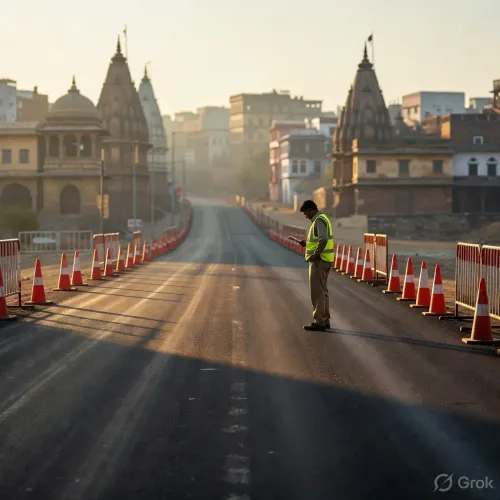
Road widening is under way in Ujjain to ease pilgrim movement during the Kumbh Mela.
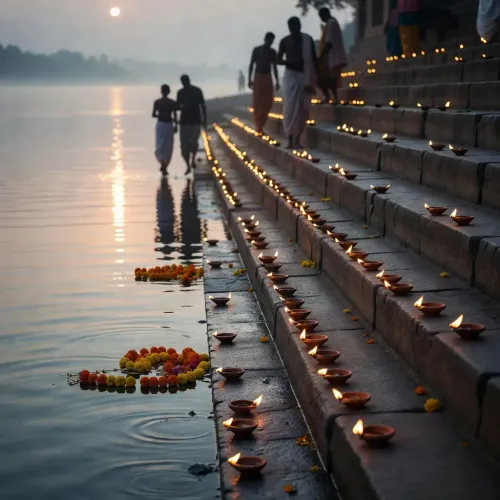
Bathing ghats on the Shipra river are being redeveloped for safer and cleaner ritual access.
Improved darshan arrangements are planned for temples and sacred sites across the city.
The previous Simhastha was held in Ujjain in 2016 ; the event recurs every 12 years.
Mohan Yadav has been tagged in the announcement, signalling high-level political ownership of the event's preparation.
Every twelve years, Ujjain transforms into one of the largest sacred gatherings on Earth — and with Simhastha 2028 now firmly on the horizon, the Chief Minister's Office of Madhya Pradesh has signalled that the next edition will be nothing short of spectacular. On Monday, November 2, 2026, the CMO posted on X that the upcoming Kumbh Mela at Ujjain is being shaped into an experience that is 'bhavya aur divya' — grand and divine.
The post, tagging Chief Minister Dr. Mohan Yadav, outlines three concrete pillars of preparation: road widening for smoother movement of pilgrims, redevelopment of bathing ghats along the Shipra river, and better arrangements for darshan — the act of sacred viewing at temples and ritual sites. The framing is deliberate: every upgrade circles back to the pilgrim's experience.
Road widening, ghat revival, and the pilgrim at the centre
The three-pronged infrastructure push mirrors the playbook Madhya Pradesh deployed ahead of Simhastha 2016, when the state undertook sweeping crowd-management upgrades to handle tens of millions of visitors. That edition set a benchmark for urban-religious infrastructure in India. The 2028 edition, the CMO's post suggests, is aiming higher.
Road widening addresses Ujjain's perennial chokepoints — narrow lanes that buckle under the surge of millions arriving over weeks. Ghat redevelopment means cleaner, safer access to the Shipra for the ritual bath that is the spiritual centrepiece of the Kumbh. Better darshan management targets the temples — above all, the Mahakaleshwar Jyotirlinga — where queue collapses have historically tested authorities.
Why 2026 prep matters for a 2028 event
Infrastructure at this scale takes years, not months. Beginning groundwork in 2026 gives contractors and planners a two-year runway — critical for projects like ghat reconstruction, which require dry-season work windows and environmental clearances. State governments across India have learned, sometimes the hard way, that rushed last-minute upgrades produce half-finished venues and overwhelmed pilgrims.
Madhya Pradesh has also increasingly tied such religious infrastructure to its broader tourism economy. Ujjain's 12-yearly moment in the global spotlight brings enormous revenue and soft-power value — and the state has consistently used post-Kumbh infrastructure as a lasting legacy for the city's residents.
Dr. Mohan Yadav's government has made religious tourism a visible priority, and this announcement reinforces that the 2028 Simhastha will be a defining moment of his tenure. When millions converge on the banks of the Shipra, the infrastructure they walk on — or don't — will be the most visible scorecard.
Point of View
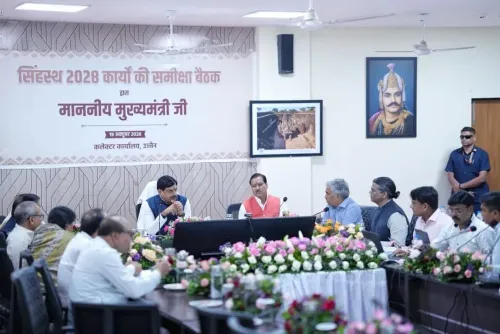
Public announcement of Simhastha-2028 infrastructure work is a strategic signal from the Mohan Yadav government — framing the 12-yearly Kumbh as a governance showcase rather than a logistical emergency. Historically, Madhya Pradesh has used Simhastha as a lever to unlock central funding and accelerate urban upgrades that benefit Ujjain beyond the mela itself. By tagging the CM personally and routing the message through the official CMO account, the party is also building a long-arc narrative of 'delivery' two years ahead of the event. The trio of road, ghat, and darshan improvements maps neatly onto the three most common pilgrim grievances — traffic, river access, and temple queues — suggesting the state has done demand-side homework this time.
NationPress
2 Nov 2026
Frequently Asked Questions
What is Simhastha 2028?
Simhastha 2028 is the Kumbh Mela scheduled to be held in Ujjain, Madhya Pradesh in 2028. It occurs every 12 years and is one of the largest religious gatherings in the world, centred on ritual bathing in the Shipra river .
What infrastructure work is being done for Simhastha 2028 in Ujjain?
The Madhya Pradesh government is undertaking road widening for pilgrim movement, redevelopment of bathing ghats on the Shipra river, and improved arrangements for darshan at temples and sacred sites.
When was the last Simhastha Kumbh Mela held in Ujjain?
The previous Simhastha Kumbh Mela in Ujjain was held in 2016 , when the state carried out major infrastructure upgrades for crowd management.
Who is overseeing Simhastha 2028 preparations in Madhya Pradesh?
Chief Minister Dr. Mohan Yadav has been tagged in the official CMO announcement, indicating high-level political oversight of the 2028 event preparations.
Why is infrastructure work for Simhastha 2028 starting in 2026?
Large-scale infrastructure projects such as ghat reconstruction and road widening require years of planning, environmental clearances, and dry-season construction windows — making a 2026 start necessary to be ready before millions of pilgrims arrive in 2028.