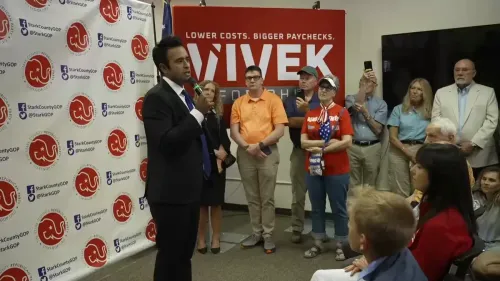
Ramaswamy warns Ohio: reject socialism, choose common sense
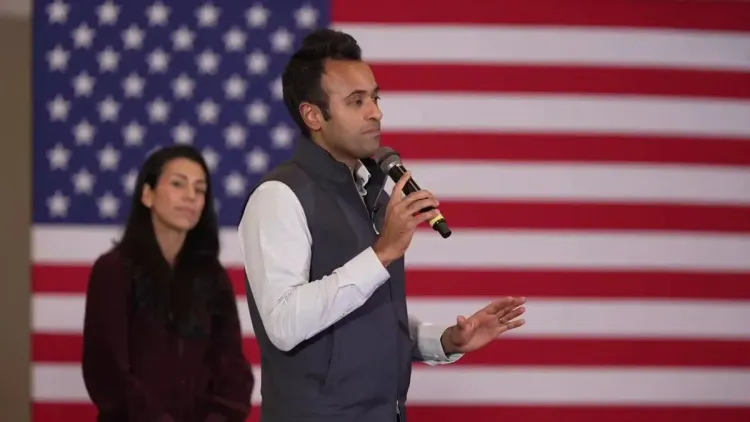
Synopsis
Entrepreneur Vivek Ramaswamy called on Ohio voters to reject 'spreading socialism,' framing the electoral choice not as a standard partisan contest but as a clash between common sense and extreme policy — invoking his home state with pointed urgency.
Key Takeaways
Vivek Ramaswamy posted on November 2, 2026 urging Ohio voters to reject socialism.
He framed the choice as 'common sense vs crazy policies,' not a traditional Republican-vs-Democrat contest.
He invoked a nostalgic 'parents' version of the Democrat Party' to appeal to moderate and independent voters.
Ramaswamy is the founder of Strive Asset Management and former co-lead of the DOGE advisory effort.
Ohio is Ramaswamy's home state, giving his appeal particular personal and political resonance.
Anti-socialist rhetoric has been a recurring feature of Ohio political contests across multiple election cycles.
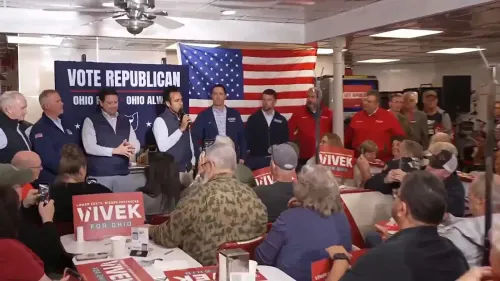
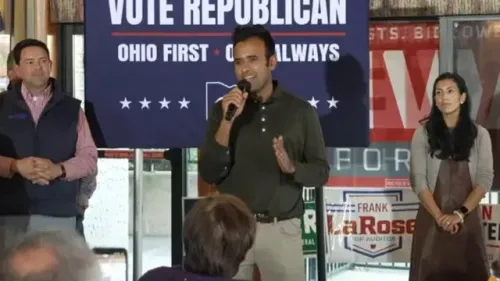
In a pointed message aimed squarely at Ohio voters, entrepreneur Vivek Ramaswamy drew a sharp ideological line on Monday, November 2, 2026 — framing the choice before voters not as a conventional partisan contest but as a civilisational fork between 'common sense' and what he called 'crazy policies.'
The framing: not your parents' Democrats
Ramaswamy's post cuts straight past party labels. 'This isn't a choice between Republicans and your parents' version of the Democrat Party,' he wrote. 'It's between common sense and crazy policies. Socialism is spreading and we must reject it in Ohio.' The language is deliberate — by invoking a nostalgic, moderate Democratic past, he attempts to peel off voters who feel their old party has moved too far left, rather than rallying only the committed Republican base.
The tactic is not new for Ramaswamy. Throughout his 2024 Republican presidential campaign, the Strive Asset Management founder consistently argued that contemporary Democratic platforms had drifted into territory previous generations of the party would not recognise — let alone endorse.
Ohio as the ideological battleground
Ohio is Ramaswamy's home state, and it carries particular emotional and political weight in his public messaging. A perennial swing-state bellwether, Ohio has seen anti-socialist arguments resurface in nearly every contested election cycle for decades. Ramaswamy's appeal lands in a state where working-class voters have long been receptive to economic-security messaging from both sides of the aisle — making the socialism framing a high-stakes rhetorical gamble.
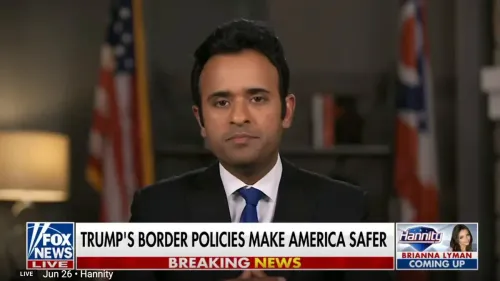
As former co-lead of the Department of Government Efficiency (DOGE) advisory effort, Ramaswamy carries the credibility of someone who has been inside the federal machinery arguing for smaller, leaner government. That credential sharpens the contrast he is drawing: between what he presents as disciplined, results-focused governance and what he characterises as expanding state control.
Standard playbook, amplified stakes
Republican strategists have deployed the 'socialism' label in Ohio contests for years — but Ramaswamy's version adds a generational wrinkle. By conceding that an older Democratic Party was acceptable, he signals to moderate and independent voters that his objection is to policy direction, not party identity. It is a softer entry point than a straight partisan attack, and it is designed to widen the coalition rather than deepen the base.
Whether Ohio voters respond to that framing will be a test of how potent anti-socialist rhetoric remains in a state that has swung between the parties in recent cycles — and of how much personal authority Ramaswamy commands on his home turf.
Point of View
Moderate Democratic tradition while condemning its current form, he attempts to redefine the centre of gravity in Ohio rather than simply energise existing loyalists. The 'socialism is spreading' alarm connects to a long-running conservative counter-narrative against progressive economic policy expansion. If it lands in Ohio, it signals that ideological labelling — rather than candidate personality — remains the sharpest instrument in state-level Republican electoral strategy.
NationPress
2 Nov 2026
Frequently Asked Questions
What did Vivek Ramaswamy say about Ohio and socialism?
Ramaswamy posted on November 2, 2026, urging Ohio voters to reject 'spreading socialism,' framing the election as a choice between common sense and extreme policies rather than a standard partisan contest.
Why is Vivek Ramaswamy focused on Ohio?
Ohio is Ramaswamy's home state, which gives his political messaging there particular personal weight. It is also a key swing state where anti-socialist arguments have resonated with voters across multiple election cycles.
What is Vivek Ramaswamy's political background?
Ramaswamy is the founder of Strive Asset Management, ran for the Republican presidential nomination in 2024, and served as co-lead of the DOGE government-efficiency advisory effort.
What does Ramaswamy mean by 'your parents' version of the Democrat Party'?
He is invoking a supposedly more moderate, centrist Democratic Party of earlier decades to argue that today's party has shifted sharply left toward socialist policies — a framing aimed at persuading moderate or disaffected Democratic voters.
Is anti-socialism rhetoric common in Ohio elections?
Yes. Anti-socialist arguments have appeared in Ohio political discourse for decades across multiple parties and election cycles, making it a familiar but still potent theme in the state.