CM Conrad Sangma Launches PRIME Hub in South Garo Hills
Synopsis
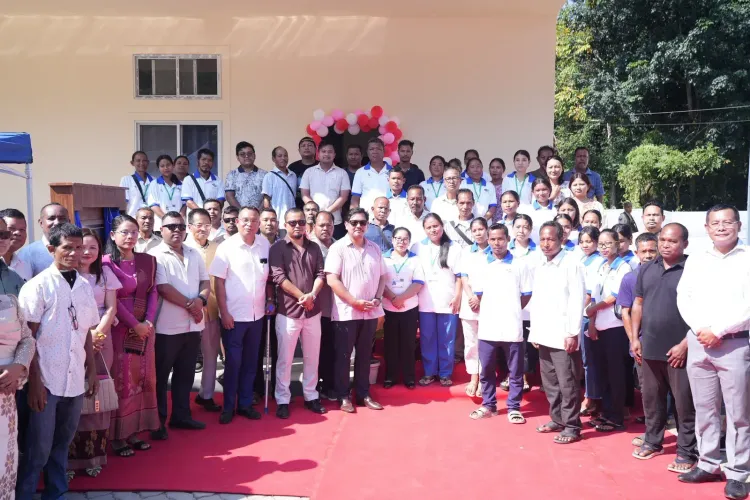
Meghalaya CM Conrad Sangma inaugurated the Chokpot Warima PRIME Hub in South Garo Hills on November 9, completing a cluster of four hubs and 32 micro-processing units backed by ₹4.24 crore to strengthen bamboo and arecanut value chains and boost rural livelihoods.
Key Takeaways
Chokpot Warima PRIME Hub inaugurated in South Garo Hills on November 9, 2026 by CM Conrad Sangma .
South Garo Hills now has 4 PRIME Hubs — at Chokpot, Rongara, Baghmara, and Gasuapara.
32 micro-processing units developed across the district alongside the four hubs.
Total investment in the hub-and-unit network stands at ₹4.24 crore .
The hubs target bamboo and arecanut value chains, providing aggregation, processing, training, and marketing services.
The model is designed to serve both farming communities and youth entrepreneurship in Meghalaya's tribal districts.
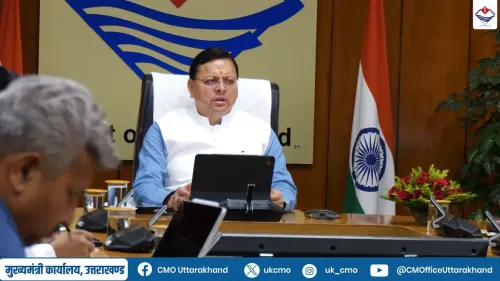
Four hubs, 32 micro-processing units, and an investment of ₹4.24 crore — Meghalaya Chief Minister Conrad Sangma has turned South Garo Hills into the state's most concentrated cluster of rural agri-enterprise infrastructure, inaugurating the latest addition on Monday, November 9, 2026.
What the Chokpot Warima Hub adds to South Garo Hills
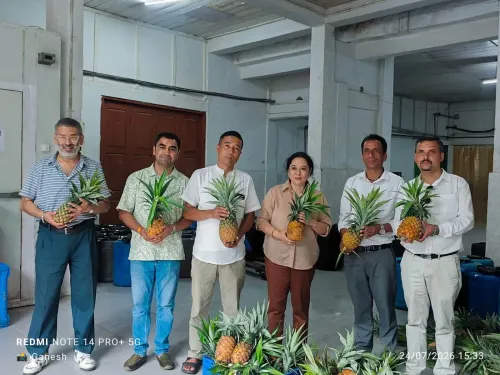
The newly inaugurated Chokpot Warima PRIME Hub is built around two of the district's most commercially significant crops: bamboo and arecanut. The facility brings under one roof common services for aggregation, processing, training, and marketing — the four bottlenecks that have traditionally kept smallholder farmers from capturing fair value for their produce.
With this inauguration, South Garo Hills now hosts a full quartet of PRIME Hubs — at Chokpot, Rongara, Baghmara, and Gasuapara — complemented by 32 micro-processing units spread across the district. The combined infrastructure signals a deliberately decentralised model: rather than funnelling produce to a single large facility, the state has seeded smaller, community-proximate hubs that cut transport losses and keep enterprise opportunity close to the farmer.
PRIME Hubs and Meghalaya's rural value-chain push
PRIME Hubs — the name standing for a state-led common-facility framework — represent Meghalaya's answer to a persistent structural problem in its tribal hinterland: high post-harvest losses and weak market linkages that suppress farm incomes despite strong agri-horticultural potential. South Garo Hills, with its predominantly rural and tribal population, has become the testing ground for this decentralised model.
The investment of ₹4.24 crore for the four hubs and 32 micro-units is relatively modest by infrastructure standards — but that is partly the point. The design philosophy leans on replicability: low-cost shared facilities that can be rolled out at block level without demanding centralised capital expenditure. Chief Minister Sangma, tagging @jayantrld in the post, framed the hubs as serving both the farming community and the aspirations of Meghalaya's youth — a nod to the dual employment-and-enterprise angle the state has been promoting in its rural economy narrative.
Bamboo, arecanut, and why these crops matter
Bamboo and arecanut are not incidental choices. Meghalaya sits within India's bamboo-rich northeast corridor, and processing infrastructure has historically been the missing link between raw bamboo abundance and viable commercial output — whether in construction materials, handicrafts, or agro-industrial uses. Arecanut, meanwhile, is a high-value cash crop whose price realisation is acutely sensitive to post-harvest handling and market access.
Giving farmers in South Garo Hills shared processing and direct marketing infrastructure for both crops addresses what economists call the 'value-chain gap' — the spread between farm-gate price and end-market price that is typically captured by intermediaries rather than producers. Whether the hubs close that gap meaningfully will depend on throughput, uptake by farmer collectives, and downstream market linkages — the variables that will define whether the ₹4.24 crore becomes a replicable template or a pilot that stalls.
The four-hub network is live. The question now is whether it moves product — and whether Meghalaya scales the model to districts beyond South Garo Hills.
Point of View
Which suggests the state may be auditioning South Garo Hills as a blueprint for other districts. The real policy test, however, will come at the throughput and market-linkage stage — infrastructure that sits idle is a liability, not a legacy.
NationPress
9 Nov 2026
Frequently Asked Questions
What is a PRIME Hub in Meghalaya?
A PRIME Hub is a Meghalaya government-created common facility that provides aggregation, processing, training, and marketing support to rural farmers and entrepreneurs, particularly for agri-horticultural value chains.
How many PRIME Hubs are there in South Garo Hills?
There are now 4 PRIME Hubs in South Garo Hills, located at Chokpot , Rongara , Baghmara , and Gasuapara .
What crops do the South Garo Hills PRIME Hubs focus on?
The hubs primarily support bamboo and arecanut value chains, two commercially significant crops in South Garo Hills.
What is the total investment in PRIME Hubs in South Garo Hills?
The four PRIME Hubs and 32 micro-processing units in South Garo Hills were developed with a combined investment of ₹4.24 crore .
Who inaugurated the Chokpot Warima PRIME Hub?
Meghalaya Chief Minister Conrad Sangma inaugurated the Chokpot Warima PRIME Hub in South Garo Hills on November 9, 2026 .