UAE rejects Iran's BRICS allegations, warns of military response
Synopsis
At the BRICS Foreign Ministers' Meeting in New Delhi, the UAE did not just defend itself — it warned Iran it is 'fully capable' of a military response. With 120 Iranian diplomatic notices at the UN and two international resolutions on record, this bilateral feud has gone fully multilateral, and the choice of a BRICS stage to air it is itself a diplomatic signal.
Key Takeaways
UAE Minister of State Khalifa Shaheen Al Marar rejected Iran's allegations at the BRICS Foreign Ministers' Meeting in New Delhi on 15 May 2026 .
The UAE called Iran's actions a 'flagrant violation of the UN Charter , international law, and the principles of good neighbourliness.' Al Marar reaffirmed the UAE's right to respond militarily to any hostile act and said the UAE is 'fully capable of deterring this unprovoked aggression.' Iran's Deputy Foreign Minister Kazem Gharibabadi alleged UAE involvement in military aggression against Iran and claimed 120 diplomatic notices had been filed with the UN Security Council .
Two international resolutions — UN Security Council Resolution 2817 (2026) and a Human Rights Council resolution of 25 March 2026 — have condemned Iran's actions.
The United Arab Emirates Ministry of Foreign Affairs on Friday, 15 May categorically rejected Iran's allegations at the BRICS Foreign Ministers' Meeting in New Delhi, denouncing what it called Iran's attempts to justify 'Iranian terrorist attacks that targeted the United Arab Emirates.' The sharp diplomatic confrontation unfolded on the sidelines of the multilateral gathering, underscoring the deepening rift between the two Gulf neighbours.
UAE's Position at the BRICS Meeting
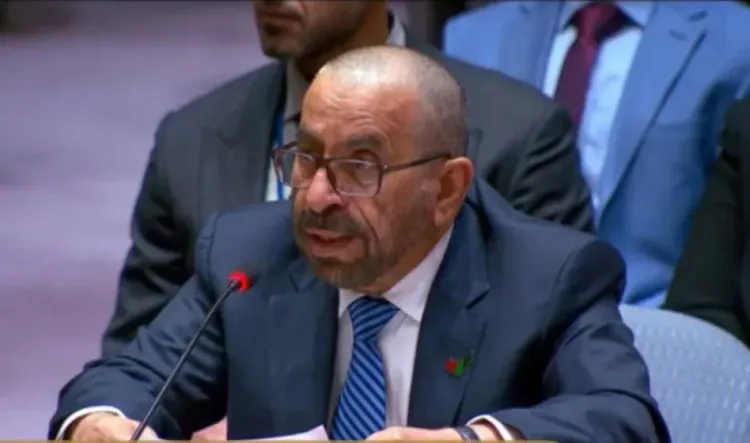
Khalifa Shaheen Al Marar, Minister of State of the UAE, represented Abu Dhabi at the BRICS Foreign Ministers' Meeting and delivered a firm rebuttal. Al Marar underscored the UAE's 'categorical rejection of any allegations or threats targeting its sovereignty and national security' and reaffirmed the country's right to respond militarily to any hostile act.
'The United Arab Emirates holds Iran fully responsible for these terrorist attacks and their repercussions,' Al Marar stated, adding that 'the United Arab Emirates does not seek protection from others and is fully capable of deterring this unprovoked aggression.'
What the UAE Accused Iran Of
The UAE Ministry described Iran's conduct as 'a flagrant violation of the United Nations Charter, international law, and the principles of good neighbourliness.' It pointed to two specific international resolutions condemning Iran's actions: UN Security Council Resolution 2817 (2026) and a resolution adopted unanimously by the Human Rights Council on 25 March 2026 at UN headquarters in Geneva. According to Al Marar, Iran has continued its attacks 'in clear disregard of the international consensus' despite these condemnations.
Iran's Counter-Claims
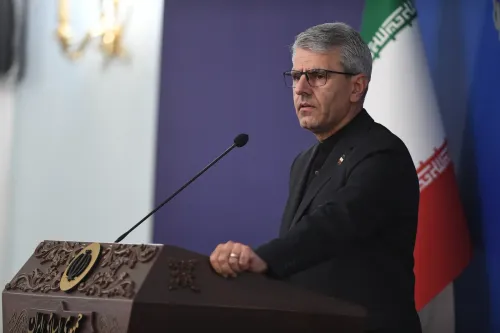
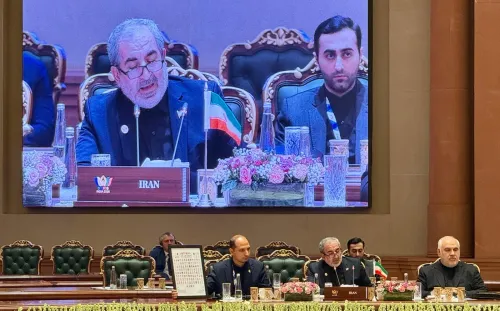
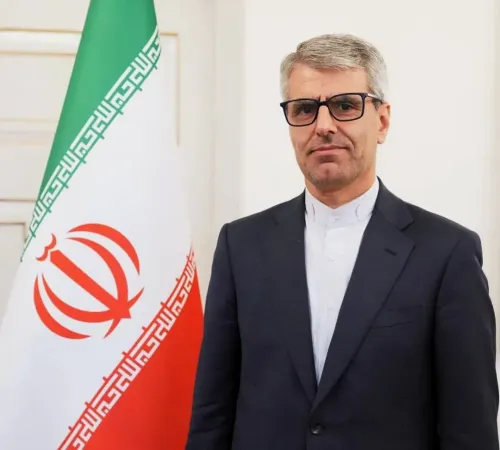
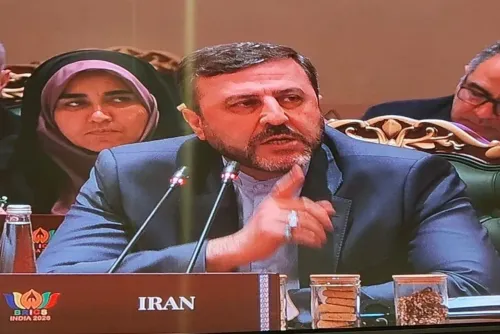
Kazem Gharibabadi, Deputy Foreign Minister for Legal and International Affairs of Iran, pushed back during the second session of the BRICS meeting. He alleged that 'the United Arab Emirates played a significant role in supporting and facilitating the military aggression against the Islamic Republic of Iran,' and argued that a party which 'contributed to the creation and escalation of tensions lacks any legitimacy to level political accusations and claims against Iran.'
Gharibabadi claimed Iran had documented 'every warplane that took off from the United Arab Emirates, including the exact time, date, and flight path.' He added that Iran had submitted 120 official diplomatic notices to the UN Security Council, with all evidence included, according to a post by the Iranian Embassy in India on social media platform X.
Broader Context and What Comes Next
The exchange at the BRICS meeting reflects a broader regional escalation that has drawn repeated international censure. The UAE's invocation of its right to a military response marks a notable hardening of its public posture. Notably, both countries chose the multilateral BRICS platform — typically reserved for economic and developmental dialogue — to air a bilateral security dispute, signalling how entrenched the standoff has become.
With 120 diplomatic notices already filed by Iran and two international resolutions on record against it, the dispute is firmly in the arena of formal international law. How the UN Security Council and regional bodies respond to the UAE's assertion of military deterrence rights will be closely watched in the weeks ahead.
Point of View
Not a diplomatic slip. By naming UN Security Council Resolution 2817 and the Geneva Human Rights Council resolution in the same breath, Abu Dhabi is building a legal record, not just scoring points. Iran's counter-move — citing 120 filed notices and documented flight paths — suggests it is doing the same. What is unfolding is less a bilateral quarrel and more a parallel legal war being waged through multilateral institutions, with the BRICS stage chosen precisely because it includes nations that have historically resisted Western-led pressure on Iran.
NationPress
23 Sept 2026
Frequently Asked Questions
What happened between the UAE and Iran at the BRICS Foreign Ministers' Meeting?
The UAE categorically rejected Iran's allegations at the BRICS Foreign Ministers' Meeting held in New Delhi on 15 May 2026, calling Iran's attacks a violation of international law. UAE Minister of State Khalifa Shaheen Al Marar reaffirmed the UAE's right to respond militarily to any hostile act.
What did UAE Minister of State Khalifa Shaheen Al Marar say about Iran?
Al Marar stated that the UAE holds Iran 'fully responsible' for terrorist attacks and their repercussions, and that the UAE is 'fully capable of deterring this unprovoked aggression' without seeking protection from others.
What is Iran's position in the dispute with the UAE?
Iran's Deputy Foreign Minister Kazem Gharibabadi alleged that the UAE played a significant role in supporting military aggression against Iran and claimed Iran had documented every warplane that took off from UAE territory. Iran says it has filed 120 official diplomatic notices with the UN Security Council.
Which international resolutions have condemned Iran's actions?
Two resolutions are on record: UN Security Council Resolution 2817 (2026) and a resolution unanimously adopted by the UN Human Rights Council on 25 March 2026 in Geneva, both condemning Iran's attacks.
Why is the BRICS meeting significant in this context?
BRICS is primarily an economic and developmental forum, making the airing of a bilateral security dispute between the UAE and Iran on this platform notable. It signals how deeply entrenched the conflict has become and reflects both countries' efforts to build international support for their respective positions.