Iran accuses UAE of backing military aggression at BRICS meet in New Delhi
Synopsis
At the BRICS Foreign Ministers' Meeting in New Delhi, Iran's Deputy FM Kazem Gharibabadi did not merely rebut UAE allegations — he declared the UAE itself an aggressor under a 1974 UN resolution, citing 120 diplomatic notices filed with the Security Council and documented flight paths of every warplane that allegedly took off from UAE soil to strike Iran.
Key Takeaways
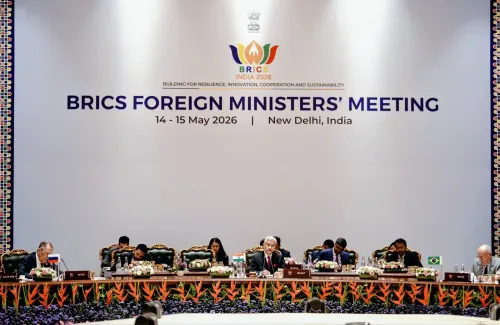
Iran's Deputy Foreign Minister Kazem Gharibabadi accused the UAE of facilitating military aggression against Iran at the BRICS Foreign Ministers' Meeting in New Delhi on 14 May .
Gharibabadi invoked the 1974 UN General Assembly Resolution , arguing that facilitating an aggressor constitutes aggression — making the UAE 'an aggressor, not merely an accomplice.' Iran claims to have submitted 120 official diplomatic notices to the UN Security Council with documented evidence, including flight times, dates, and paths of warplanes from UAE territory.
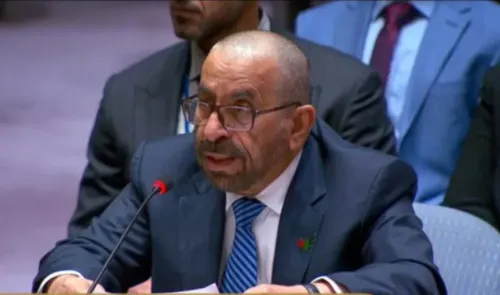
The remarks were a direct response to the UAE Minister of State for Foreign Affairs , who had accused Iran of being the aggressor.
Iran described its military actions as consistent with the UN Charter and the inherent right of self-defence.
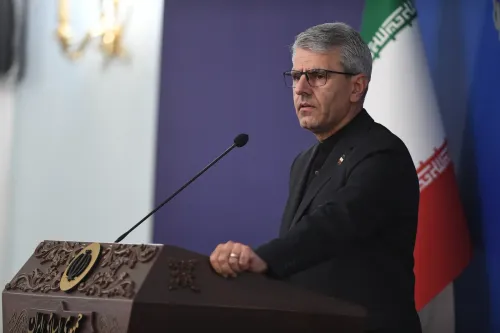
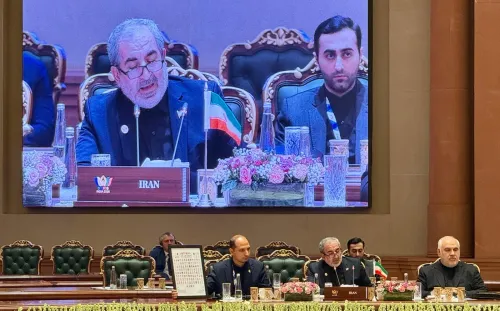
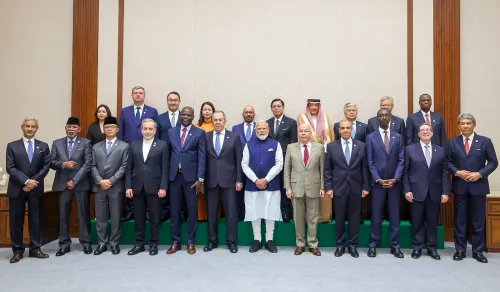
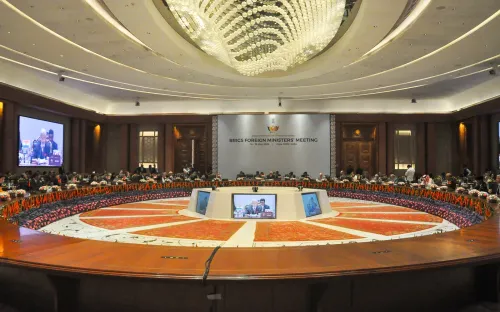
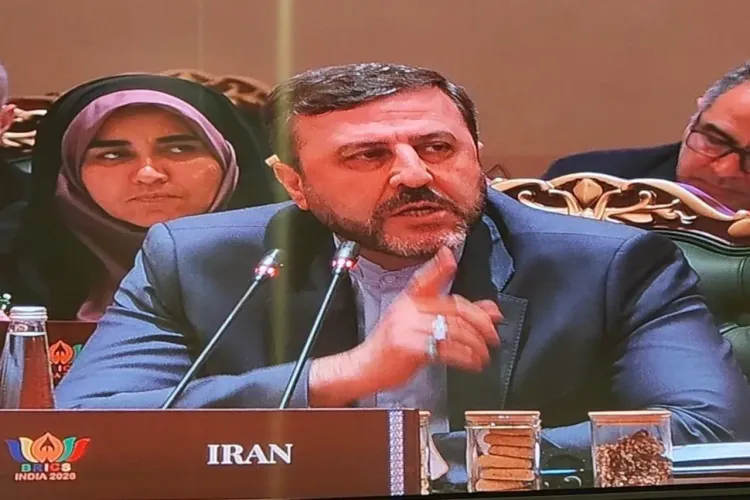
Iran's Deputy Foreign Minister Kazem Gharibabadi on Thursday, 14 May publicly accused the United Arab Emirates of actively supporting and facilitating military aggression against Iran, making the charge during the second session of the BRICS Foreign Ministers' Meeting in New Delhi. The remarks marked one of Tehran's sharpest diplomatic rebukes of Abu Dhabi in a multilateral forum.
What Gharibabadi Said
Speaking at the BRICS session, Gharibabadi declared: 'The United Arab Emirates played a significant role in supporting and facilitating the military aggression against the Islamic Republic of Iran. Therefore, a party that itself contributed to the creation and escalation of tensions lacks any legitimacy to level political accusations and claims against Iran.'
He went further, invoking the 1974 United Nations General Assembly Resolution to argue that facilitating an aggressor is itself an act of aggression. 'When countries facilitate and provide services to aggressors, this is not merely assistance; such conduct itself constitutes aggression. Therefore, the United Arab Emirates is an aggressor, not merely an accomplice to aggression,' he said.
The Trigger: UAE's Allegations Against Tehran
According to the Embassy of Iran in India, Gharibabadi's remarks were a direct response to statements made by the UAE Minister of State for Foreign Affairs, who had accused Iran of attacking the UAE and portrayed Tehran as the aggressor. Iran characterised those allegations as 'baseless.'
The Iranian deputy minister countered that his country's military actions were fully consistent with the UN Charter and fell within the framework of the inherent right of self-defence.
Evidence Claims and UN Filings
Gharibabadi asserted that Iran had meticulously documented every military flight originating from UAE soil, stating: 'Every warplane that took off from the United Arab Emirates has been documented, including the exact time, date and flight path.' He said Iran had submitted 120 official diplomatic notices to the United Nations Security Council, with all evidence included in those filings.
The Embassy of Iran in India shared these remarks on the social media platform X, amplifying the statement beyond the closed ministerial session.
Iran's Stated Justification for Targeting UAE Facilities
Gharibabadi said Tehran had 'no option' but to target facilities of US bases in the UAE, or any installations in which the United States had a role, given what he described as the UAE's 'participation and cooperation' in attacks on Iranian people and infrastructure. He emphasised that Iran 'could not tolerate the situation any longer' under those circumstances.
Context and What Comes Next
The confrontation unfolded on the sidelines of a BRICS gathering that was expected to focus on multilateral cooperation — underscoring how the Iran-UAE tensions are spilling into broader diplomatic forums. Notably, both Iran and the UAE are navigating complex relationships within a region still absorbing the aftershocks of recent military escalations. The exchange is likely to draw scrutiny from other BRICS members and could complicate efforts to present a unified bloc position on West Asian security.
Point of View
That paper trail could become central to any future international legal proceeding. The broader question is whether BRICS — a grouping that includes both Iran and countries with deep UAE ties — can absorb this kind of open confrontation without fracturing its already fragile consensus on West Asian security.
NationPress
5 Oct 2026
Frequently Asked Questions
What did Iran's Deputy Foreign Minister say about the UAE at the BRICS meeting?
Iran's Deputy Foreign Minister Kazem Gharibabadi accused the UAE of actively supporting and facilitating military aggression against Iran, declaring the UAE 'an aggressor, not merely an accomplice,' during the BRICS Foreign Ministers' Meeting in New Delhi on 14 May. He cited the 1974 UN General Assembly Resolution to underpin the legal argument.
Why did Iran make these accusations at the BRICS Foreign Ministers' Meeting?
The remarks were a direct rebuttal to statements made by the UAE Minister of State for Foreign Affairs, who had accused Iran of attacking the UAE. Iran characterised those allegations as 'baseless' and used the multilateral forum to publicly counter them.
What evidence did Iran claim to have against the UAE?
Iran's Deputy FM Gharibabadi stated that every warplane that took off from UAE soil had been documented — including exact time, date, and flight path — and that Iran had submitted 120 official diplomatic notices to the UN Security Council containing this evidence.
How does Iran justify its military actions under international law?
Gharibabadi argued that Iran's actions are fully consistent with the UN Charter and fall within the inherent right of self-defence, asserting that the UAE's facilitation of attacks on Iranian people and infrastructure left Tehran with no alternative.
What is the significance of this confrontation at a BRICS forum?
The public accusation at a BRICS session — a multilateral platform focused on cooperation — signals Tehran's intent to internationalise the dispute beyond bilateral channels. It also puts pressure on other BRICS members to navigate their relationships with both Iran and the UAE carefully.