Iran slams EU over Kuwait strike condemnation, calls it 'selective moral outrage'
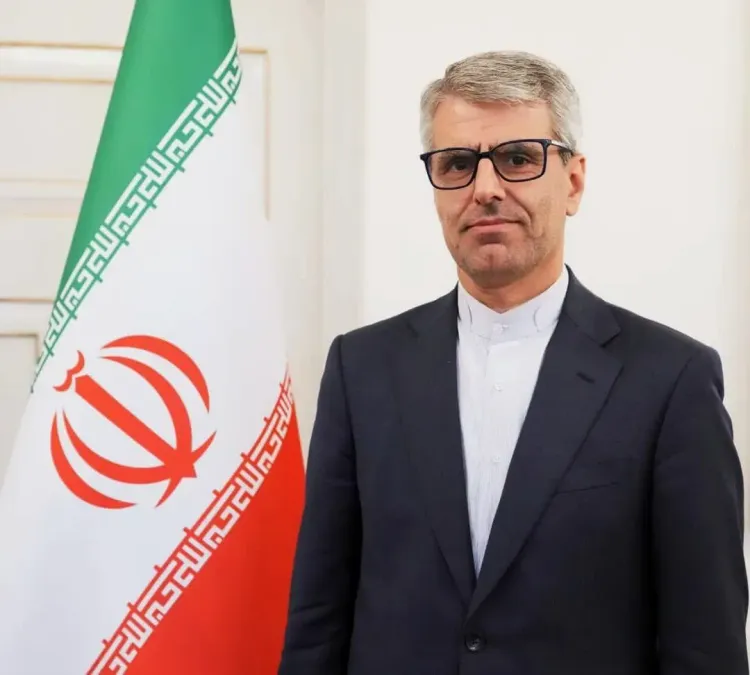
Synopsis
Iran's Foreign Ministry has turned the EU's condemnation of its Kuwait strikes back on Brussels, calling it a 'masterclass in selective moral outrage.' The exchange lays bare a fundamental legal standoff: Tehran claims lawful self-defence; the EU invokes UNSC Resolution 2817 and Kuwaiti sovereignty. With Gulf states now directly in the line of fire, the diplomatic fallout could reshape how non-belligerent nations navigate the US-Israel-Iran conflict.
Key Takeaways
Iranian Foreign Ministry spokesperson Esmaeil Baqaei on 1 June called the EU's condemnation of Iran's Kuwait strikes 'hypocritical, reckless and a masterclass in selective moral outrage.' Iran defended the strikes as a 'lawful exercise of self-defence' against US aggression launched from bases in neighbouring countries.
The EU condemned Iran's attack on Kuwait on 29 May , citing violations of Kuwaiti sovereignty under international law.
The 27-nation bloc invoked UN Security Council Resolution 2817 , which urges Iran to cease attacks against Gulf states and Jordan .
The EU called for full implementation of UNSC Resolution 2817 and said it would advocate for a sustainable solution to the US-Israel-Iran war.
Iran's Foreign Ministry on Monday, 1 June sharply rebuked the European Union for condemning Tehran's military strikes against targets in Kuwait, with a senior spokesperson calling the bloc's stance 'hypocritical, reckless and a masterclass in selective moral outrage.' The rebuke marks a significant escalation in diplomatic tensions between Iran and the EU over the widening conflict involving the United States, Israel, and Gulf states.
What Iran Said
Iranian Foreign Ministry spokesperson Esmaeil Baqaei defended the strikes as a lawful act of self-defence, arguing that Tehran was responding to what he described as US aggression launched from bases in neighbouring countries. 'The EU's statement blaming Iran for exercising its right to self-defence against US aggression launched from bases in neighbouring countries is a masterclass in selective moral outrage; it is hypocritical and reckless,' Baqaei said in a post on X.
'The EU must remain faithful to the rule of law and the principles of the UN Charter that it has long claimed to uphold. It must stop appeasing aggressors while blaming those who respond to unlawful attacks,' he added. Baqaei further argued that states carry 'an established legal obligation not to allow their territory or assets to be used for invading other countries.'
The EU's Position
The EU's condemnation was issued on 29 May, days before Tehran's response. The 27-nation bloc stated it 'strongly condemns the latest attack by Iran against the State of Kuwait, violating its sovereignty according to International Law,' and reiterated full solidarity with Kuwait's government and people. The EU characterised the strikes as 'a serious threat to regional security and stability.'
The bloc also invoked UN Security Council Resolution 2817, which had urged Iran to cease its attacks against Gulf states and Jordan, calling for its full implementation. The EU said it would 'continue to support all efforts towards de-escalation and advocate for a sustainable solution regarding the war between the US, Israel and Iran.'
The Legal Dispute at the Centre
The core dispute turns on competing interpretations of international law. Iran frames its strikes as permissible self-defence under the UN Charter, pointing to the use of third-country bases to launch operations against Iranian territory. The EU, by contrast, holds that Iran's actions violate Kuwait's sovereignty — an argument grounded in the same Charter's prohibition on force against a state's territorial integrity.
Notably, the EU's invocation of UNSC Resolution 2817 signals that the international community has already formally called on Tehran to stand down, lending weight to the bloc's legal framing even as Iran contests it.
Regional and Diplomatic Fallout
This comes amid an intensifying multi-front conflict involving the United States, Israel, and Iran, with Gulf states increasingly drawn into the theatre. Kuwait's position as a host of US military assets has made it a focal point of Iranian counter-strike strategy, raising acute concerns about the sovereignty of non-belligerent nations in the region. The EU's explicit solidarity with Kuwait and its call for all parties — not just Iran — to respect international humanitarian law suggests Brussels is attempting to hold a principled line while leaving diplomatic channels open.
How Tehran responds to mounting international pressure, and whether UNSC Resolution 2817 can be operationalised, will be critical markers in the days ahead.
Point of View
Making it harder to sustain a pure self-defence narrative when a multilateral body has already ruled on the conduct. The deeper story is Kuwait's impossible position — a non-belligerent whose territory and hosting arrangements have made it a target in a war it is not party to. That is the accountability gap mainstream coverage is underplaying.
NationPress
15 Oct 2026
Frequently Asked Questions
Why did Iran criticise the EU over the Kuwait strikes?
Iran's Foreign Ministry criticised the EU for condemning Tehran's military strikes against targets in Kuwait, arguing the attacks were a lawful act of self-defence against US aggression conducted from bases in neighbouring countries. Spokesperson Esmaeil Baqaei called the EU's stance 'hypocritical and reckless.'
What did the EU say about Iran's attack on Kuwait?
The EU on 29 May strongly condemned Iran's attack on Kuwait, stating it violated Kuwaiti sovereignty under international law and posed a serious threat to regional security. The bloc reiterated full solidarity with Kuwait's government and people.
What is UN Security Council Resolution 2817?
UN Security Council Resolution 2817 is a multilateral resolution that urged Iran to cease its attacks against Gulf states and Jordan. The EU invoked it in its 29 May statement, calling for its full implementation as a step toward de-escalation.
How does Iran justify striking targets in Kuwait?
Iran argues that states have a legal obligation not to allow their territory or assets to be used to attack other countries. Tehran contends that bases in Kuwait were used to launch what it calls unlawful attacks against Iran, making its counter-strikes permissible under the UN Charter's self-defence provisions.
What is the broader conflict context?
The strikes are part of an ongoing armed conflict involving the United States, Israel, and Iran, with Gulf states increasingly drawn in. The EU has said it will continue advocating for a sustainable solution to this multi-party war while supporting de-escalation efforts.