Iran rejects UN Gulf stance, cites self-defence after Khamenei killing
Synopsis
Iran has taken its self-defence argument directly to the UN, publicly rejecting the Secretary-General's call for restraint and framing its Gulf strikes as a lawful response to the US-Israel killing of Supreme Leader Khamenei. The move signals Tehran is internationalising its legal justification — a significant escalation in the diplomatic battle over responsibility for the Gulf crisis.
Key Takeaways
Iran condemned the UN Secretary-General's statement on Gulf escalations on 13 July , calling it one-sided.
Tehran framed its strikes on US military bases in Bahrain and Kuwait as lawful self-defence under international law.
Iran cited a US-Israel offensive beginning 28 February that reportedly killed Supreme Leader Ayatollah Khamenei as the trigger.
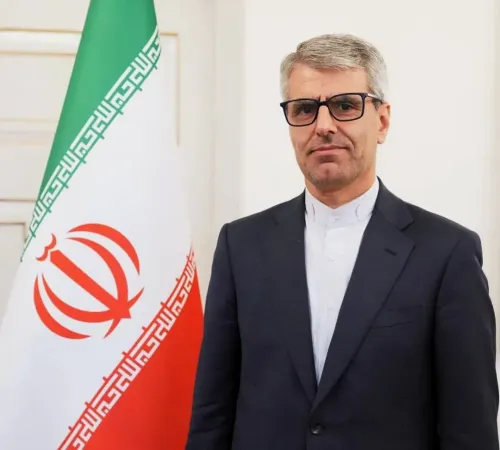
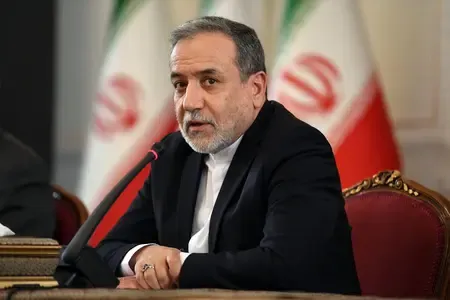
Foreign Ministry Spokesperson Esmaeil Baqaei called on the UN to pressure Gulf states to stop allowing the US to use their territory as launchpads.
UN Secretary-General António Guterres called on all parties to halt attacks and urged Iran and the US to resume diplomatic negotiations.
Baqaei separately invoked UN directives from 1994 and 1999 demanding use of the term 'Persian Gulf' in all UN texts.
Iran on 13 July formally condemned a statement by United Nations Secretary-General António Guterres on military escalations in the Gulf region, insisting that its strikes on US military bases in Bahrain and Kuwait constitute lawful self-defence under international law rather than aggression. Tehran anchored its position in what it described as an unprovoked US-Israel offensive that began on 28 February and resulted in the killing of Supreme Leader Ayatollah Ali Khamenei.
Tehran's Core Argument
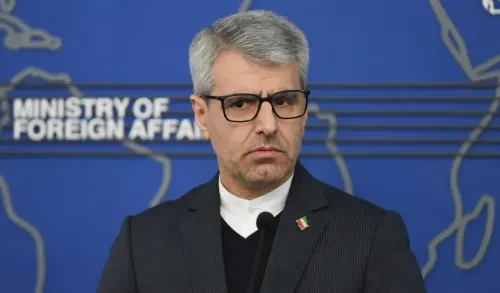
Iranian Foreign Ministry Spokesperson Esmaeil Baqaei rejected the UN's framing of the crisis as a bilateral military confrontation. In a post on X, Baqaei stated that the situation is 'the continuation of a blatant and unprovoked act of aggression initiated on 28 February by the United States and Israel' and that Iran's strikes on US military bases in the southern Persian Gulf constitute 'a legitimate and lawful exercise of its inherent right to self-defence under international law.'
Baqaei further accused the US of using the territories of Gulf states as launchpads for strikes against Iran, and called on the UN to pressure those countries to withdraw that access. He said it is 'far from responsible to blame Iran for defending its sovereignty while failing to hold the aggressors accountable for their egregious violation of international law.'
What the UN Said
Secretary-General Guterres expressed deep concern over escalating hostilities, citing what his office described as Iranian attacks on ships in the Strait of Hormuz, US strikes on Iran, and Iranian strikes on targets in neighbouring countries. His spokesperson, Stéphane Dujarric, said in a statement that 'these attacks must all stop' and called on all parties to 'exercise maximum restraint, avoid further escalatory action and take immediate steps to de-escalate.' The UN chief urged Iran and the United States to 'urgently resume negotiations and to address outstanding issues through diplomacy.'
The Persian Gulf Terminology Dispute
In a secondary but pointed rebuke, Baqaei called out the UN for its use of geographic terminology. Citing UN directives issued on 18 August 1994 and 14 May 1999 mandating the use of the full term 'Persian Gulf' in all UN texts, the spokesperson urged the world body to remain consistent with its own standing directives. The issue carries significant symbolic weight for Tehran, which has long objected to alternative nomenclature used in parts of the Arab world.
Broader Context and What Comes Next
The exchange marks a sharp deterioration in the diplomatic climate surrounding the Iran-US standoff. The killing of Supreme Leader Khamenei on 28 February — which Tehran attributes to a US-Israel operation — has fundamentally altered the conflict's stakes. Notably, this is the first time Iran has publicly framed its Gulf strikes in explicit self-defence language before the UN, signalling a shift toward internationalising its legal justification. The UN's call for resumed negotiations faces immediate credibility challenges given the depth of mutual accusations now on the record.
Point of View
Iran is building an international law record, likely anticipating Security Council proceedings. The UN's both-sides framing, while procedurally standard, risks being read as moral equivalence between an action and a stated retaliatory response — a distinction that will matter enormously in any future accountability forum. What mainstream coverage underplays is how the Khamenei killing has structurally changed Iran's negotiating calculus: a leadership that absorbed that blow and struck back has little domestic room to accept a ceasefire without visible concessions.
NationPress
12 Oct 2026
Frequently Asked Questions
Why did Iran condemn the UN statement on Gulf escalations?
Iran condemned the UN statement because it considered the framing one-sided and irresponsible. Tehran argued the UN blamed Iran for strikes that were, in its view, a lawful self-defence response to a US-Israel offensive that began on 28 February and killed Supreme Leader Ayatollah Khamenei.
What did Iranian spokesperson Esmaeil Baqaei say about Iran's Gulf strikes?
Baqaei stated on X that Iran's strikes on US military bases in Bahrain and Kuwait constitute a legitimate and lawful exercise of its inherent right to self-defence under international law, rejecting the characterisation of the strikes as aggression.
What did UN Secretary-General António Guterres call for?
Guterres called on all parties to exercise maximum restraint, stop all attacks, and avoid further escalatory action. He urged Iran and the United States to urgently resume negotiations and resolve outstanding issues through diplomacy.
What is the significance of the Persian Gulf terminology dispute?
Iran's Foreign Ministry invoked UN directives from 18 August 1994 and 14 May 1999 that mandate use of the full term 'Persian Gulf' in all UN texts. The issue carries symbolic and political weight for Tehran, which objects to alternative names used in parts of the Arab world.
What triggered the current Iran-US military confrontation?
According to Tehran, the confrontation was triggered by a US-Israel military offensive that began on 28 February, which Iran says resulted in the killing of Supreme Leader Ayatollah Ali Khamenei. Iran frames all subsequent strikes as self-defence responses to that initial attack.