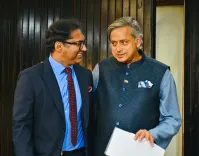
Pradhan: India's steel output now tops US and Japan combined
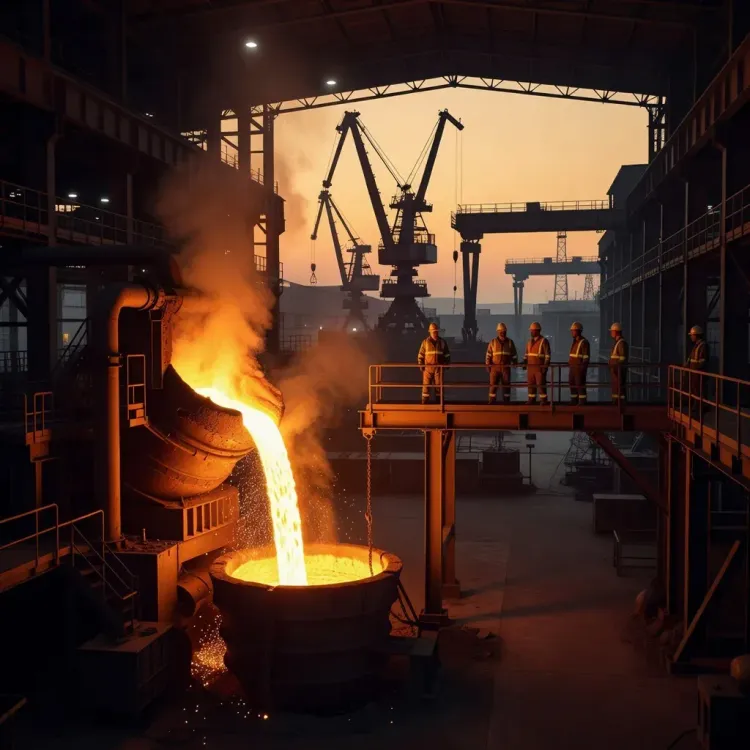
Synopsis
India's crude steel production reached 164.9 million tonnes in 2025 — nearly double the 2014 figure — moving the country from fourth to second in global rankings and surpassing the combined output of the United States and Japan, Union Education Minister Dharmendra Pradhan announced.
Key Takeaways
India's crude steel output reached 164.9 million tonnes in 2025 , nearly double the 2014 level.
India has climbed from fourth to second in global steel production rankings over the past decade.
India now produces more steel than the United States and Japan combined.
The National Steel Policy 2017 targets 300 million tonnes of capacity by 2030 .
The milestone is linked to the broader Viksit Bharat and Atmanirbhar Bharat industrial self-reliance agenda.
Upcoming Union Budget and Ministry of Steel capacity announcements will indicate whether the 2030 target remains on track.
From fourth in the world to second — and India is not done yet. Union Education Minister Dharmendra Pradhan marked a landmark moment in India's industrial story on Friday, November 6, 2026, highlighting that the country's crude steel production has nearly doubled since 2014, reaching 164.9 million tonnes in 2025 — surpassing the combined output of the United States and Japan.
From fourth to second: a decade of steel ambition
In 2014, India was the world's fourth-largest crude steel producer. The climb to second place is the result of deliberate, sustained industrial policy — not an accident of demand. The Make in India initiative, launched that same year, set manufacturing expansion as a national priority, with steel as one of its most visible pillars. The National Steel Policy of 2017 then gave the sector a long-horizon blueprint: a target of 300 million tonnes of crude steel capacity by 2030, backed by modernisation incentives and infrastructure linkages.
The Atmanirbhar Bharat package of 2020 added another layer — measures to cut import dependence and direct more domestic demand toward Indian-made steel. Each policy built on the last, compounding the sector's momentum year by year.
Why beating the US and Japan combined matters
The United States and Japan are not merely large steel producers — they are benchmarks of industrial sophistication. Both nations have spent decades refining high-grade, technology-intensive steelmaking. For India's raw output to exceed their combined total is a signal that the country's production base has scaled into a genuinely different category of industrial power.
Pradhan framed it squarely within the Viksit Bharat vision — the government's roadmap for a fully developed India by 2047. 'This builds the foundations of a stronger, more self-reliant and developed India,' he wrote, connecting a tonnage figure to something much larger: a national trajectory.
Steel as the spine of infrastructure India
The timing of this milestone is not incidental. India is in the middle of an unprecedented infrastructure push — highways, railways, ports, urban housing, defence manufacturing. Every bridge, every metro viaduct, every port berth requires steel. A domestic production base of this scale means lower import bills, greater supply-chain resilience, and the capacity to anchor downstream industries like auto, shipbuilding, and capital goods.
The question now is whether the 300 million tonne target for 2030 stays in reach — and whether the upcoming Union Budget brings fresh Production-Linked Incentive support or new capacity announcements to keep the trajectory intact. India moved from fourth to second in roughly a decade. The race to the top is very much live.
Point of View
The National Steel Policy, and the Atmanirbhar package. Pradhan's post is notable for coming from the Education Minister rather than the Steel Ministry, signalling that this milestone is being claimed as whole-of-government achievement rather than a sectoral win. The comparison with the US-Japan combined figure is a rhetorically sharp choice: it anchors India's progress against established industrial powers, not just emerging-market peers. Whether the 300 million tonne capacity target for 2030 is met will be the real test of whether this trajectory is policy-driven or demand-cyclical.
NationPress
6 Nov 2026
Frequently Asked Questions
What is India's crude steel production in 2025?
According to Union Education Minister Dharmendra Pradhan, India's crude steel production reached 164.9 million tonnes in 2025 , nearly double the country's output in 2014 .
What rank is India in global steel production?
India is now ranked second in global crude steel production, having climbed from fourth place in 2014 . Only China produces more steel than India.
Does India produce more steel than the US and Japan?
Yes, as stated by Minister Pradhan, India's 164.9 million tonne output in 2025 exceeds the combined crude steel production of the United States and Japan .
What is India's steel production target by 2030?
The National Steel Policy 2017 set a target of 300 million tonnes of crude steel capacity by 2030 , along with a roadmap for modernisation and technology upgrades.
What is Viksit Bharat and how does steel relate to it?
Viksit Bharat is the Indian government's vision for a fully developed India by 2047 . Steel production growth is presented as foundational to this goal, supporting infrastructure expansion, manufacturing self-reliance, and reduced import dependence.