Tharoor backs new book on India's post-nonalignment foreign policy
Synopsis
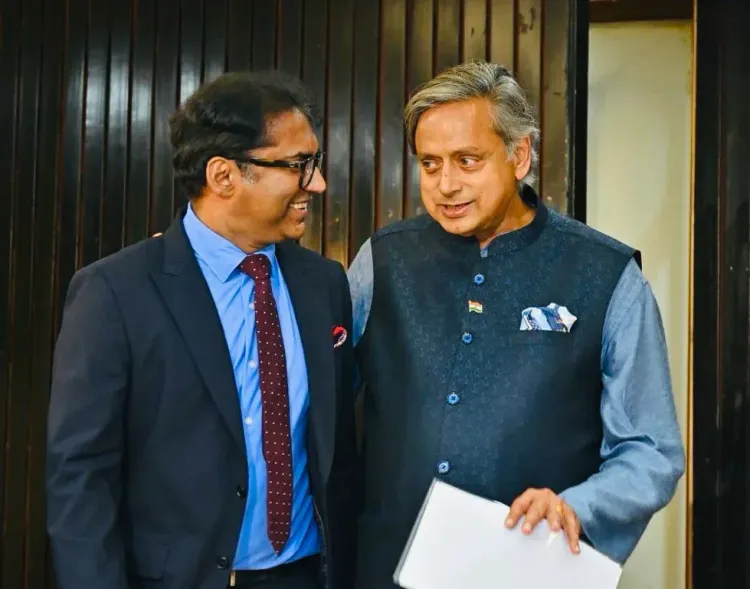
Congress MP Dr. Shashi Tharoor spoke at the packed Delhi launch of JNU professor Happymon Jacob's new book interrogating India's transition from non-alignment to a potential pole in international politics, calling it essential reading for anyone interested in India's global role.
Key Takeaways
Shashi Tharoor spoke at and endorsed the launch of Happymon Jacob 's new book on Indian foreign policy in Delhi on a Wednesday evening.
The book is titled 'India After Nonalignment: The Quest to Become a Pole in International Politics' .
Happymon Jacob is a professor at Jawaharlal Nehru University and an established commentator on Indian foreign policy and regional security.
India co-founded the Non-Aligned Movement at the 1961 Belgrade Summit ; its foreign policy has shifted toward multi-alignment and strategic autonomy since the 1990s .
The central debate the book engages is whether India can position itself as an independent pole rather than a swing state in a multipolar world.
Tharoor, a former UN Under-Secretary-General and former Union Minister of State for External Affairs , lent significant credibility to the event with his presence and endorsement.
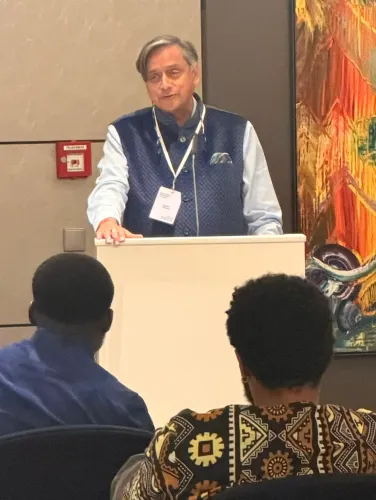
India's foreign policy identity — built on decades of studied neutrality — is being interrogated in print, and Congress MP Dr. Shashi Tharoor wants the country to pay attention. On Friday, 6 November 2026, Tharoor took to X to share his enthusiasm after speaking at the Delhi launch of 'India After Nonalignment: The Quest to Become a Pole in International Politics' by Happymon Jacob, calling it 'an important new book on Indian foreign policy' at what he described as 'a packed event.'
From Belgrade to multipolarity: the debate the book enters
The intellectual stakes here are real. India co-founded the Non-Aligned Movement at the 1961 Belgrade Summit, and for the better part of the Cold War, non-alignment was not merely a policy — it was an identity. The idea was simple and bold: refuse to be anyone's client state. It defined how New Delhi saw itself in the world for three generations.
That architecture has been quietly dismantling itself since the 1990s. What replaced non-alignment is harder to name — 'multi-alignment', 'strategic autonomy', 'issue-based partnerships' — but the direction is unmistakable. India has simultaneously deepened ties with Washington, maintained its relationship with Moscow, courted Quad members, and positioned itself as the voice of the Global South. The core question Jacob's book takes head-on: is India merely a 'swing state' pulled by competing powers, or is it actively assembling the weight to be a pole in its own right?
Happymon Jacob and the book's moment
Happymon Jacob, a professor at Jawaharlal Nehru University, is one of India's most closely watched voices on foreign policy, India-Pakistan ties, and regional security. His entry into the debate on India's strategic positioning carries weight inside the academic and diplomatic community. The launch drew a packed audience in Delhi on a Wednesday evening — a signal, in itself, of how live this conversation is among India's strategic community.
Tharoor, who brings his own formidable foreign-policy résumé as a former UN Under-Secretary-General and former Union Minister of State for External Affairs, was not merely a ceremonial presence at the podium. His endorsement — 'well worth reading' — lands with the credibility of someone who has navigated exactly the multilateral corridors the book maps.
Why this conversation is overdue
The timing is pointed. As India navigates its role in BRICS, the SCO, and ongoing conversations about a reformed UN Security Council, the question of whether New Delhi is a pole or a pivot has moved from seminar rooms to cabinet strategy. A new book that traces the arc from Nehru's non-alignment to contemporary multi-alignment gives policymakers, analysts, and citizens a shared framework for that reckoning.
India's growing strategic ambitions demand a vocabulary — and books like Jacob's supply it. The debate over what India stands for, not just what it balances between, is now well and truly in print.
Point of View
And the emergence of serious academic literature interrogating the shift signals that the strategic community is ready to name what has changed. Tharoor's presence at the launch is not incidental — as a former UN Under-Secretary-General and External Affairs minister of state, he represents a generation that straddled classical non-alignment and the new era of multi-alignment. The book's central question, whether India is a pole or merely a pivot, is live in every multilateral forum New Delhi enters. The fact that a packed Delhi audience turned out for a foreign-policy book launch reflects genuine public appetite for a coherent strategic identity — one that the political class will increasingly be pressed to articulate.
NationPress
6 Nov 2026
Frequently Asked Questions
What is the book 'India After Nonalignment' about?
The book by Happymon Jacob examines India's transition from its founding foreign-policy doctrine of non-alignment toward a more assertive quest to become an independent pole in international politics. It traces the arc from the Cold War era to India's contemporary multi-alignment strategy.
Who is Happymon Jacob?
Happymon Jacob is a professor at Jawaharlal Nehru University (JNU) and one of India's most prominent commentators on foreign policy, India-Pakistan relations, and regional security in South Asia.
What was India's Non-Aligned Movement and when did it start?
India co-founded the Non-Aligned Movement (NAM) at the 1961 Belgrade Summit , under Prime Minister Jawaharlal Nehru. NAM was a collective refusal by developing nations to align with either the Western or Soviet bloc during the Cold War.
Why is Shashi Tharoor's endorsement of the book significant?
Dr. Shashi Tharoor is a former UN Under-Secretary-General and former Union Minister of State for External Affairs , giving him direct experience in multilateral diplomacy and Indian foreign policy. His endorsement carries weight within India's academic and diplomatic community.
How has India's foreign policy changed since non-alignment?
Since the 1990s , India has moved from classical non-alignment toward 'multi-alignment' and strategic autonomy — deepening partnerships with the US , maintaining ties with Russia , engaging Quad members, and championing the Global South , without formally aligning with any single bloc.