CM Yogi targets 'Saifai Syndicate' in UP recruitment reform pitch
Synopsis
CM Yogi Adityanath declared on 6 November 2026 that the 'Saifai Syndicate' — shorthand for alleged family-driven recruitment favouritism under the SP's 2012–17 rule — has been dismantled, citing transparent, CCTV-monitored hiring drives since 2018 as proof of systemic reform.
Key Takeaways
CM Yogi Adityanath posted on 6 November 2026 that the 'Saifai Syndicate' in UP recruitments has been broken by his government.
The 'Saifai Syndicate' refers to alleged nepotism in state hiring during the Akhilesh Yadav -led Samajwadi Party government ( 2012–2017 ).
Post-2017, the Yogi government overhauled recruitment with CCTV monitoring , centralised oversight, computerised processing, and third-party audits.
The Yogi administration had earlier ordered reviews of several pre-2017 recruitments citing procedural irregularities.
Uttar Pradesh's vast population of over 240 million makes government employment a critical political issue, particularly for the state's youth.
Ongoing UPPSC and police recruitment cycles remain under public and legal scrutiny, keeping the issue live.
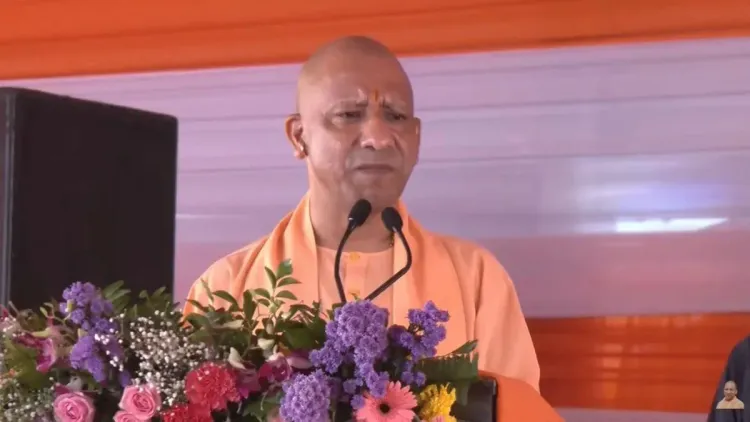
Recruitments in Uttar Pradesh once meant one thing above all: connections to the Saifai political family. Uttar Pradesh Chief Minister Yogi Adityanath fired a sharp broadside at that legacy on Friday, 6 November 2026, declaring in a post on X that his government had broken the so-called 'Saifai Syndicate' and ended nepotism in state hiring once and for all.
Posting in Hindi, CM Yogi wrote: 'पहले भर्ती का मतलब केवल सैफई सिंडिकेट होता था। इस सरकार ने उस सिंडिकेट को तोड़ा है... अब कोई भाई-भतीजावाद नहीं होगा...' — 'Earlier, recruitment meant only the Saifai Syndicate. This government has broken that syndicate... Now there will be no nepotism.'
What the 'Saifai Syndicate' charge means
Saifai is a village in Etawah district and the ancestral base of the Mulayam Singh Yadav political family, the founding dynasty of the Samajwadi Party. Under the Akhilesh Yadav-led government (2012–2017), opposition parties — including the BJP — repeatedly alleged that state recruitment processes in police, public services, and group-C posts were tilted in favour of candidates with links to this network. CM Yogi's post invokes that charge directly, framing the 2017 change of power as a structural rupture in how government jobs were distributed.
The allegation of a family-driven hiring machine was not merely rhetorical: after taking office in 2017, the Yogi administration ordered reviews of several recruitment drives conducted under the previous regime, citing procedural irregularities. That inquiry process became a defining early signal of the new government's posture.
What changed on the ground after 2017
Since 2018, the state has conducted multiple police and subordinate services recruitment drives under overhauled norms — CCTV monitoring at examination centres, centralised oversight, computerised result processing, and third-party audits at key stages. Successive state budgets have allocated funds specifically to digitise and de-politicise the hiring pipeline. The Uttar Pradesh Public Service Commission (UPPSC) and state police recruitment boards have both been restructured during this period.
The practical stakes are high. Uttar Pradesh, with a population of over 240 million, is the country's most populous state, and government employment remains one of the most coveted — and fiercely contested — pathways to economic security for its youth. Any perception of a rigged system carries enormous political weight.
The political timing of the message
The post arrives as results and legal challenges from ongoing UPPSC and police recruitment cycles continue to draw scrutiny. By anchoring his message to the 'Saifai Syndicate' label, CM Yogi keeps the contrast with the SP era front and centre — a rhetorical strategy his administration has deployed consistently across nine years in power. The Samajwadi Party has routinely denied the nepotism charges and pushed back with its own allegations of administrative bias under the current government.
What is not in dispute is the audience for the message: millions of young UP job-seekers who live and die by recruitment calendars — and who vote accordingly.
For those aspirants, the question is not which party frames the debate better. It is whether the next exam date holds, the results come clean, and the appointment letter arrives without a middleman. That is the standard CM Yogi has now set for himself, in writing.
Point of View
Keeping the BJP's anti-nepotism brand sharp heading into future electoral cycles. The consistent return to pre-2017 comparisons signals that the UP government views recruitment credibility as a primary vote-driver among aspirant-class youth. However, the framing also creates a high-stakes accountability benchmark — any fresh controversy in UPPSC or police recruitment would be measured against precisely this promise. Structurally, the post reflects a broader BJP state-level playbook of anchoring governance legitimacy to process reforms rather than purely outcome metrics.
NationPress
6 Nov 2026
Frequently Asked Questions
What is the 'Saifai Syndicate' that CM Yogi mentioned?
The 'Saifai Syndicate' is a political term used by CM Yogi Adityanath and the BJP to describe what they allege was a network of nepotism and family-based favouritism in Uttar Pradesh government recruitments during the Samajwadi Party rule (2012–2017), centred on the Mulayam Singh Yadav family whose ancestral village is Saifai in Etawah district.
What recruitment reforms has the Yogi government introduced in UP?
Since 2018, the Yogi Adityanath government has conducted police and subordinate services recruitment drives under revised transparent norms including CCTV monitoring at exam centres, centralised oversight, computerised results processing, and third-party audits at key stages of the hiring process.
Did the Yogi government investigate pre-2017 UP recruitments?
Yes. After taking office in 2017, the Yogi administration ordered reviews of several recruitment drives conducted under the previous Samajwadi Party regime, citing procedural irregularities, though the full outcomes of those reviews have been contested.
Why is government recruitment such a big political issue in Uttar Pradesh?
Uttar Pradesh, with a population of over 240 million, is India's most populous state. For millions of young aspirants, a government job is one of the most secure economic pathways available, making the fairness of the recruitment process a high-stakes issue that directly shapes electoral outcomes.
What is the Samajwadi Party's response to the nepotism charges in UP recruitments?
The Samajwadi Party has consistently denied allegations of nepotism and family-controlled recruitment practices during its 2012–2017 tenure, and has pushed back with its own counter-allegations regarding the current administration's conduct.