CM Yogi targets 'Saifai Syndicate', contrasts BJP rule with SP era
Synopsis
UP Chief Minister Yogi Adityanath accused previous state governments of limiting development to the 'Saifai Syndicate' — a sharp reference to the SP's founding family — while asserting his government prioritised villages, the poor, youth, and women.
Key Takeaways
CM Yogi Adityanath on August 18, 2026 publicly accused earlier UP governments of having no genuine development agenda.
He used the term 'Saifai Syndicate' — a political epithet for the SP's Yadav family of Saifai, Etawah — to argue development was captured by one network.
CM Yogi contrasted this with his government's stated focus on villages, the poor, youth, and women .
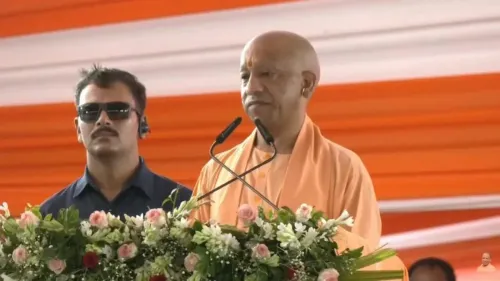
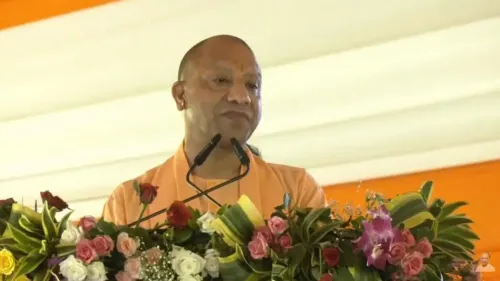
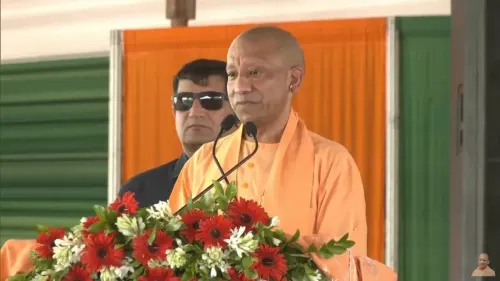
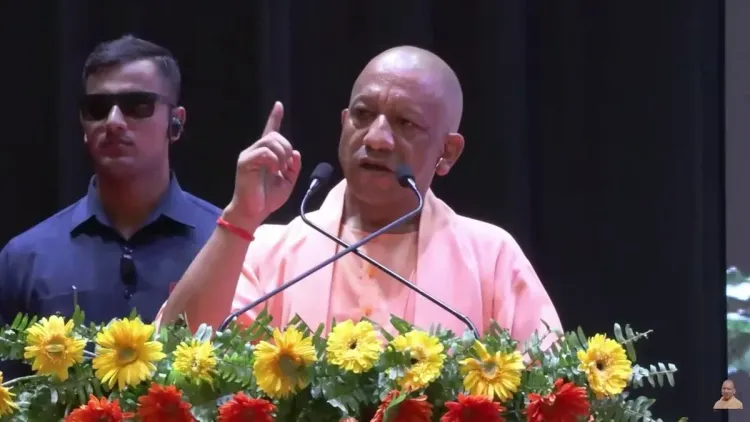
The remarks were made in a video address shared on his official X account.
The attack is consistent with BJP's long-standing electoral strategy of framing SP rule as dynastic and parochial ahead of future UP polls.
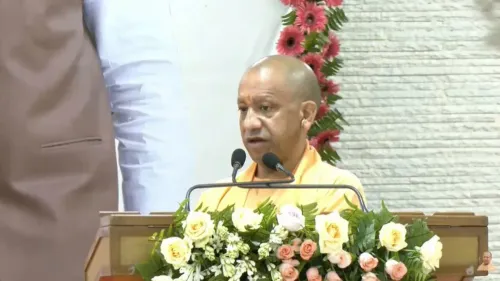
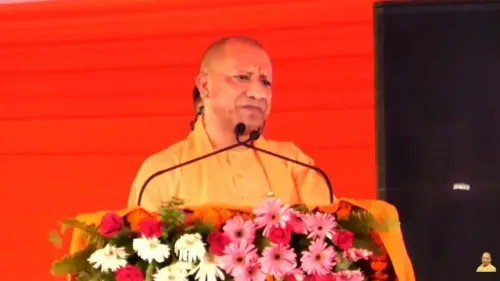
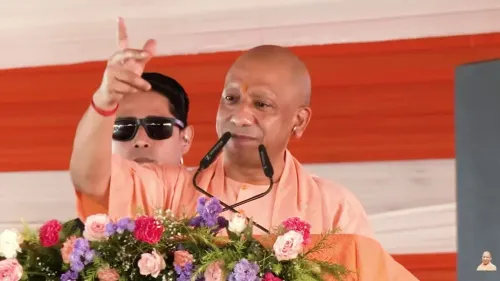
In a pointed political salvo, Uttar Pradesh Chief Minister Yogi Adityanath on Tuesday, August 18, 2026 accused previous state governments of reducing 'development' to a private family enterprise — and named it bluntly: the 'Saifai Syndicate ka vikas' ('development of the Saifai Syndicate').
Speaking in what appears to be a public address, CM Yogi said: 'Pehle ki sarkaron ke agenda mein development nahin tha. Unka vikas kewal Saifai Syndicate ka vikas tak seemit reh gaya tha' — 'The previous governments had no development on their agenda. Their idea of development was limited only to the development of the Saifai Syndicate.'
The 'Saifai Syndicate' is a well-worn but sharp political epithet in UP politics, a reference to the Samajwadi Party's founding family, the Yadavs of Saifai village in Etawah district. The charge: that SP-led governments funnelled state resources and attention toward their home turf and political network rather than the broader population.
Villages, youth, women — the counter-narrative CM Yogi is building
Against that backdrop, the Chief Minister drew a sharp contrast with the current BJP dispensation. 'We spoke of villages, the poor, the youth, and women,' he said — framing the Adityanath government's priorities as a deliberate correction to what he characterised as dynastic, exclusionary rule.
The framing is familiar BJP political grammar in Uttar Pradesh: cast SP governance as nepotistic and parochial, then position the current government as a universal, aspirational alternative. With UP Assembly elections on the political horizon, such rhetoric signals that the BJP intends to keep the SP's governance record — not just its present leadership — squarely in the crosshairs.
Why 'Saifai' still lands as an attack line
The Saifai reference carries specific weight because it is concrete and locally resonant. Saifai became nationally known during SP rule for hosting lavish cultural events — including a multi-day music festival — at a time when flood-affected communities elsewhere in UP were awaiting relief. That episode crystallised, for BJP and its supporters, everything they argue was wrong with SP governance. Invoking it now is less a new allegation than a deliberate recall of a settled political verdict.
CM Yogi's remarks, amplified through his official X account with an attached video, are aimed at a broad UP audience — particularly rural voters, women, and youth, the three constituencies he explicitly named as beneficiaries of his government's approach. The political math is straightforward: if those groups believe the contrast, the SP faces a structural disadvantage heading into the next electoral cycle.
The battle for UP's political memory is very much alive — and Yogi Adityanath just reminded everyone who is writing the current chapter.
Point of View
Historically anchored, and designed to activate anti-incumbency sentiment against the SP rather than defend his own record. By naming Saifai specifically, he sidesteps abstract governance comparisons and forces the SP to relitigate a past that already cost it power. The pivot to villages, women, and youth signals that the BJP's 2027 UP campaign, whenever it formally begins, will be fought on welfare delivery and social inclusion — a terrain where the party believes it holds a structural advantage over a party still associated with caste patronage networks.
NationPress
2 Oct 2026
Frequently Asked Questions
What is the 'Saifai Syndicate' that CM Yogi referred to?
'Saifai Syndicate' is a political term used by BJP leaders to describe the Samajwadi Party's founding Yadav family, who hail from Saifai village in Etawah district, UP. The term implies that SP governments prioritised resources and development for their home region and political network over the rest of the state.
What did CM Yogi Adityanath say on August 18, 2026?
CM Yogi said that previous UP governments had no development agenda and that their idea of development was limited to the 'Saifai Syndicate.' He contrasted this with the current BJP government's focus on villages, the poor, youth, and women.
Why is Saifai significant in UP politics?
Saifai, a village in Etawah district, is the ancestral home of the Samajwadi Party's Yadav family. It became a flashpoint during SP rule when lavish cultural events were held there while other parts of UP dealt with flood relief crises, cementing the BJP's narrative of selective governance.
Is CM Yogi's speech directed at the Samajwadi Party?
While CM Yogi did not name the SP directly in the quoted remarks, the 'Saifai Syndicate' reference is universally understood in UP as pointing to the SP and its leadership. The speech is widely read as a political attack on the opposition ahead of future state elections.
What groups did CM Yogi say his government focuses on?
CM Yogi stated that his government's agenda centres on villages, the poor, youth, and women — presenting these as groups neglected by previous administrations.