CM Yogi Contrasts Modi's National Vision With Saifai-Centric Rule
Synopsis
CM Yogi Adityanath on 18 June 2026 posted a pointed contrast on X, accusing the Samajwadi Party of reducing Uttar Pradesh to 'Saifai' while praising PM Modi for treating all of India as his home — a recurring BJP governance-contrast narrative ahead of future state elections.
Key Takeaways
CM Yogi Adityanath posted on X on 18 June 2026 , contrasting two governance philosophies in Uttar Pradesh .
He accused a 'school of thought' — an implicit reference to the Samajwadi Party — of treating only Saifai village in Etawah district as the entire state.
He praised PM Narendra Modi for adopting an all-India, inclusive development approach under the 'Sabka Saath, Sabka Vikas' framework.
The 'Saifai-centric governance' charge has been a consistent BJP rhetorical tool in Uttar Pradesh since the 2017 power shift.
Samajwadi Party spokespersons are expected to respond; district-level development announcements may follow to reinforce the message.
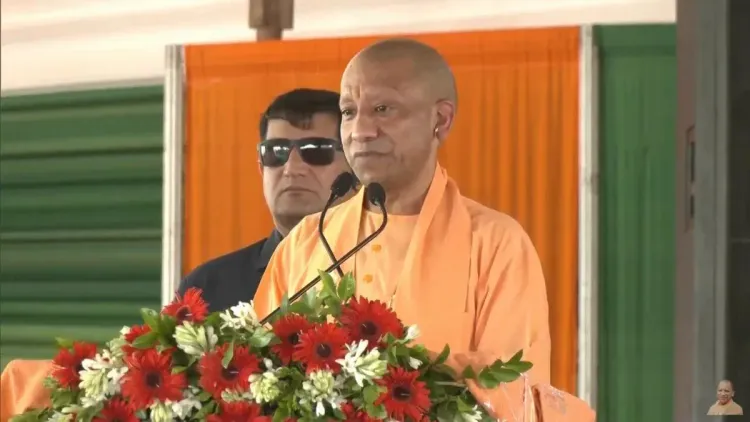
Uttar Pradesh Chief Minister Yogi Adityanath on Thursday, 18 June 2026, took a sharp political dig at the previous Samajwadi Party government, contrasting what he described as its narrow, village-centric governance with Prime Minister Narendra Modi's inclusive, all-India development philosophy.
Posting in Hindi on X, CM Yogi wrote: 'Yaad kariye, ek soch 'Saifai' ko hi pradesh maanti thi' ('Remember, one school of thought considered only Saifai to be the entire state'), before adding that PM Modi's vision, by contrast, treats all of India as his home.
Context
The post is a pointed political contrast aimed squarely at the Samajwadi Party and its leadership, whose roots lie in Saifai, a village in Etawah district, Uttar Pradesh. Saifai became a symbol of concentrated patronage during SP-led governments, with critics long arguing that the region received disproportionate state attention and resources. CM Yogi invokes this perception to draw a line between two eras of governance in the state.
Policy Backdrop
PM Modi's 2014 national campaign introduced the 'Sabka Saath, Sabka Vikas' ('Together with all, development for all') framework, explicitly positioning the BJP as a party of pan-India, region-neutral development. After the BJP's landmark victory in the 2017 Uttar Pradesh assembly elections, CM Yogi Adityanath reoriented state priorities toward infrastructure, law-and-order, and district-level outreach across Uttar Pradesh's 75 districts. The rhetorical contrast between 'Saifai-centric' rule and broad-based governance has been a recurring motif in BJP political messaging in the state since that power shift.
Stakeholders and Impact
The post speaks directly to Uttar Pradesh voters, particularly those outside the Etawah-Mainpuri belt, reinforcing the BJP's narrative that earlier SP governments neglected large swathes of the state. For the Samajwadi Party, the charge is a familiar one — the party has consistently denied allegations of regional favouritism, arguing that development under its watch was statewide. The framing also serves to elevate PM Modi's national stature ahead of any upcoming electoral cycle in the state.
What's Next
Political observers will watch for a formal response from Samajwadi Party spokespersons, who have in the past pushed back strongly against the 'Saifai' narrative. Any follow-up state-level development announcements tied to Etawah or historically underserved districts could amplify the political message embedded in CM Yogi's post. As Uttar Pradesh remains the single largest electoral prize in Indian politics, this kind of governance-contrast messaging is likely to intensify in the months ahead.
Point of View
CM Yogi simultaneously defends the Centre's development record and frames the next electoral contest as a choice between parochialism and national integration. The timing, without a confirmed external trigger, suggests this is proactive political positioning rather than a reactive statement. It fits a broader BJP pattern of keeping the governance-contrast narrative alive between election cycles to shape voter memory in India's most electorally consequential state.
NationPress
17 Sept 2026
Frequently Asked Questions
What did CM Yogi Adityanath say about Saifai?
On 18 June 2026, CM Yogi posted on X saying that one school of thought — widely understood as a reference to the Samajwadi Party — considered only Saifai village in Etawah district to be the entire state of Uttar Pradesh, contrasting it with PM Modi's pan-India vision.
Why is Saifai politically significant in Uttar Pradesh?
Saifai is a village in Etawah district closely associated with the Mulayam Singh Yadav family and the Samajwadi Party. Critics have long alleged that the region received disproportionate state resources and attention during SP-led governments.
What is the BJP's 'Sabka Saath, Sabka Vikas' framework?
'Sabka Saath, Sabka Vikas' — meaning 'Together with all, development for all' — is the governance slogan introduced by PM Narendra Modi during the 2014 national campaign, emphasising region-neutral, inclusive development across all states and districts.
Has CM Yogi raised the Saifai issue before?
Yes. The charge of Saifai-centric governance has been a recurring element in BJP political messaging in Uttar Pradesh since the party came to power in 2017, used to contrast its statewide infrastructure push with what it describes as the SP's localised patronage model.
How is the Samajwadi Party likely to respond?
The Samajwadi Party has historically denied allegations of regional favouritism, arguing that its governments delivered statewide development. Party spokespersons are expected to issue a rebuttal, as they have done in past instances when the Saifai narrative has been raised.