Is India the Most Reliable Bridge in a Fractured World?
Synopsis
In his compelling New Year's column, Shashi Tharoor examines India's pivotal role as a stabilizing force in a tumultuous global landscape. Through its 'multi-alignment' strategy, India is showcasing its ability to navigate complex international relations while prioritizing national interests and claiming a leadership position on the world stage.
Key Takeaways
India's multi-alignment strategy enhances its global standing.
The country has surpassed Japan to become the world's fourth-largest economy.
Strengthening ties with the Global South is crucial for India's leadership role.
Technological innovation is key to India's future growth.
India aims to balance national interests with global responsibilities.
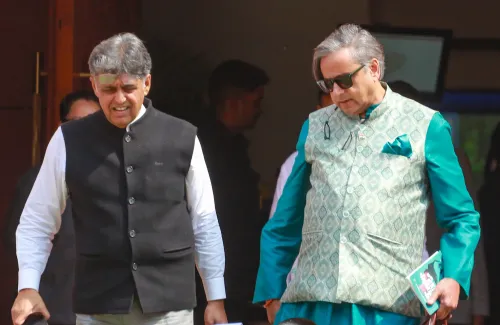
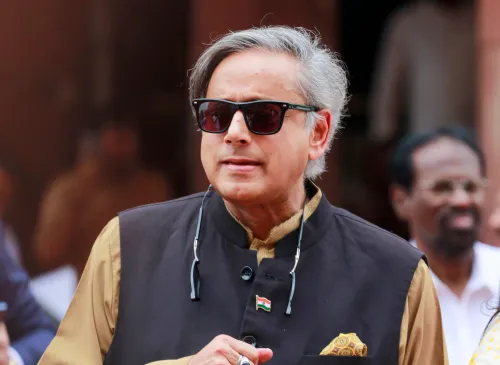
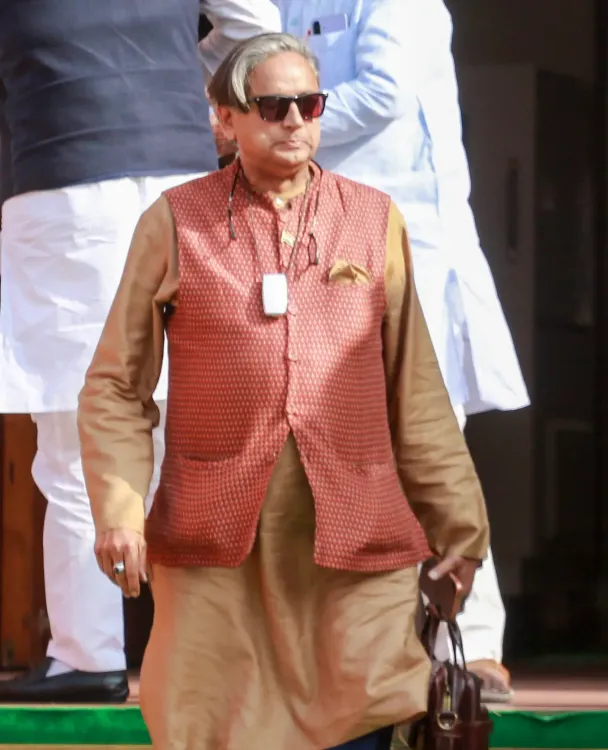
New Delhi, Jan 1 (NationPress) The past year significantly challenged India's resilience through its “multi-alignment” strategy, showcasing that a nation can be a “friend to all” while being independent of any one ally, as per Congress leader Shashi Tharoor.
“By opting for multi-alignment instead of binary loyalties, India has established itself as the most stable bridge in a fractured world,” he remarked, highlighting his position as a Lok Sabha member representing Thiruvananthapuram in Kerala.
In a column released on New Year’s Day, Tharoor reviewed India’s geopolitical and economic path as the world approaches 2026.
He positioned India amid global turbulence characterized by disrupted supply chains, trade wars, climate urgency, and digital fragmentation, asserting that India's “multi-alignment” strategy has enabled it to serve as a bridge across these divides.
Tharoor has previously commended Prime Minister Narendra Modi and his administration's policies, which has led to protests from within the Congress party. His comments, ranging from praising the PM’s addresses to defending foreign policy decisions, have often prompted party leaders to clarify that his opinions are personal and not necessarily reflective of the party's stance.
In Thursday’s column, he characterized 2025 as a period of “maximal interdependence and minimal trust,” where collaborations have turned transactional, economic relationships have become weaponized, and strategic forecasts have been destabilized.
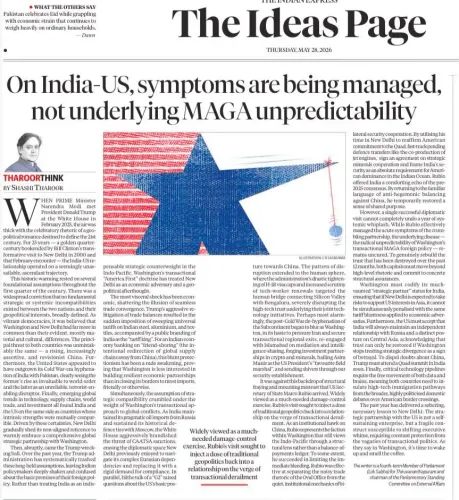
“New Delhi has strengthened its connections with the Global South while managing relations with Washington, Moscow, and Beijing,” he noted, adding that Russian President Vladimir Putin’s visit to New Delhi amid intense Western scrutiny was a “bold assertion of sovereign autonomy.”
This visit served as a “reminder that India will not be a ‘spoke’ in anyone else’s wheel.”
Moreover, the 15th India-Japan Annual Summit in August and the initiation of the Africa-India Key Maritime Engagement (AIKEYME) naval exercise illustrated India's ambition to lead as a ‘Vishwa Bandhu’, Tharoor asserted, also noting his role as the Chairman of the Parliamentary Standing Committee on External Affairs.
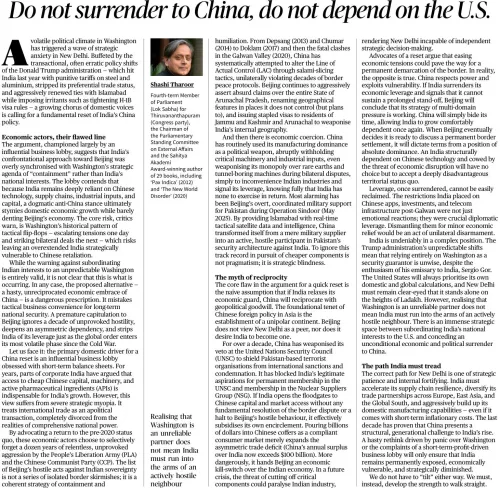
He pointed out that the market downturn following China’s restrictions on rare earth exports and former US President Donald Trump’s imposition of a 50% tariff on Indian goods exemplified this new reality.
Despite India’s vulnerabilities, particularly in its green transition and labor-intensive sectors, Tharoor remarked that the country has responded with confidence—diversifying trade partners, accelerating the National Critical Mineral Mission, and reinforcing ties with the Mineral Security Partnership.
In the face of external shocks, he observed that India’s domestic fundamentals have remained strong. Although the rupee faced depreciation due to tariff pressures, fiscal stability persisted, he wrote, further emphasizing that the implementation of four labor codes and the SHANTI Act for nuclear energy investment reflects a proactive reform agenda.
Tharoor sees these initiatives as signs of India constructing a “fortress-like” economy resilient to global fluctuations.
His analysis aligns with his earlier commendations for the Modi administration, which he has previously described as effectively implementing structural reforms that have positioned India as an emerging economic power.
As India advanced past Japan to become the world’s fourth-largest economy, Tharoor hailed this achievement as indicative of a “golden period” of structural reform. The Congress MP has also indicated India’s role as the voice of the Global South at COP30 in Brazil, advocating for equitable climate action and urging developed nations to deliver predictable support beyond mere targets.
Furthermore, he praised India for establishing a unique “tech-diplomacy” presence in an arena dominated by global giants in the World Wide Web, amid the splintering of the Internet into sovereign fragments.
With technology emerging as a defining influence in 2025, particularly as AI accelerates its impact on labor markets and energy systems, Tharoor noted, “India’s push into AI innovation hubs and digital public infrastructure presents a pathway to global leadership.”
He acknowledged the challenges ahead, stating, “India has demonstrated that the way forward is not to retreat from the world, but to engage with a clear vision that prioritizes national interests without forsaking global responsibilities.”
Point of View
The analysis provided by Shashi Tharoor reflects a balanced understanding of India's geopolitical stance. His assessment of India's 'multi-alignment' strategy underlines the importance of maintaining robust international relations while safeguarding national interests. It is crucial for India to navigate these complexities skillfully, ensuring it remains a key player in global affairs.
NationPress
7 Oct 2026
Frequently Asked Questions
What is India's multi-alignment strategy?
India's multi-alignment strategy refers to its approach of engaging with multiple countries and forming partnerships without being bound to a single ally, allowing for greater diplomatic flexibility and autonomy.
How has India positioned itself in the global economy?
India has been recognized as a rising economic power, surpassing Japan to become the world's fourth-largest economy, thanks to structural reforms and a focus on diversifying trade relationships.
What challenges does India face in international relations?
India faces challenges such as global supply chain disruptions, trade wars, and climate change, requiring a careful balance in its diplomatic engagements.
What role does technology play in India's future?
Technology, particularly AI, is crucial for India's future, as it seeks to innovate and establish leadership in digital infrastructure and tech diplomacy.
What is the significance of India's relationships with the Global South?
Strengthening ties with the Global South positions India as a leader in advocating for equitable climate action and represents its commitment to emerging economies.