India's finished steel output rises 5.9% in April-June 2026
Synopsis
India's steel sector posted back-to-back quarterly gains, with finished steel output up 5.9% and consumption up 8.3% in April–June 2026 — both driven by a government infrastructure push. The real headline is exports: a 38.1% volume surge and a 43.5% jump in value signal that Indian steel is finding global buyers even as China and Europe struggle.
Key Takeaways
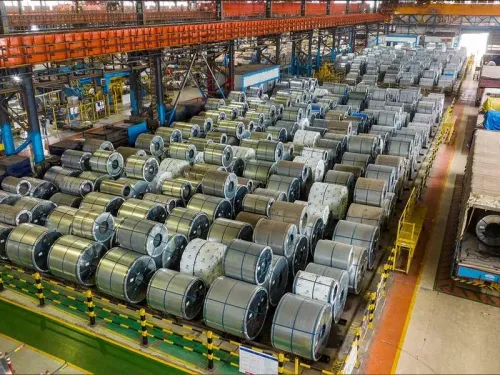
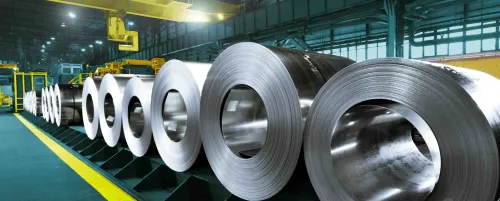
Finished steel production rose 5.9% to 41 million tonnes in April–June 2026 , up from 38.7 million tonnes a year earlier.
June finished steel output reached 13.8 million tonnes , a 6% year-on-year increase.
Consumption grew faster than output, up 8.3% to 41.6 million tonnes for the quarter, fuelled by highways, railways, and ports projects.
Steel exports jumped 38.1% in June to 6,16,200 tonnes ; export value surged 43.5% to ₹4,674 crore .
Total crude steelmaking capacity stands at 221.9 million tonnes per annum as of June 2026, against a National Steel Policy target of 300 million tonnes per annum by 2030 .
India's production of finished steel climbed 5.9 per cent to 41 million tonnes in the first quarter of the current financial year (April–June 2026), up from 38.7 million tonnes in the same period last year, according to data released by the Ministry of Steel on 7 July 2026. The figures underscore a sustained expansion in the country's steelmaking capacity, driven by large-scale government infrastructure spending.
June Numbers at a Glance
Finished steel output in June 2026 alone reached 13.8 million tonnes, a 6 per cent rise over the 13 million tonnes recorded in June 2025. Crude steel production also moved higher, reaching 14.1 million tonnes in June against 13.5 million tonnes in the year-ago month.
Consumption Outpaces Production Growth
Demand for finished steel grew at an even faster clip, rising 7.2 per cent year-on-year to 14.2 million tonnes in June. For the full April–June quarter, consumption expanded 8.3 per cent to 41.6 million tonnes from 38.4 million tonnes in the corresponding quarter of the previous year. The Ministry of Steel attributed the acceleration to heightened demand from government-backed projects in the highways, railways, and ports sectors — all segments that are capital-intensive and steel-heavy by design.
Notably, consumption growth outpacing production growth signals that domestic supply is being absorbed efficiently, with limited inventory overhang — a healthier demand profile than in some earlier cycles.
Exports Surge on Strong Demand
India's steel exports registered a sharp 38.1 per cent jump in June, rising to 6,16,200 tonnes from 4,46,200 tonnes in June 2025. In value terms, the export surge was even more pronounced — receipts climbed 43.5 per cent to ₹4,674 crore from ₹3,256.9 crore in the same month last year, suggesting improved realisations alongside higher volumes. This comes amid a global steel market that has been navigating demand softness in China and Europe, making India's export performance particularly notable.
Capacity Trajectory and the 2030 Target
India's total crude steelmaking capacity stood at 221.9 million tonnes per annum as of June 2026, according to an official statement. The country's National Steel Policy sets a target of 300 million tonnes per annum by 2030, implying that roughly 78 million tonnes of additional capacity must be commissioned over the next four years. Industry analysts note that while the trajectory is broadly on course, the pace of capacity addition will need to accelerate to meet the deadline comfortably.
What to Watch
The sustained consumption uptick tied to infrastructure spending suggests steel demand will remain firm through the rest of the financial year, particularly if government capital expenditure stays on its budgeted path. Any slowdown in project execution or a moderation in export realisations could, however, temper the headline growth numbers in subsequent quarters.
Point of View
Which is a structurally bullish signal for capacity investment. The export surge is equally telling: a 43.5% jump in value versus 38.1% in volume implies better per-tonne realisations, suggesting Indian producers are moving up the value chain or benefiting from a weaker rupee. The harder question is whether the 300-million-tonne capacity target by 2030 is achievable — with 221.9 million tonnes in place today, the industry needs to add roughly 20 million tonnes annually for four straight years, a pace that has historically required significant land, logistics, and financing alignment that rarely comes without friction.
NationPress
5 Oct 2026
Frequently Asked Questions
How much did India's finished steel production grow in April–June 2026?
India's finished steel production grew 5.9 per cent to 41 million tonnes in the April–June 2026 quarter, up from 38.7 million tonnes in the same period last year, according to Ministry of Steel data.
What drove the growth in steel consumption during the quarter?
Consumption of finished steel rose 8.3 per cent to 41.6 million tonnes in April–June 2026, driven by government-backed infrastructure projects in the highways, railways, and ports sectors, which are among the most steel-intensive segments of public capital expenditure.
How did India's steel exports perform in June 2026?
India's steel exports surged 38.1 per cent in June 2026 to 6,16,200 tonnes from 4,46,200 tonnes a year earlier. In value terms, exports jumped 43.5 per cent to ₹4,674 crore , indicating stronger realisations alongside higher volumes.
What is India's current crude steelmaking capacity and the 2030 target?
India's total crude steelmaking capacity stood at 221.9 million tonnes per annum as of June 2026. The National Steel Policy targets 300 million tonnes per annum by 2030, requiring the addition of roughly 78 million tonnes of capacity over the next four years.
How does consumption growth compare with production growth in the steel sector?
Consumption grew faster than production in April–June 2026 — up 8.3 per cent versus 5.9 per cent for output — indicating that domestic demand, primarily from infrastructure projects, is absorbing supply efficiently with limited inventory build-up.