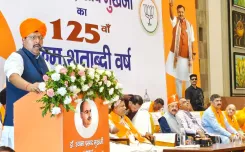
Khattar Dedicates Dayanand Saraswati Chowk to Viksit Bharat Vision
Synopsis
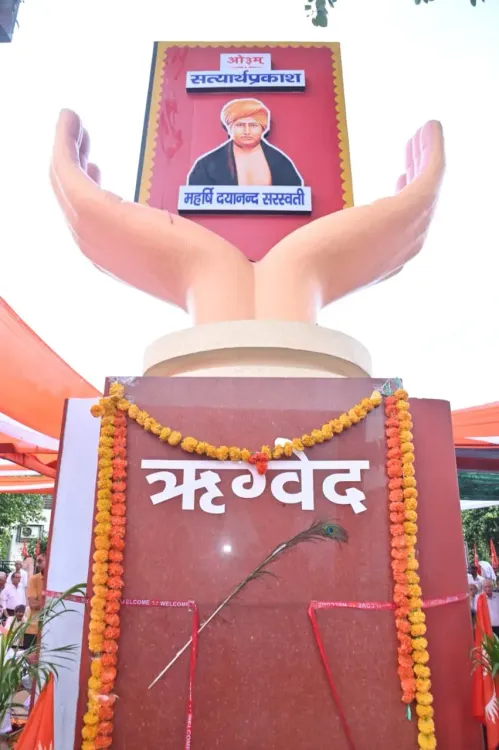
Union Minister Manohar Lal Khattar dedicated a chowk named after Maharshi Dayanand Saraswati on 6 July 2026, calling it a permanent memorial to the Arya Samaj founder's ideals and linking his legacy of truth, education, and social harmony to PM Modi's Viksit Bharat mission.
Key Takeaways
Union Minister Manohar Lal Khattar spoke at the inauguration of a public chowk named after Maharshi Dayanand Saraswati on 6 July 2026 .
Khattar described the chowk as a 'permanent memorial' to Dayanand Saraswati's ideals of truth, education, self-respect, social harmony, and national service .
Maharshi Dayanand Saraswati founded the Arya Samaj in 1875 , a reform movement that shaped India's independence struggle and the DAV school network.
The minister explicitly linked the tribute to PM Modi's Viksit Bharat campaign, framing the reformer's values as guidance for achieving developed-nation status by 2047 .
The Ministry of Housing and Urban Affairs has increasingly embedded cultural memorials within Smart Cities and urban redevelopment frameworks since 2014 .
Arya Samaj institutions and urban local bodies are the primary stakeholders in maintaining the chowk's memorial character.
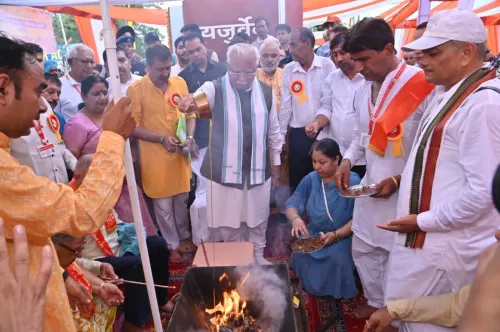
Union Power Minister Manohar Lal Khattar on Monday, 6 July 2026, paid tribute to Maharshi Dayanand Saraswati at the inauguration of a public chowk named in the reformer's honour, calling it a permanent memorial to his ideals of truth, education, self-respect, social harmony, and national service. Khattar linked the occasion directly to Prime Minister Narendra Modi's Viksit Bharat vision, framing the 19th-century Vedic scholar's legacy as a living guide for contemporary nation-building.
Context
In his post, Khattar wrote that the chowk named after Maharshi Dayanand Saraswati is 'केवल एक सार्वजनिक स्थल नहीं' ('not merely a public space') but a 'permanent memorial to his immortal ideas, Vedic tradition, social consciousness, and ideals of national service.' The minister addressed the gathering by invoking the reformer's five core values — truth, education, self-respect, social harmony, and national service — as sources of 'new energy and clear guidance' for India today.
Khattar concluded that honouring these ideals in practice would be the 'truest tribute' to Dayanand Saraswati, tying the commemoration explicitly to the Viksit Bharat goal of achieving developed-nation status by 2047.
Policy Backdrop
Maharshi Dayanand Saraswati founded the Arya Samaj in 1875, advocating Vedic education, opposition to caste discrimination, and social reform at a time of colonial rule. His movement directly influenced India's independence struggle and gave rise to the DAV school network, one of the country's largest private education chains.
Since 2014, central and state governments have increasingly named public spaces and civic infrastructure after 19th-century reformers, a pattern that the Ministry of Housing and Urban Affairs has embedded within Smart Cities and urban redevelopment frameworks. Naming ceremonies of this kind serve a dual purpose: commemorating historical figures while anchoring them to present-day development narratives.
Stakeholders and Impact
Arya Samaj institutions and their affiliated educational bodies are the most immediate stakeholders, as such dedications reinforce the movement's continued relevance in public life. Urban local bodies responsible for maintaining the chowk will be expected to uphold its memorial character as part of broader civic pride initiatives.
Education advocates who trace the DAV tradition back to Dayanand Saraswati's philosophy see such gestures as state validation of indigenous pedagogical values — a point that resonates with the National Education Policy 2020's emphasis on cultural rootedness in learning.
What's Next
With the 2047 centenary of Indian independence serving as the horizon for the Viksit Bharat campaign, the Housing Ministry is expected to integrate further cultural memorials into urban redevelopment projects. Statements of this kind from senior ministers may foreshadow references to reformers like Dayanand Saraswati in upcoming education or cultural policy announcements.
The broader pattern suggests that civic naming ceremonies will continue to function as policy signalling moments, connecting historical intellectual heritage to the government's long-term development agenda ahead of the independence centenary.
Point of View
Lending the Viksit Bharat agenda a civilisational depth that purely economic messaging cannot provide. By invoking Dayanand Saraswati's five core values — truth, education, self-respect, social harmony, national service — the minister maps a Vedic reform tradition directly onto current policy priorities such as the National Education Policy and urban renewal. The Housing Ministry's role in civic naming ceremonies is increasingly functioning as soft cultural diplomacy, shaping how Indian cities memorialise their intellectual heritage. As the 2047 centenary approaches, expect this convergence of commemoration and policy signalling to intensify across multiple ministries.
NationPress
6 Jul 2026
Frequently Asked Questions
Who was Maharshi Dayanand Saraswati and why is a chowk named after him?
Maharshi Dayanand Saraswati was a 19th-century Vedic scholar who founded the Arya Samaj in 1875, championing education, social equality, and opposition to caste discrimination. A public chowk has been named in his honour to serve as a permanent memorial to his ideals, with Union Minister Khattar calling it a symbol of his enduring legacy for modern India.
What did Manohar Lal Khattar say at the Dayanand Saraswati chowk inauguration?
Khattar said the chowk is 'not merely a public space' but a permanent memorial to the reformer's immortal ideas, Vedic tradition, social consciousness, and national service. He linked Dayanand Saraswati's values of truth, education, and social harmony to PM Modi's Viksit Bharat vision for a developed India by 2047.
What is the Viksit Bharat campaign and how does it connect to this tribute?
Viksit Bharat is the Government of India's campaign under PM Narendra Modi to achieve developed-nation status by 2047, the centenary of independence, focusing on economic growth, infrastructure, education, and cultural self-confidence. Khattar invoked the campaign to frame Dayanand Saraswati's reformist ideals as intellectual inspiration for this national goal.
What is the Arya Samaj and what is its relevance today?
The Arya Samaj is a Hindu reform movement founded by Dayanand Saraswati in 1875 that promoted Vedic education, social harmony, and national service. It influenced India's independence movement and established the DAV school network, one of India's largest private education systems, making its legacy directly relevant to contemporary education and social policy.
Why does the BJP government name public spaces after 19th-century reformers?
Since 2014, central and state governments have named public spaces after reformers like Dayanand Saraswati to highlight indigenous thought traditions and connect historical intellectual heritage to present-day development goals. The Ministry of Housing and Urban Affairs has integrated such cultural memorials into Smart Cities and urban redevelopment projects as part of a broader nation-building narrative.